Equipment
Ingredients
Brisket Broth
- 500 g beef brisket, whole piece
- 250 g korean radish (mu), peeled and left whole
- 2500 ml water
- 25 g garlic, whole cloves
- 30 g scallions, whole stalks
- 30 ml soup soy sauce (guk-ganjang)
Dumplings (Mandu)
- 200 g ground beef, 80/20 lean to fat ratio
- 150 g mature kimchi, finely chopped and squeezed dry
- 100 g firm tofu, crumbled and squeezed dry
- 15 ml sesame oil
- 24 dumpling wrappers
Soup Elements
- 400 g sliced korean rice cakes (tteokguk tteok), soaked in cold water for 30 minutes
Spicy Gochugaru Oil
- 15 g gochugaru (korean chili flakes)
- 45 ml neutral oil
- 5 ml sesame oil
Garnishes
- 4 pasteurized egg yolks, separated from whites
- 1 roasted seaweed (gim), cut into thin strips
Nutrition (per serving)
Method
Place the beef brisket in a large bowl of cold water and let it soak to draw out excess blood, ensuring a clearer broth.
Drain the brisket and transfer it to a large stockpot along with the whole radish, garlic cloves, scallion stalks, and 2500ml of water. Bring to a rapid boil at 100°C/212°F, aggressively skimming any foam or scum that rises to the surface for the first 15 minutes, then reduce the heat to maintain a gentle simmer.
While the broth simmers, prepare the dumpling filling. In a mixing bowl, combine the ground beef, finely chopped and squeezed kimchi, crumbled and squeezed tofu, and sesame oil. Knead the mixture vigorously by hand until it becomes sticky and cohesive.
Place a small spoonful of the meat and kimchi filling into the center of a dumpling wrapper. Moisten the outer edges with water, fold in half to create a half-moon shape, and press the edges firmly together to seal, gently pushing out any trapped air.
Prepare the gochugaru oil. Place the gochugaru and sesame oil in a heatproof bowl. In a small pan, heat the neutral oil until it shimmers and lightly smokes, then pour it over the chili flakes. Stir gently to combine and set aside to cool and infuse.
Carefully remove the tender brisket and radish from the broth. Discard the garlic and scallions. Slice the cooled brisket against the grain into thin strips, and cut the radish into bite-sized squares. Season the clear broth with the soup soy sauce.
Bring the seasoned broth back to a rolling boil at 100°C/212°F. Drain the soaked rice cakes and add them to the pot along with the assembled dumplings. Cook until the rice cakes are soft and chewy and the dumplings float to the surface, ensuring the internal temperature of the beef filling reaches 74°C/165°F.
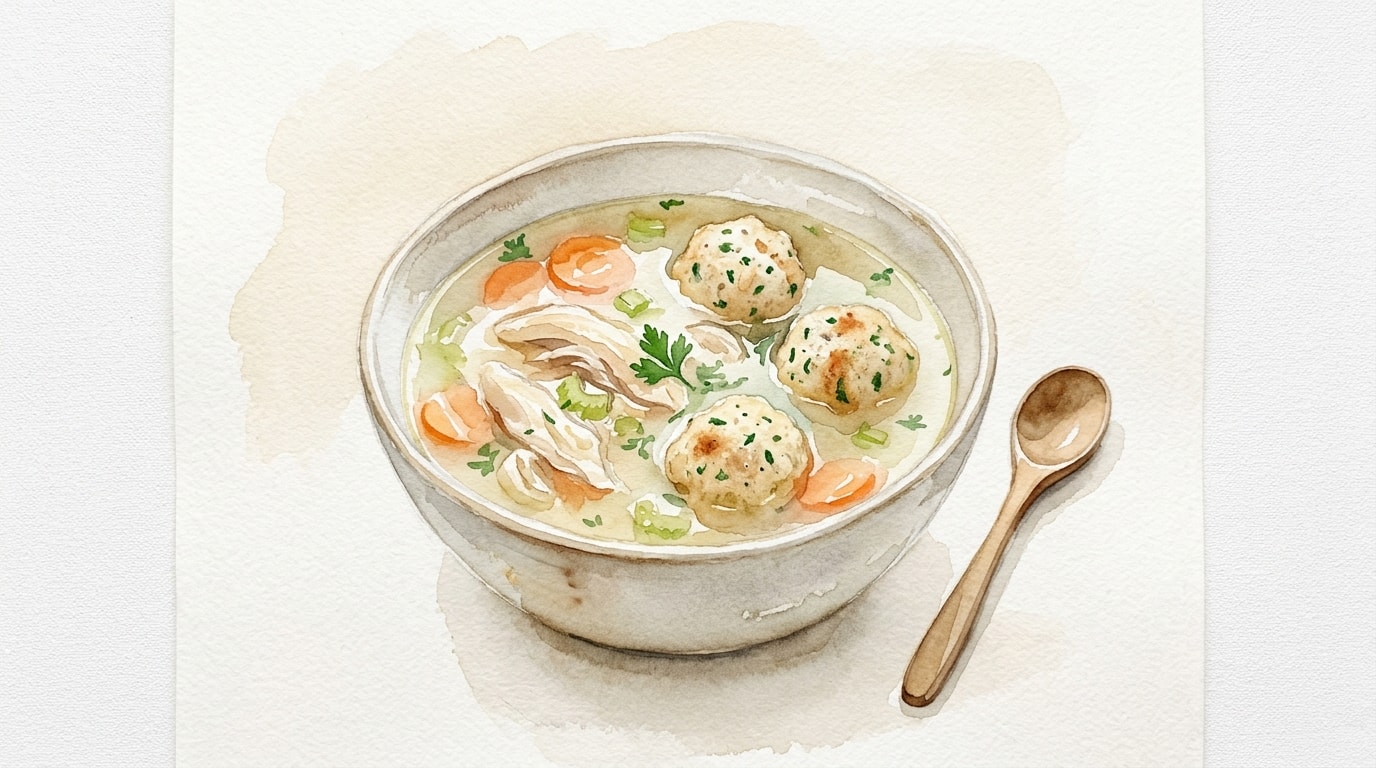
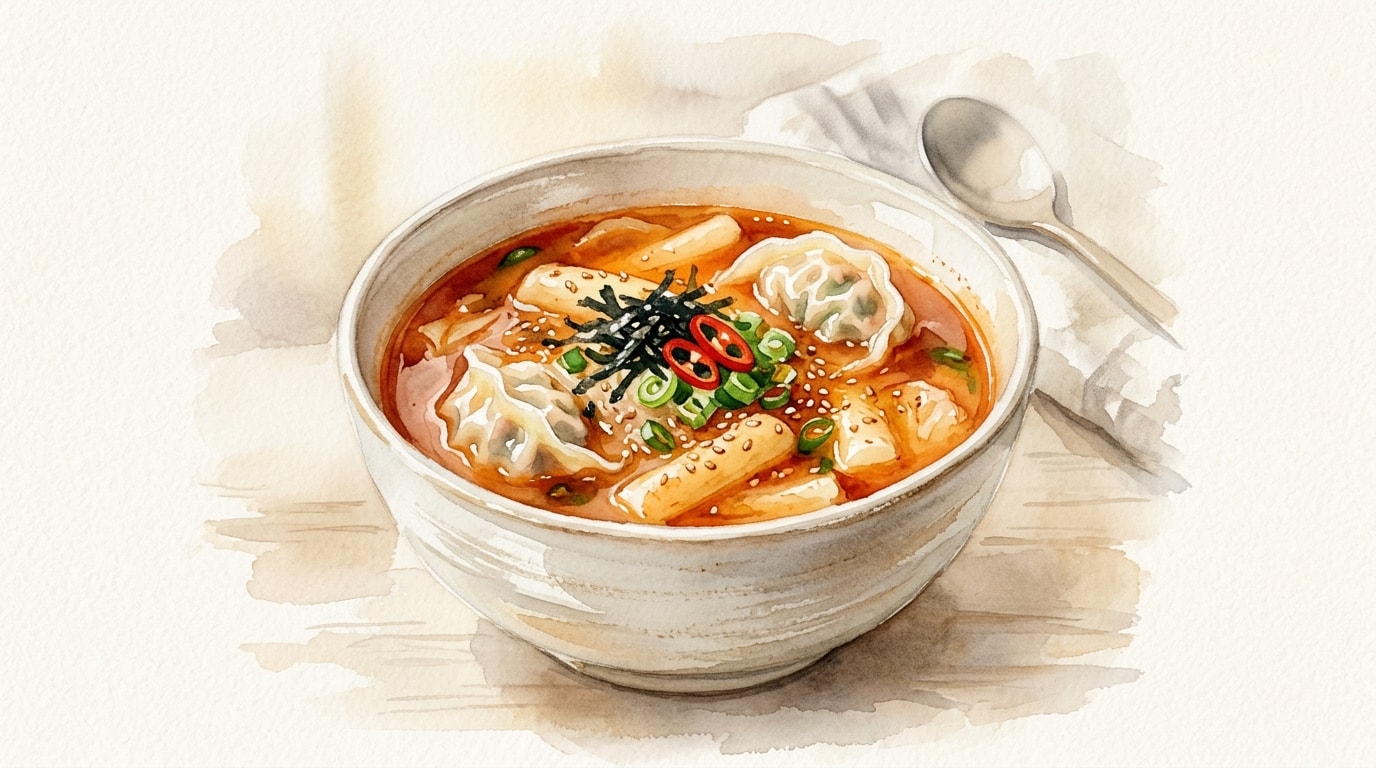
Ladle the hot soup, dumplings, and rice cakes into wide serving bowls. Artfully arrange the sliced brisket and radish on top. Carefully place one pasteurized raw egg yolk in the center of each bowl, garnish with the shredded roasted seaweed, and drizzle generously with the spicy gochugaru oil.
Chef's Notes
- Soaking the rice cakes in cold water for 30 minutes before cooking prevents them from cracking and ensures a perfectly chewy, elastic texture.
- Soup soy sauce (guk-ganjang) is a traditional Korean pantry staple. It is lighter in color but significantly saltier and more umami-forward than regular soy sauce, allowing you to season the broth without turning it dark brown.
- Thoroughly squeezing the moisture out of both the kimchi and the tofu is critical for the dumpling filling. Excess moisture will cause the filling to steam internally and burst the wrappers.
- The homemade gochugaru oil can be scaled up and stored in a glass jar in the refrigerator for up to a month. It is an exceptional condiment for noodles, fried eggs, and dipping sauces.
Storage
Refrigerator: 3 days — Store the broth, uncooked dumplings, and rice cakes in separate airtight containers to prevent the starches from dissolving and turning the soup mushy.
Freezer: 1 month — Freeze uncooked dumplings on a baking sheet before transferring to a sealed bag. Do not freeze soaked rice cakes.
Reheating: Bring the chilled broth to a rolling boil, then add the rice cakes and cooked dumplings, simmering until heated through.