Equipment
Ingredients
Broth Bones and Meat
- 1500 g beef marrow bones
- 500 g beef brisket
Aromatics and Spices
- 2 yellow onion, unpeeled and halved
- 1 ginger, halved lengthwise
- 5 star anise pods
- 1 cinnamon stick
- 5 whole cloves
- 10 g coriander seeds
- 5 g fennel seeds
- 1 black cardamom pod
Broth Liquid and Seasoning
- 4000 ml water
- 60 ml fish sauce
- 40 g rock sugar
- 15 g kosher salt
Bowls and Assembly
- 400 g dried flat rice noodles
- 250 g beef sirloin, thinly sliced against the grain
Garnishes
- 150 g bean sprouts
- 50 g fresh thai basil
- 20 g fresh cilantro
- 2 lime, cut into wedges
- 2 bird's eye chilies, thinly sliced
Nutrition (per serving)
Method
Add beef marrow bones and brisket to a large stockpot, cover with cold water, and bring to a boil. Boil for 10 minutes to release impurities. Drain, rinse the bones and meat thoroughly under cold water, and scrub the pot clean.
Place halved onions and ginger on a baking sheet. Broil at 200 degrees Celsius / 400 degrees Fahrenheit for 15 minutes until heavily charred on the outside but slightly softened inside. Rinse lightly under water to remove loose black ash.
In a dry skillet over medium heat, toast the star anise, cinnamon stick, cloves, coriander seeds, fennel seeds, and black cardamom for 3 to 4 minutes until highly fragrant. Place the toasted spices in a spice infuser or a securely tied cheesecloth bag.
Return the clean bones, brisket, charred onion, charred ginger, and spice bag to the clean stockpot. Add the 4000ml of water. Bring to a boil, then immediately reduce heat to a gentle simmer. Cook for 4 hours, skimming the surface regularly to keep the broth clear.
After 1.5 hours of simmering, remove the beef brisket from the pot. Submerge it in a bowl of cold water for 5 minutes to stop the cooking and prevent the meat from darkening, then transfer to the refrigerator. Once completely cold, slice thinly against the grain.
After 4 hours total simmering time, discard the solid bones, aromatics, and spice bag. Strain the broth through a fine mesh sieve into a clean pot. Stir in the fish sauce, rock sugar, and kosher salt. Keep the broth at a low simmer and adjust the seasoning to taste.
Bring a separate pot of water to a boil. Cook the dried flat rice noodles according to package instructions, typically about 5 minutes. Drain thoroughly and divide equally among four large, warm serving bowls.
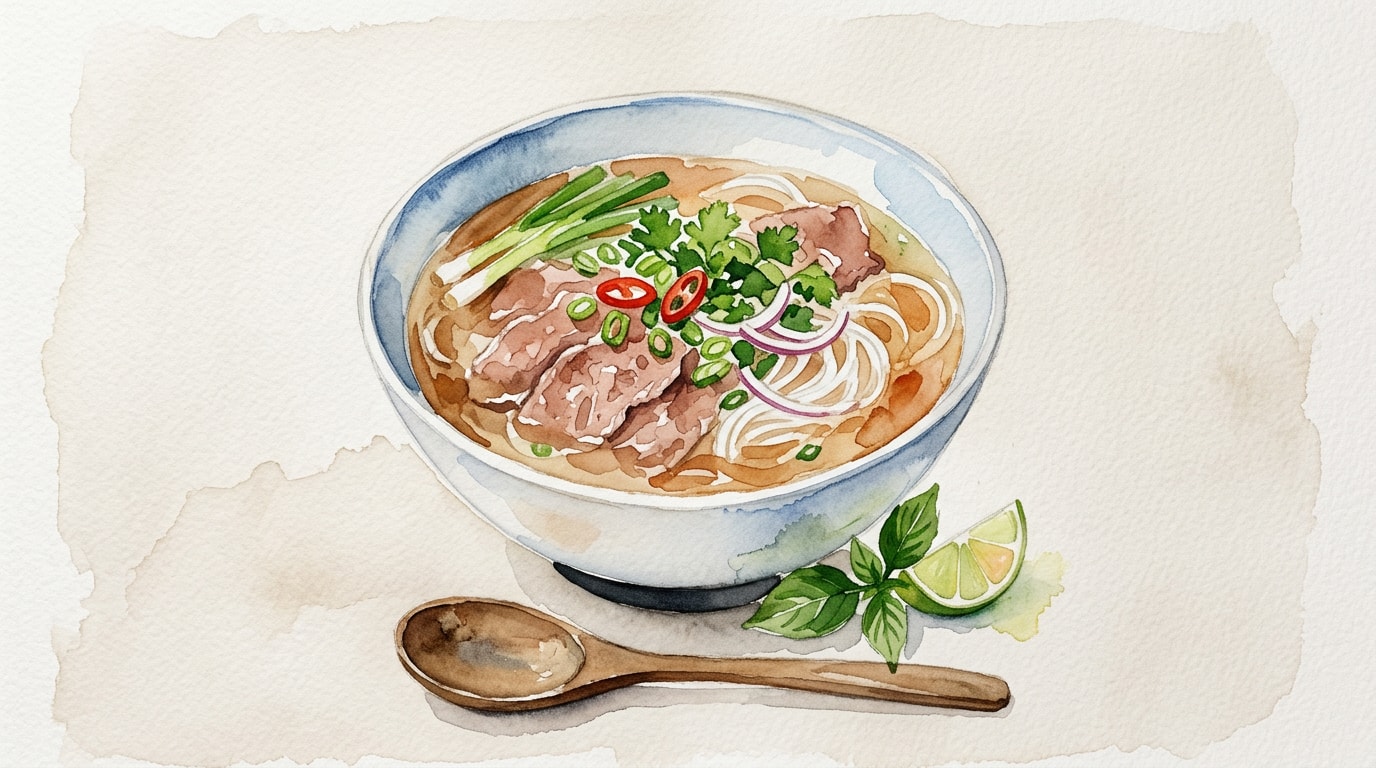
Arrange the sliced cooked brisket and raw thinly sliced sirloin over the noodles in each bowl, using clean separate tongs for the raw meat to prevent cross-contamination. Ensure the broth is at a rapid rolling boil at 100 degrees Celsius / 212 degrees Fahrenheit, then ladle it directly over the raw beef. The boiling broth will quickly bring the raw beef slices to a safe internal temperature of 74 degrees Celsius / 165 degrees Fahrenheit.
Serve the bowls immediately while steaming hot. Provide plates of bean sprouts, fresh Thai basil, cilantro, lime wedges, and sliced chilies on the side for each person to garnish their bowl as desired.
Chef's Notes
- For the most fragrant broth, do not skip charring the aromatics. The caramelization of the onion and ginger is crucial for the authentic deep flavor profile of traditional pho.
- Freezing the raw sirloin for 20 minutes before slicing will firm up the meat, allowing you to easily cut paper-thin slices that will cook instantly and remain tender in the hot broth.
- To ensure a crystal clear broth, never let it reach a rolling boil after the initial parboiling stage. A gentle, lazy simmer prevents fat and impurities from emulsifying into the cooking liquid.
- Quality fish sauce makes a significant difference. Add it towards the end of the cooking process rather than the beginning to prevent the broth from becoming overly sour or pungent as it reduces.
Storage
Refrigerator: 4 days — Store broth and meat separately from noodles and fresh herbs.
Freezer: 3 months — Freeze broth and cooked brisket only. Do not freeze noodles or raw herbs.
Reheating: Reheat broth to a rolling boil before pouring over freshly prepared noodles and herbs.