Equipment
Ingredients
Sri Lankan Curry Powder
- 15 g coriander seeds
- 10 g cumin seeds
- 5 g fennel seeds
- 2 g cinnamon stick
- 2 g cardamom pods
- 1 g cloves
- 1 g curry leaves, fresh or dried
Okra and Potato Curry
- 30 ml coconut oil
- 300 g okra, sliced into 3cm pieces
- 400 g new potatoes, halved
- 100 g red onion, finely diced
- 15 g garlic, minced
- 10 g ginger, minced
- 10 g green chilies, slit lengthwise
- 2 g curry leaves, fresh preferred
- 5 g pandan leaf, cut into 5cm pieces
- 3 g mustard seeds
- 2 g fenugreek seeds
- 3 g turmeric powder
- 400 ml coconut milk, full fat
- 100 ml water
- 15 g tamarind paste
- salt
Katta Sambol
- 100 g red onion, roughly chopped
- 15 g chili flakes
- 10 g maldive fish flakes
- 15 ml lime juice
- 3 g salt
Nutrition (per serving)
Method
Place the coriander, cumin, fennel, cinnamon, cardamom, and cloves in a dry frying pan. Toast over medium heat around 160C/320F until highly fragrant.
Transfer the toasted spices and 1g of curry leaves to a spice grinder. Grind completely into a fine powder.
Heat 15ml of coconut oil in the frying pan over medium-high heat. Add the okra pieces and saute until slightly blistered and the mucilage is heavily reduced. Remove from heat and set aside.
In a large saucepan, heat the remaining 15ml of coconut oil. Add the mustard seeds, fenugreek seeds, remaining curry leaves, and pandan leaf. Fry until the mustard seeds begin to pop.
Add the diced red onion, garlic, ginger, and green chilies to the saucepan. Cook until the onion is translucent and soft.
Stir in the freshly ground curry powder and turmeric powder, cooking for one minute to bloom the spices in the oil.
Add the halved new potatoes, water, and 200ml of the coconut milk. Bring to a gentle boil, then lower the heat to 90C/195F, cover the saucepan, and simmer until the potatoes are nearly tender.
Stir in the sauteed okra, the remaining 200ml of coconut milk, and the tamarind paste. Simmer uncovered at 90C/195F until the okra is fully tender and the gravy has slightly thickened. Season with salt to taste.
To make the katta sambol, place the roughly chopped red onion, chili flakes, Maldive fish flakes, and salt into a mortar and pestle. Pound vigorously until the mixture forms a coarse, slightly sticky paste.
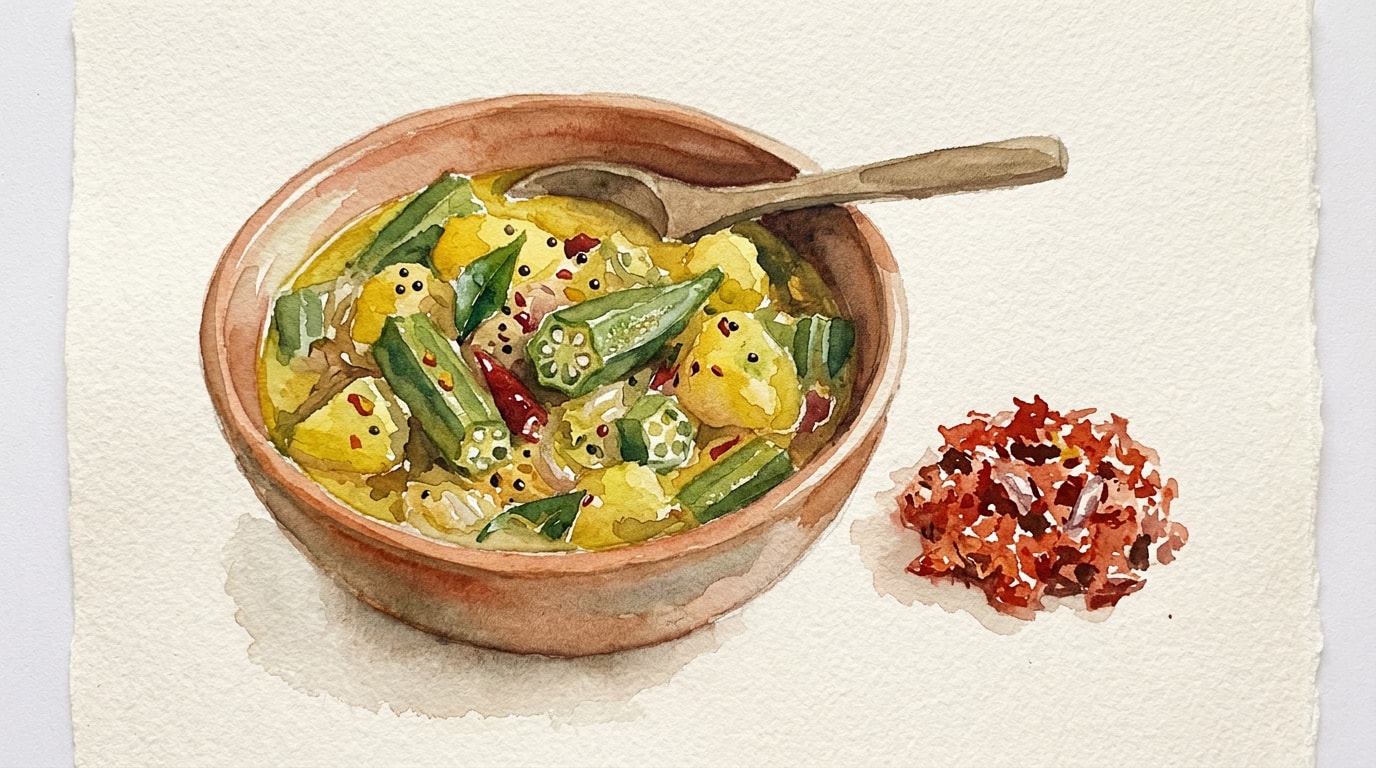
Transfer the pounded sambol to a small bowl and stir in the lime juice. Serve the warm potato and okra curry accompanied by the fresh katta sambol.
Chef's Notes
- Maldive fish is cured, dried tuna that provides an essential umami backbone to authentic Sri Lankan flavor. For a vegan alternative, use a combination of crushed toasted nori and a drop of soy sauce.
- Sri Lankan vegetable curries typically use unroasted curry powder to preserve the bright, floral notes of the spices. This distinguishes them from the dark, heavily roasted curry powders traditionally reserved for heavy meats.
- Frying the okra over high heat before adding it to the wet curry fundamentally changes its texture, drastically reducing the mucilage that puts many people off this otherwise wonderful vegetable.
- The acidity in the tamarind not only balances the rich coconut milk but also helps keep the potatoes firm while they absorb the spices.
Storage
Refrigerator: 3 days — Store the curry and sambol in separate airtight containers. The sambol is best consumed within 24 hours for optimal freshness.
Freezer: 1 month — Freeze the curry only. Potatoes may change texture slightly upon thawing. Do not freeze the sambol.
Reheating: Reheat the curry gently on the stovetop over low heat, stirring minimally to prevent the okra from breaking down.