Equipment
* optional
Ingredients
Aromatics & Base
- 15 ml sesame oil, toasted
- 30 g scallions, thinly sliced, white and green parts separated
- 15 g garlic, finely minced
- 15 g gochugaru (korean chili flakes), adjust quantity to taste for desired spice level
Broth & Vegetables
- 150 g vegetarian kimchi, well-fermented (sour), roughly chopped
- 400 ml vegetable broth, low sodium preferred
- 15 ml soy sauce
- 50 g shiitake mushrooms, stems removed, thinly sliced
- 50 g enoki mushrooms, root ends trimmed, gently separated
Protein & Garnish
- 400 g silken tofu (soondubu), drained, usually sold in tubes or water-filled tubs
- 1 egg, raw
Nutrition (per serving)
Method
Prepare all vegetables. Thinly slice the scallions, keeping the thicker white bottoms separate from the delicate green tops. Mince the garlic, slice the shiitake caps, and tear the enoki mushrooms into small bundles.
Place your ttukbaegi or small pot over medium heat. Add the toasted sesame oil, scallion whites, and minced garlic. Sauté gently until fragrant, then add the gochugaru. Stir continuously for about 1 minute until a bright red, fragrant chili oil forms. Keep the heat moderate so the chili flakes do not burn.
Add the chopped vegetarian kimchi to the chili oil. Sauté until the kimchi softens slightly and its moisture begins to evaporate, intensifying the sour and savory flavors.
Pour in the vegetable broth and soy sauce. Increase the heat to medium-high and bring the liquid to a rolling boil (100 degrees C / 212 degrees F).
Add the sliced shiitake mushrooms to the boiling broth. Carefully slide the silken tofu into the pot. Use a spoon to gently break the tofu into large, rustic chunks directly in the liquid. Do not over-stir. Reduce the heat to medium and simmer until the mushrooms are tender and the tofu is heated completely through.
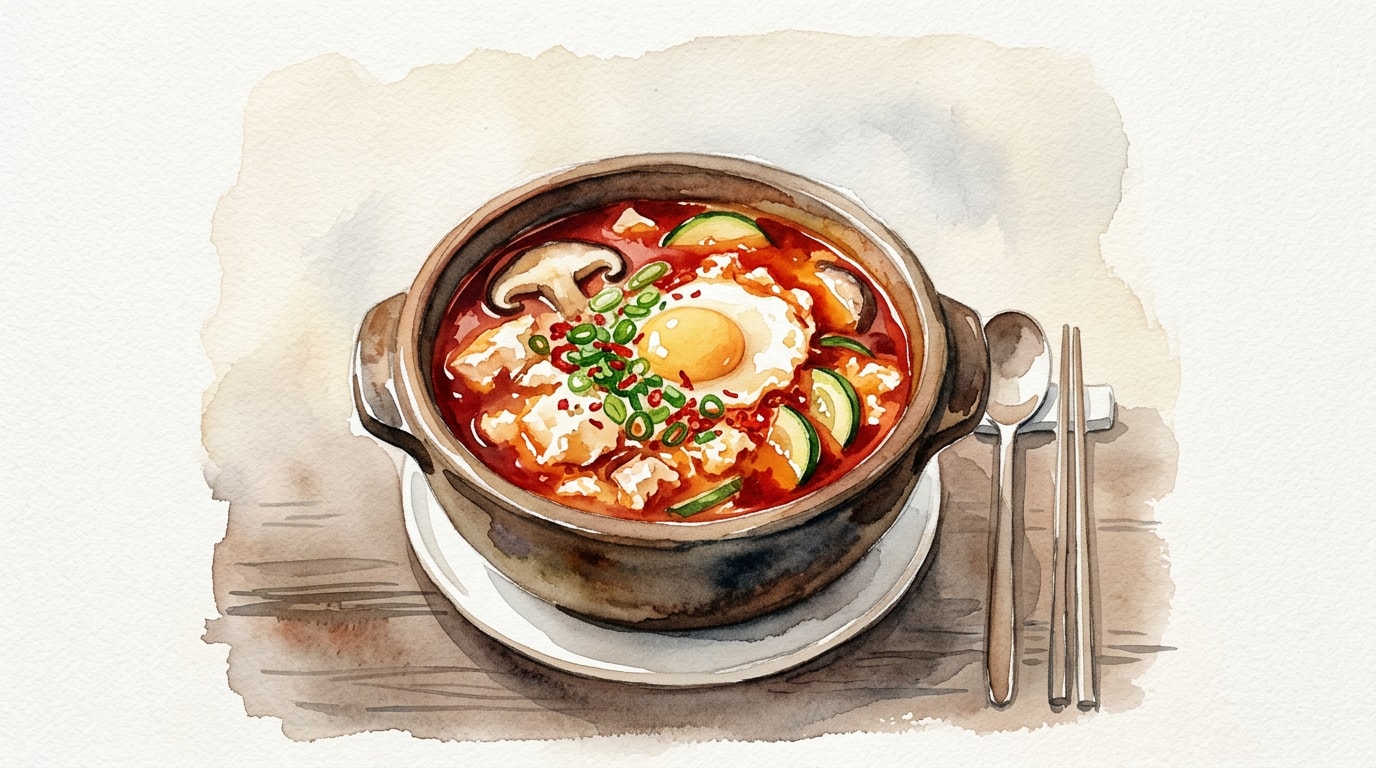
Top the stew with the separated enoki mushrooms. While the stew is still furiously bubbling, remove it from the heat. Crack the raw egg directly into the center of the molten liquid and scatter the reserved scallion greens over the top. Serve immediately with steamed short-grain rice.
Chef's Notes
- Traditional Korean cuisine relies heavily on anchovy-kelp broth and shrimp-paste kimchi for Soondubu Jjigae. To achieve deep vegetarian umami without seafood, highly fermented (sour) vegetarian kimchi and high-quality shiitake mushrooms are non-negotiable.
- The type of tofu matters immensely. Look for extra-soft silken tofu, often labeled 'Soondubu' and sold in plastic tubes. Regular soft tofu sold in square blocks contains less water and will yield a slightly denser result.
- A ttukbaegi (earthenware pot) is highly recommended because it retains heat so well that the stew continues to boil long after it leaves the stove, allowing the raw egg garnish to cook properly at the table.
- For those sensitive to spice, do not simply reduce the gochugaru, as it provides essential flavor and color. Instead, use a milder brand of gochugaru, or substitute half the amount with sweet paprika.
Storage
Refrigerator: 3 days — Store in an airtight container. The kimchi flavor will deepen over time.
Reheating: Reheat gently on the stovetop over medium-low heat until bubbling. Do not stir vigorously or the tofu will disintegrate.