Equipment
Ingredients
Pasta and Produce
- 400 g spaghetti
- 150 g baby spinach, washed and dried
Sauce Base
- 60 g unsalted butter, cut into cubes
- 2 eggs
- 2 egg yolks
Cheese and Seasoning
- 60 g parmesan cheese, finely grated
- 40 g smoked gouda cheese, finely grated
- 4 g black pepper, freshly cracked
- 15 g kosher salt
Nutrition (per serving)
Method
In a mixing bowl, combine the whole eggs, egg yolks, finely grated parmesan, grated smoked gouda, and freshly cracked black pepper. Whisk vigorously until the mixture forms a thick, cohesive paste.
Bring a large pot of water to a rolling boil. Add the kosher salt, then add the spaghetti. Cook until al dente, stirring occasionally to prevent sticking.
About 3 minutes before the pasta is done, melt the unsalted butter in a large skillet over medium heat. Add the baby spinach and toss gently with tongs just until wilted. Turn off the heat under the skillet.
Reserve at least 250ml of the starchy pasta cooking water. Using tongs, transfer the cooked spaghetti directly from the pot into the large skillet with the spinach and butter. Toss well to coat the pasta in the fat.
Ensure the skillet is completely off the heat. Pour the egg and cheese mixture over the pasta. Add 60ml of the reserved hot pasta water. Toss rapidly and continuously with tongs to emulsify the fat, cheese, and starchy water into a creamy sauce. The residual heat will gently cook the eggs to a safe internal temperature of 71 degrees Celsius or 160 degrees Fahrenheit without scrambling them. Add more pasta water 15ml at a time if the sauce is too thick.
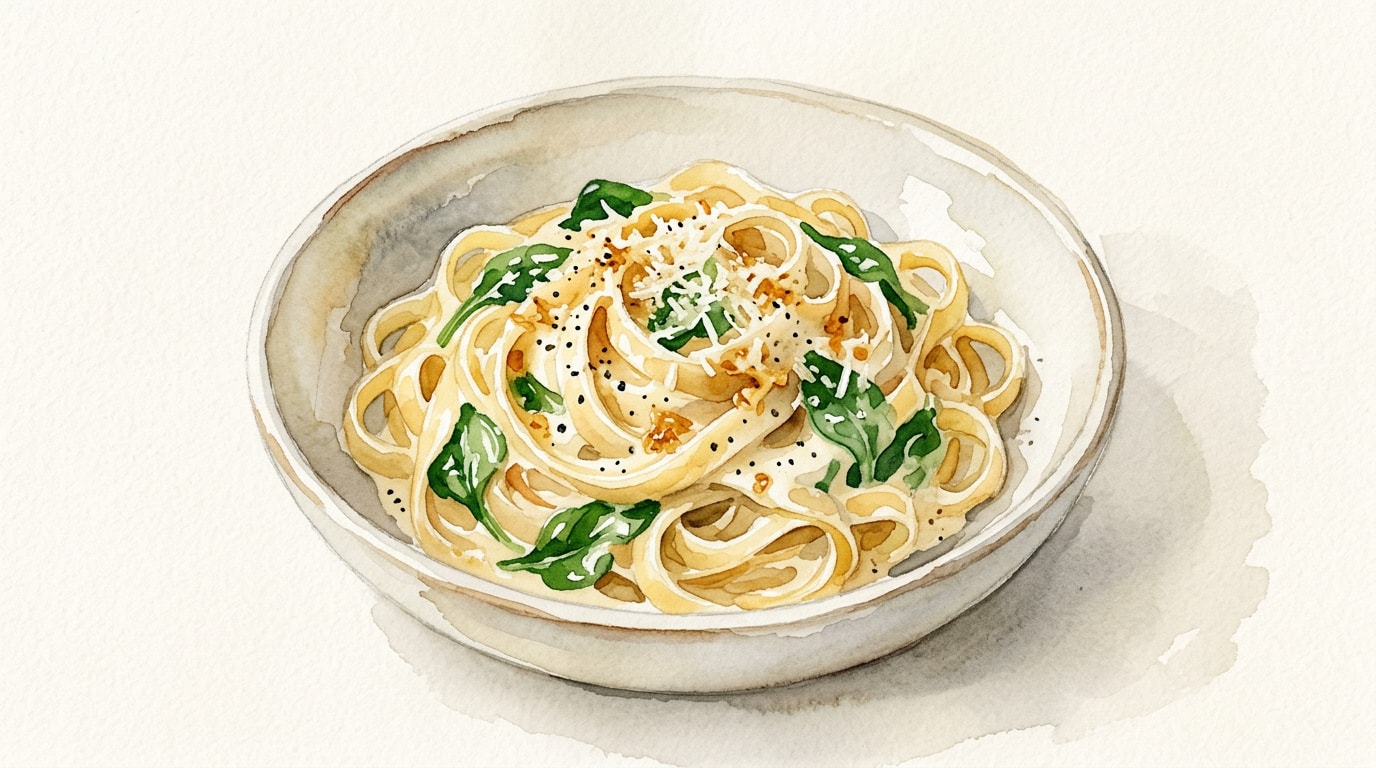
Divide the pasta immediately among warm bowls. Garnish with a small extra sprinkle of smoked cheese and additional black pepper if desired. Serve immediately.
Chef's Notes
- Safety note: This traditional preparation relies on residual heat to cook the eggs. For pregnant women, young children, or immunocompromised individuals, strongly consider using pasteurized in-shell eggs to eliminate the risk of foodborne illness.
- The secret to a successful carbonara emulsion is the starchy pasta water. Do not rinse your pasta, and use a minimal amount of boiling water in the pot to maximize the starch concentration.
- Grating your own cheese from a block rather than using pre-bagged shredded cheese is critical. Pre-shredded cheeses are coated in anti-caking agents that will cause your sauce to break and turn grainy.
- Smoked Gouda melts beautifully but has a softer texture than traditional hard cheeses. The combination of the firm Parmesan and the softer smoked cheese requires rapid tossing to blend perfectly with the egg yolks.
Storage
Refrigerator: 2 days — Sauce will separate upon cooling. Reheat gently over a double boiler with a splash of water.
Reheating: Gently warm in a skillet over low heat, adding 1 to 2 tablespoons of water and stirring continuously to restore the emulsion.