Equipment
Ingredients
Kombu Dashi (Vegetarian Broth)
- 600 ml water, cold
- 5 g dried kombu, wiped clean with a damp cloth
Soup Elements
- 3 g dried wakame seaweed
- 150 g silken tofu, cut into 1cm cubes
- 45 g white miso paste
- 2 spring onions, thinly sliced
Nutrition (per serving)
Method
Place the cold water and dried kombu in a medium saucepan. Let it sit at room temperature for 15 minutes to gently extract the natural umami flavors.
While the broth steeps, place the dried wakame seaweed in a small bowl of water to rehydrate for 5 minutes, then drain completely.
Place the saucepan with the kombu over medium heat. Just before the water reaches a boil, at approximately 90°C/195°F, remove and discard the kombu to prevent the broth from becoming bitter and slimy.
Add the cubed silken tofu and the drained, rehydrated wakame to the hot dashi. Simmer gently for 2 minutes to warm the ingredients through.
Turn off the heat completely. Lower a fine mesh strainer slightly into the hot broth, add the miso paste into the strainer, and use a spoon or chopsticks to dissolve it seamlessly into the soup.
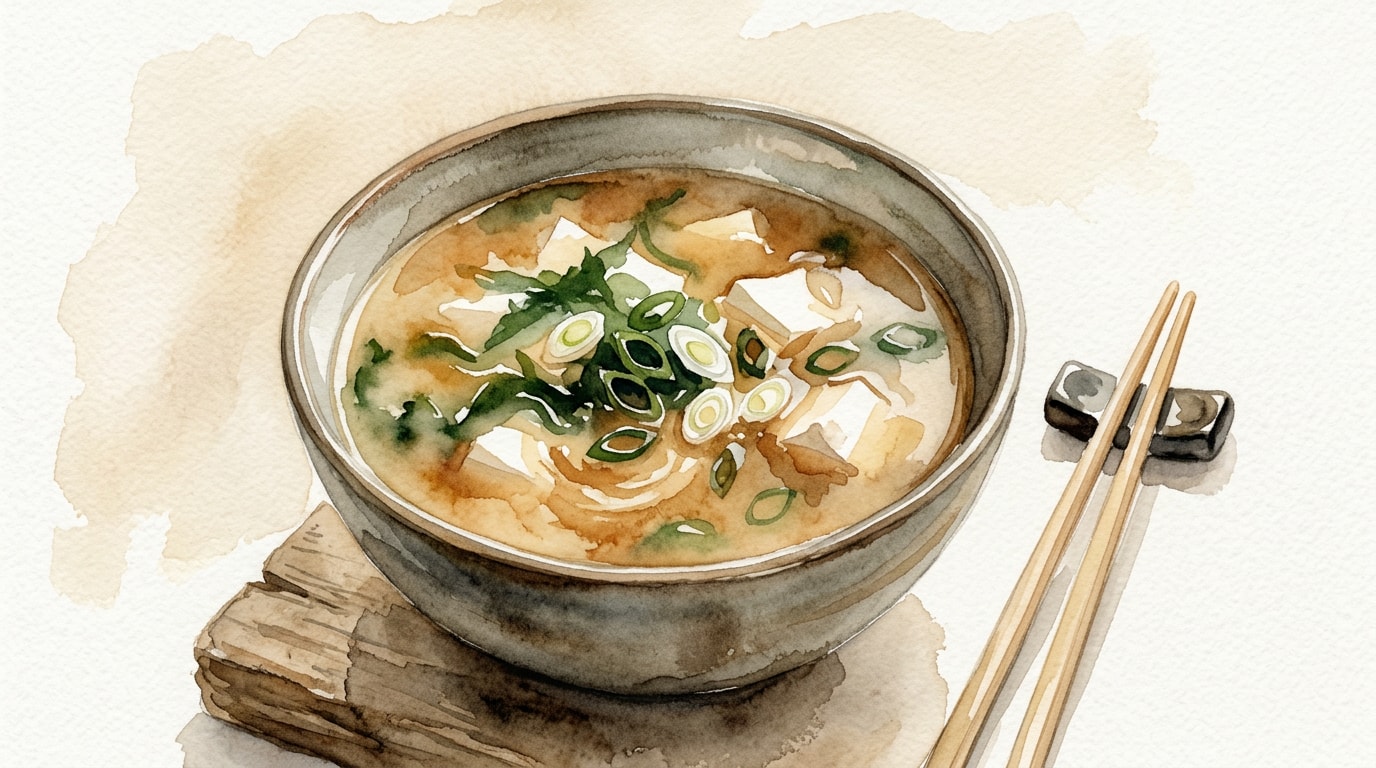
Ladle the hot soup carefully into serving bowls, taking care not to break the delicate tofu cubes. Garnish with thinly sliced spring onions and serve immediately.
Chef's Notes
- Never boil the soup once the miso paste has been added. High heat destroys the delicate aromas, subtle flavors, and beneficial enzymes of the fermented paste.
- Using a dedicated miso muddler or a small fine-mesh strainer ensures the thick paste dissolves completely into the broth without leaving unpleasant, salty lumps at the bottom of the bowl.
- While white (shiro) miso yields a sweeter, lighter soup, you can create a more complex, robust flavor profile by mixing white miso with a darker red (aka) miso, a technique known as an awase blend.
- Silken tofu is traditional and provides a luxurious, melt-in-the-mouth texture, but it is extremely fragile. Stir the soup with a very gentle hand once the tofu is added.
Storage
Refrigerator: 2 days — Store broth separately from tofu and wakame if possible, as wakame becomes overly soft and slimy over time.
Reheating: Reheat gently on the stove over medium-low heat until just steaming. Do not let the soup boil, as it will ruin the miso flavor.