Equipment
Ingredients
Root Vegetables
- 300 g waxy potato, peeled and cut into 3cm chunks
- 300 g sweet potato, peeled and cut into 3cm chunks
- 150 g carrot, peeled and cut into 3cm chunks
Aromatics
- 45 ml toasted sesame oil
- 30 g fresh ginger, unpeeled, sliced into thin coins
- 8 garlic, peeled, whole cloves
- 4 chiles de arbol, whole, dried
Three-Cup Sauce
- 60 ml rice wine
- 45 ml light soy sauce
- 15 ml dark soy sauce
- 15 g brown sugar
Finishing
- 30 g fresh thai basil, leaves only, stems removed
Nutrition (per serving)
Method
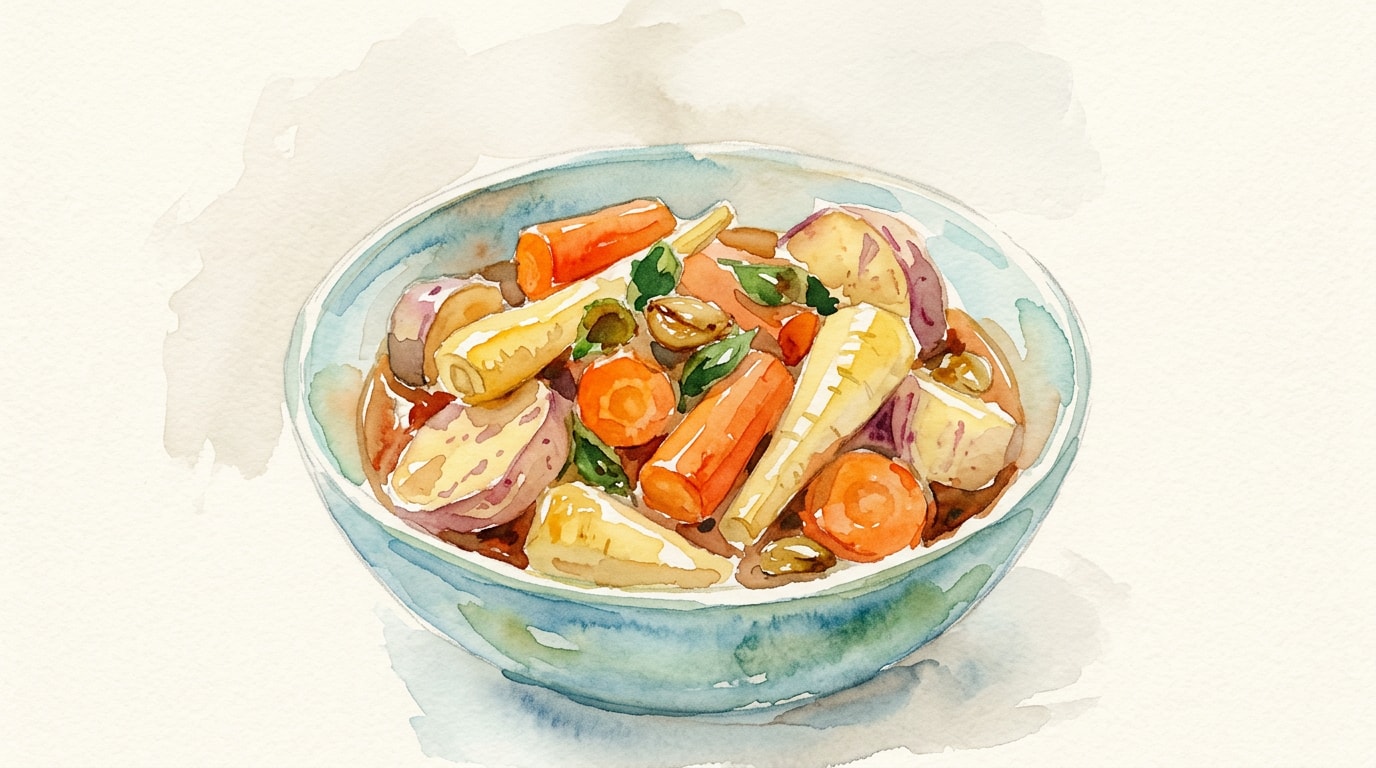
Peel the potato, sweet potato, and carrot. Chop them uniformly into chunks about 3 centimeters thick to ensure even cooking.
Heat 30ml of the toasted sesame oil in a wok or large pan over medium-high heat (about 190C/375F). Add the ginger coins and fry them until the edges wrinkle and crisp up slightly.
Add the whole peeled garlic cloves and dried chiles de arbol to the wok. Toss continuously until the garlic is golden and intensely fragrant.
Introduce the chopped root vegetables to the wok. Sear them with the aromatics, tossing occasionally, until the edges of the potatoes begin to turn golden.
Pour in the rice wine, light soy sauce, dark soy sauce, and brown sugar. Bring the liquid to a rapid boil, then immediately reduce the heat to low. Cover the wok with a lid and let it gently simmer until the vegetables are tender.
Remove the lid and increase the heat back to medium-high. Allow the remaining liquid to reduce into a thick, syrupy glaze that thoroughly coats the vegetables. Drizzle in the remaining 15ml of toasted sesame oil for a glossy finish.
Turn off the heat entirely. Immediately drop in the fresh Thai basil leaves and fold them gently through the hot vegetables just until the leaves wilt from the residual heat. Serve immediately.
Chef's Notes
- Frying the ginger in sesame oil is a foundational technique in Taiwanese cooking. Letting the ginger crisp before adding other ingredients unlocks its fat-soluble flavor compounds and infuses the entire dish.
- Dark soy sauce is used primarily for its rich mahogany color and slight molasses sweetness rather than saltiness. Without it, the dish will lack its signature dark, appetizing gloss.
- Taiwanese rice wine (Michiu) is traditional, but Shaoxing wine or dry sherry works well as a substitute. The alcohol evaporates during braising, leaving a deep, savory foundation.
- Adding half the sesame oil at the beginning is for flavor extraction, while saving the remaining half to stir in right at the end preserves its volatile aromatic compounds for maximum fragrance.
Storage
Refrigerator: 4 days — Store in an airtight container. Basil will darken but retain flavor.
Freezer: 1 month — Potatoes may change texture slightly and become softer upon freezing.
Reheating: Reheat gently in a pan with a splash of water over low heat until warmed through.