Equipment
Ingredients
Vegetable & Protein Base
- 300 g firm tofu, pressed and crumbled into small pieces
- 300 g eggplant, diced into 5mm cubes
- 100 g fresh shiitake mushrooms, stems removed, caps finely diced
Aromatics
- 15 g garlic, finely minced
- 10 g ginger, finely minced
- 30 g scallions, white and green parts separated, thinly sliced
- 45 ml neutral cooking oil
Zha Jiang Sauce
- 60 g sweet bean sauce (tianmianjiang)
- 30 g ground bean sauce
- 15 ml light soy sauce
- 10 ml dark soy sauce
- 10 g sugar
- 150 ml water
Noodles & Garnish
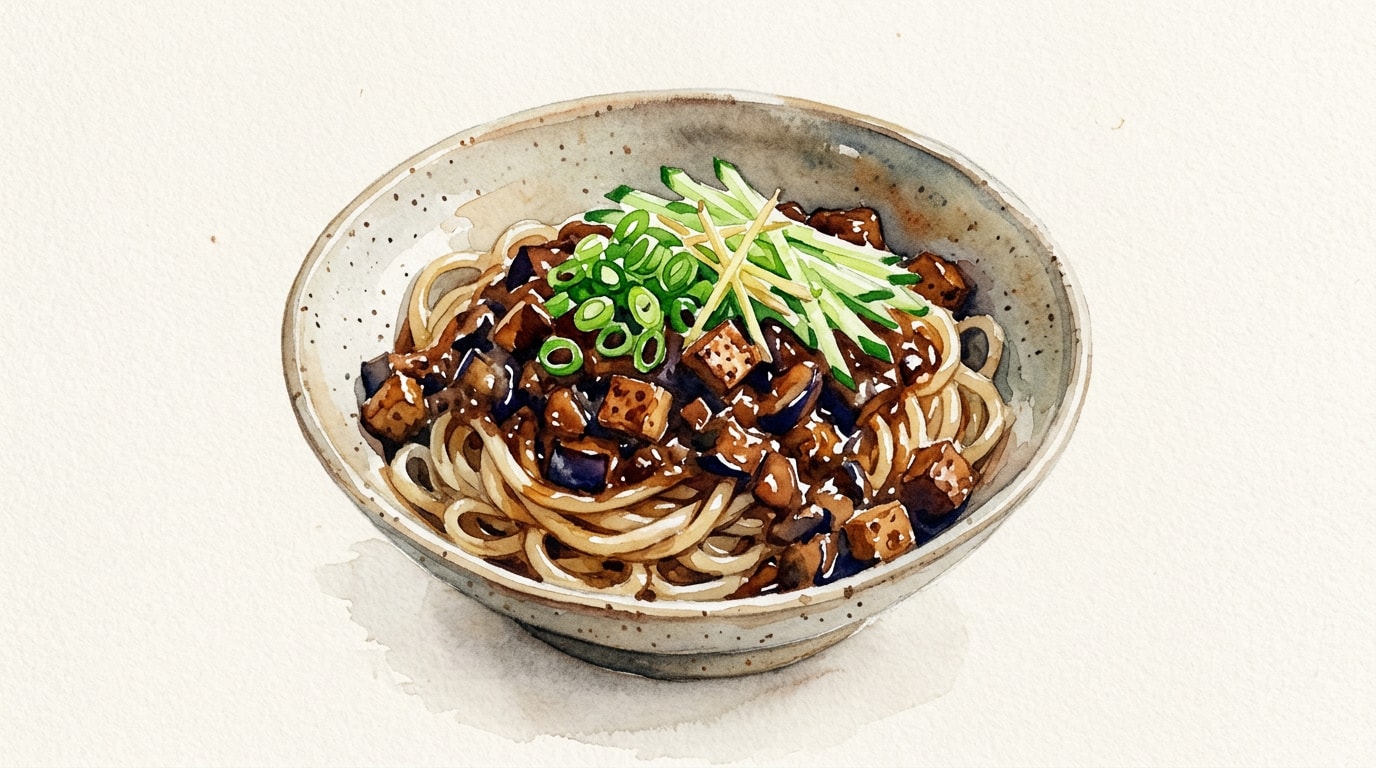
- 800 g fresh udon noodles
- 100 g cucumber, julienned into fine matchsticks
Nutrition (per serving)
Method
Using a chef's knife, prepare all vegetables. Dice the eggplant and shiitake mushrooms into uniform 5 millimeter cubes. Mince the garlic and ginger, and slice the scallions, keeping the white and green parts separate.
In a small mixing bowl, combine the sweet bean sauce, ground bean sauce, light soy sauce, dark soy sauce, sugar, and water. Stir thoroughly until a smooth, well-integrated liquid slurry forms.
Heat the neutral oil in a wok over medium-high heat. Add the crumbled tofu and pan-fry until the moisture evaporates and the edges turn lightly golden and firm.
Add the minced garlic, ginger, and scallion whites to the wok with the tofu. Sauté briefly until highly fragrant, then fold in the diced eggplant and shiitake mushrooms. Continue to cook until the eggplant softens and noticeably reduces in volume.
Pour the mixed sauce slurry into the wok. Stir continuously, allowing the fermented pastes to fry in the residual oil. This step is crucial for mellowing the raw, earthy flavor of the bean pastes.
Lower the heat to a gentle bubble. Simmer the mixture until the liquid reduces into a thick, deeply glossy sauce that clings heavily to the vegetables. The oil should begin to separate slightly from the sauce around the edges.
While the sauce simmers, bring a large pot of water to a rolling boil (100°C/212°F). Cook the udon noodles according to package instructions until tender but maintaining a chewy bite. Drain thoroughly.
Divide the hot, drained udon noodles among serving bowls. Spoon a generous ladle of the hot eggplant and tofu sauce directly into the center of each bowl. Garnish with a small handful of julienned cucumber and the reserved green scallion slices. Serve immediately to be tossed vigorously by the diner.
Chef's Notes
- Frying the sauce (the zha in zha jiang) is the most critical technique here. You are looking for the oil to separate slightly from the bean paste at the end of cooking, an indicator that the raw, fermented flavor of the beans has been cooked out and transformed into rich umami.
- While udon noodles are traditionally Japanese, their thick, slick, and chewy texture makes them an incredibly convenient and excellent substitute for hand-pulled or thick-cut northern Chinese wheat noodles.
- Salting the diced eggplant for 15 minutes and gently patting it dry before cooking can prevent it from acting like a sponge and absorbing too much oil, yielding a lighter final sauce.
- If you want to add a layer of texture, toss in a small handful of blanched edamame or roasted peanuts as a garnish just before serving.
Storage
Refrigerator: 4 days — Store the cooked sauce separately from the noodles to prevent them from becoming soggy.
Freezer: 1 month — The sauce freezes excellently. Thaw overnight before reheating.
Reheating: Warm the sauce gently in a pan over low heat until bubbling, then spoon over freshly boiled noodles.