Equipment
Ingredients
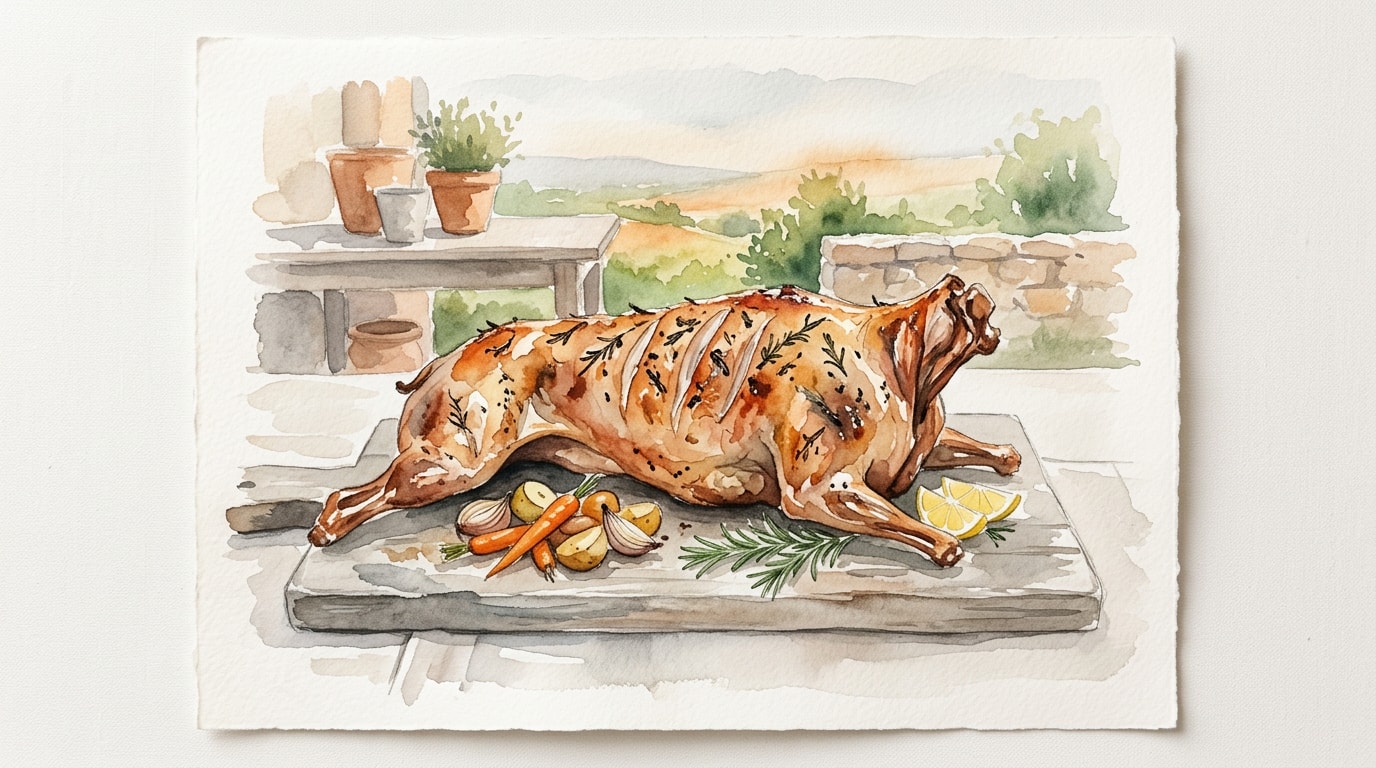
The Lamb
- 14000 g whole spring lamb, dressed, head and trotters removed
Dry Cure & Studding
- 20 garlic, peeled and halved
- 15 fresh rosemary, broken into small sprigs
- 150 g coarse sea salt
- 30 g black pepper, freshly ground
Vinegar Baste
- 500 ml red wine vinegar
- 500 ml extra virgin olive oil
- 50 g garlic, minced
- 20 g fresh rosemary, finely chopped
- 100 ml lemon juice, freshly squeezed
Nutrition (per serving)
Method
Using a sharp knife, make deep incisions all over the lamb, particularly in the thicker muscles of the legs and shoulders. Insert a half-clove of garlic and a small sprig of rosemary into each incision.
Rub the lamb generously inside and out with coarse sea salt and black pepper. Wrap securely and refrigerate or keep in a very cold, sanitized environment for 12 hours. Ensure all surfaces that come into contact with the raw meat are thoroughly sanitized afterward.
Thread the rotisserie spit firmly through the cavity of the lamb. Secure the spine, legs, and shoulders tightly to the spit using heavy-duty stainless steel wire and rotisserie prongs to prevent shifting during rotation.
In a mixing bowl, whisk together the red wine vinegar, extra virgin olive oil, minced garlic, finely chopped rosemary, and lemon juice to create the baste. Set aside.
Prepare a hardwood or charcoal fire. Allow the fuel to burn down to glowing coals. Rake the coals into two parallel banks that will sit directly beneath the legs and shoulders, leaving the center relatively clear to avoid burning the thin rib section.
Mount the spit onto the motorized roaster approximately 50 centimeters above the coals and begin rotation. Roast for 4 to 5 hours, using a long-handled basting brush to generously apply the vinegar mixture every 30 minutes.
Verify the internal temperature in the thickest part of the leg and shoulder using an instant-read meat thermometer, taking care not to touch the bone. Continue cooking until the temperature reaches 65°C/150°F for a medium finish.
Carefully remove the spit from the heat source. Transfer the lamb to a large carving board, tent loosely with aluminum foil, and let it rest for 30 minutes before carving.
Chef's Notes
- Trussing is the most critical mechanical step. A loose lamb will cook unevenly and the rotating motion will eventually tear the meat. Take extra time to secure the spine and the thickest parts of the legs.
- Fire management dictates success. Concentrate your coals at the two ends under the shoulders and the hind legs. The thin ribs in the middle require very little direct heat and will cook perfectly via ambient temperature.
- The red wine vinegar baste serves a dual purpose: its acidity tenderizes the outer crust and perfectly cuts through the rich, fatty flavor profile inherent to lamb.
- Resist the urge to pierce the meat with a thermometer too early or too frequently. Every puncture allows precious juices to escape into the fire.
Storage
Refrigerator: 4 days — Store carved meat in an airtight container with any resting juices.
Freezer: 3 months — Freeze in vacuum-sealed bags to prevent freezer burn.
Reheating: Reheat gently in a covered pan with a splash of lamb stock or water over medium-low heat to prevent drying out.