Equipment
* optional
Ingredients
Achiote Oil (Aceite de Achiote)
- 350 ml vegetable oil
- 50 g annatto seeds
Pork Filling (Pino)
- 1500 g boneless pork shoulder, diced into small cubes
- 120 g puerto rican sofrito
- 225 g tomato sauce
- 100 g manzanilla olives, pitted and halved
- 30 g capers, drained
- 5 g dried oregano
- 15 g salt
- 250 ml water
Masa
- 1500 g green bananas, peeled
- 600 g green plantains, peeled
- 500 g yautia, peeled
- 250 g calabaza squash, peeled and seeded
- 20 g salt
Assembly Materials
- 24 banana leaves, cleaned and cut into rectangles
- 24 parchment paper squares
- 24 butcher twine
Nutrition (per serving)
Method
Combine the vegetable oil and annatto seeds in a saucepan over medium-low heat. Simmer gently for 10 minutes until the oil turns deep red. Do not let it reach a hard boil to prevent bitterness. Remove from heat, let cool, and strain, discarding the seeds.
Dice the raw pork shoulder into small cubes. Wash your hands, cutting board, and chef knife thoroughly with hot soapy water immediately after handling the raw meat to prevent cross-contamination.
In a large pot over medium heat, combine the diced pork, sofrito, tomato sauce, olives, capers, oregano, salt, and water. Simmer for 1 hour and 30 minutes until the pork reaches an internal temperature of at least 74°C/165°F and is deeply tender. Strain the meat mixture, reserving all the rich cooking liquid in a separate bowl.
Peel the green bananas, green plantains, yautia, and calabaza squash, discarding the skins.
Process all the peeled roots and squash through a food processor fitted with a grating attachment, then switch to a standard blade and process briefly until you achieve a smooth, homogeneous paste. Alternatively, use the fine side of a manual box grater.
In a large mixing bowl, combine the grated masa paste, 120ml of the strained achiote oil, 120ml of the reserved pork cooking liquid, and the salt. Mix thoroughly until the masa takes on an even, vibrant orange hue.
Wipe the banana leaves clean with a damp cloth. Pass each leaf quickly over an open gas flame or hot griddle until it slightly changes color, turns glossy, and becomes pliable.
Lay a square of parchment paper flat, place a prepared banana leaf on top, and brush the center with a small amount of achiote oil. Spread roughly 120g of masa into a thin rectangle, and place 50g of the strained pork filling directly in the center.
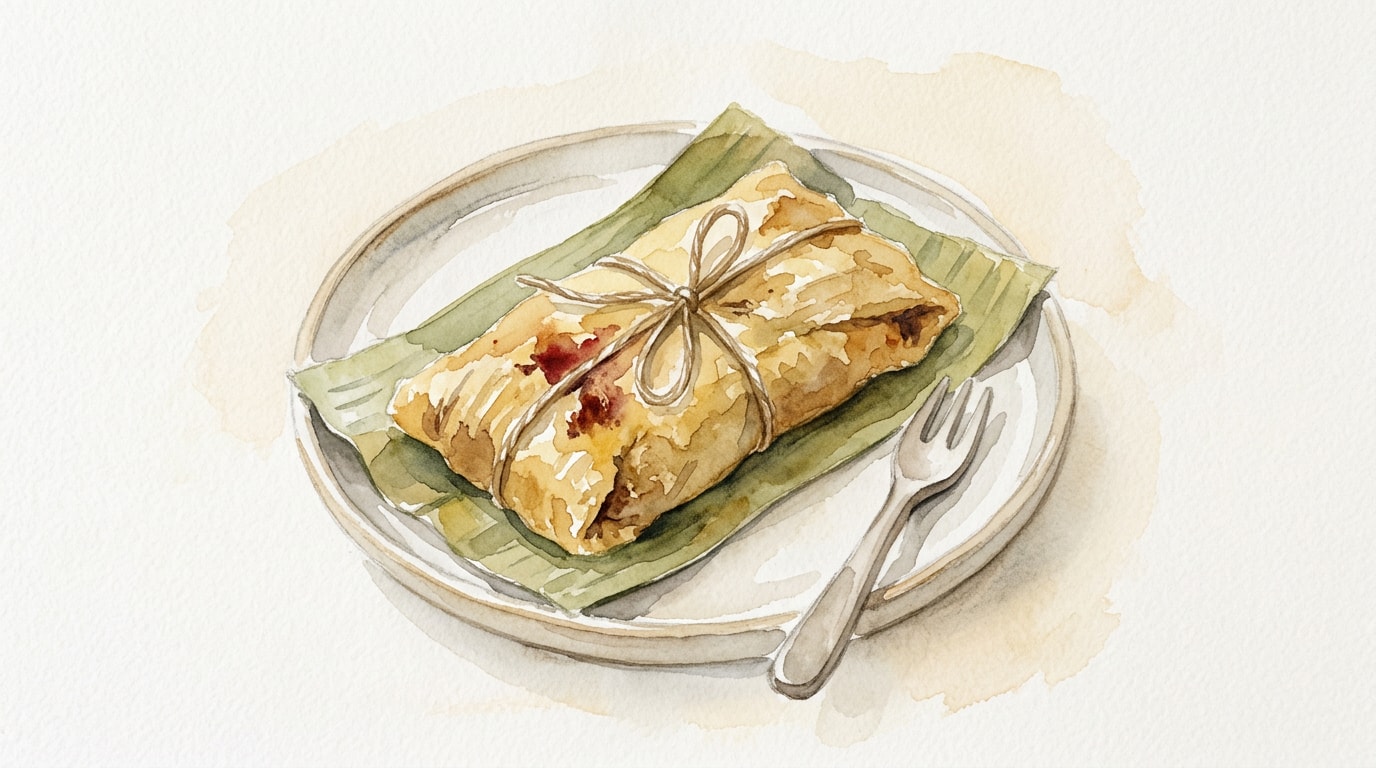
Fold the top and bottom edges of the banana leaf and parchment over the filling so they overlap, creating a tight rectangular packet. Fold the ends securely underneath. Tie firmly with butcher twine, crossing the string in the center like a traditional gift parcel.
Bring a large pot of heavily salted water to a rolling boil. Submerge the tied pasteles and boil covered for 1 hour at 100°C/212°F.
Carefully remove the pasteles from the boiling water using tongs. Let them drain and rest on a cooling rack or plate for 10 minutes to help the masa set before untying, unwrapping, and serving.
Chef's Notes
- Peeling green bananas can leave a notoriously sticky sap on your hands. Lightly oil your hands before peeling, or score the peels lengthwise and soak them in hot tap water for 10 minutes to loosen the skins and wash away the sap.
- Using parchment paper in addition to banana leaves is a widely adopted modern technique that acts as vital insurance against tearing, and helps shape the pasteles tightly during boiling.
- Pasteles freeze exceptionally well when raw. You can assemble a large batch and freeze them for up to 6 months. Boil directly from frozen, adding an extra 30 minutes to the cooking time.
- The color of your masa depends heavily on the achiote oil. Treat the infusion gently, ensuring it never exceeds a mild simmer to extract color without imparting any harsh bitterness to the final dish.
Storage
Refrigerator: 5 days — Keep tightly wrapped in their leaves and parchment.
Freezer: 6 months — Can be frozen raw or cooked. Freezing raw is preferred for best texture.
Reheating: Boil from frozen for 1 hour and 30 minutes, or microwave cooked pasteles wrapped in a damp paper towel for 3 to 4 minutes.