Equipment
Ingredients
Marinade & Seafood
- 500 g firm white fish fillets, cut into large chunks
- 300 g large shrimp, peeled and deveined
- 30 ml lime juice, freshly squeezed
- 3 garlic, minced
- 5 g fine sea salt
- 2 g black pepper, freshly ground
Stew Base
- 200 g yellow onion, sliced into thin rings
- 150 g red bell pepper, sliced into thin rings
- 150 g green bell pepper, sliced into thin rings
- 300 g roma tomatoes, sliced into thin rings
- 15 ml olive oil
- 400 ml coconut milk, full-fat, well shaken
- 30 ml dende oil, unrefined red palm oil
- 30 g fresh cilantro, roughly chopped
- 20 g scallions, thinly sliced
Nutrition (per serving)
Method
In a mixing bowl, combine the fish chunks, shrimp, lime juice, minced garlic, sea salt, and black pepper. Toss gently to coat, then cover and set aside at room temperature to marinate for 30 minutes.
Coat the bottom of a heavy-bottomed pot or Dutch oven with the olive oil. Arrange half of the sliced onions, red bell peppers, green bell peppers, and tomatoes in a single, overlapping layer.
Place the marinated fish and shrimp in an even layer directly on top of the vegetable bed. Pour any remaining marinade juices over the seafood. Cover with the remaining onions, bell peppers, and tomatoes.
Pour the well-shaken coconut milk evenly over the layered ingredients. Place the pot over medium heat and bring the liquid to a gentle simmer. Do not stir the pot, as this will break apart the delicate fish.
Once simmering, reduce the heat to medium-low, cover with a tight-fitting lid, and cook for 12 to 15 minutes. The fish should reach an internal temperature of 63 Celsius or 145 Fahrenheit, turning opaque and flaking easily.
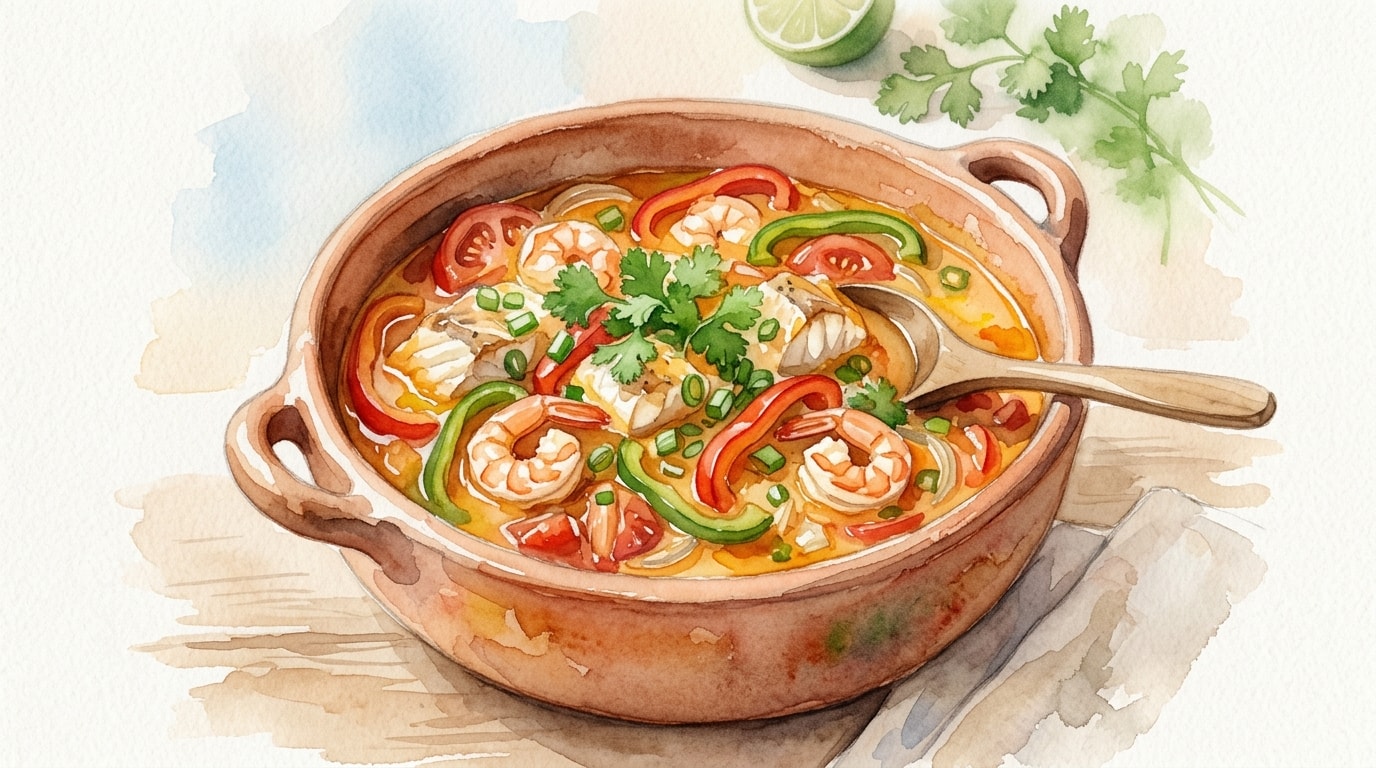
Remove the lid and drizzle the dende oil evenly over the top of the stew. Scatter half of the chopped cilantro and scallions into the pot. Let it simmer uncovered for 3 to 5 minutes so the oil incorporates, giving the broth a vibrant orange hue.
Remove the pot from the heat. Garnish the stew with the remaining fresh cilantro and scallions. Serve immediately right from the pot alongside steamed rice.
Chef's Notes
- Dende oil (red palm oil) is non-negotiable for an authentic Moqueca Baiana. It provides a distinct, earthy, slightly floral flavor and a striking sunset-orange color that cannot be perfectly replicated.
- Layering is a fundamental technique in making Moqueca. Stacking the ingredients and refusing to stir preserves the structural integrity of the fish, creating a beautiful, composed presentation.
- A traditional Moqueca is cooked and served in a 'panela de barro' (black clay pot) from Espirito Santo. The clay retains heat exceptionally well, meaning the stew will continue to bubble gently even after it is brought to the table.
- To elevate this dish, serve it with pirao, a thickened porridge made by ladling the hot moqueca broth over toasted cassava flour (farinha de mandioca) while whisking vigorously.
Storage
Refrigerator: 2 days — Seafood degrades rapidly; store in an airtight container and reheat gently to avoid overcooking.
Freezer: 1 month — Freezing may slightly alter the texture of the fish and break the coconut milk emulsion.
Reheating: Reheat very gently on the stovetop over low heat until just warmed through.