Equipment
Ingredients
Homemade Red Curry Paste
- 15 g dried spur chilies, seeds removed
- 5 g coarse sea salt
- 2 g white peppercorns
- 4 g coriander seeds
- 2 g cumin seeds
- 30 g lemongrass, bottom third only, thinly sliced
- 15 g galangal, peeled and finely chopped
- 2 g makrut lime zest
- 10 g cilantro roots, cleaned and chopped
- 20 g garlic, peeled
- 40 g shallots, peeled and chopped
- 10 g shrimp paste
The Curry
- 400 g beef flank steak, sliced against the grain, 3mm thick
- 400 ml full-fat coconut milk
- 150 g bamboo shoots, canned, sliced, rinsed and drained
- 100 g thai eggplant, cut into quarters
- 30 ml fish sauce
- 15 g palm sugar, finely chopped
- 20 g thai basil leaves
- 2 g makrut lime leaves, midrib removed, torn
- 20 g red spur chilies, sliced diagonally
Nutrition (per serving)
Method
Place the deseeded dried chilies in a bowl and cover with room temperature water. Soak for 15 minutes until softened, then drain well, squeezing out excess water.
In a dry small skillet over medium heat, toast the coriander seeds, cumin seeds, and white peppercorns until fragrant. Remove from heat immediately.
Transfer the toasted spices to the mortar and pestle. Pound until a fine powder forms, then remove and set aside.
Add the drained soaked chilies and coarse sea salt to the mortar. Pound into a fine, smooth paste. The salt acts as an abrasive to break down the chili skins.
Add the fibrous ingredients one by one, pounding completely before adding the next: lemongrass, galangal, makrut lime zest, and cilantro roots. Continue pounding until homogeneous.
Add the softer aromatics: garlic and shallots. Pound into the paste. Finally, incorporate the ground dry spices and the shrimp paste, mixing until fully integrated and uniformly red.
Spoon the thick cream from the top of the canned coconut milk (about 150ml) into a wok or heavy pan over medium-high heat. Cook until the liquid reduces and the coconut oil begins to separate and pool at the edges.
Add 3 to 4 tablespoons of the freshly pounded red curry paste to the cracked coconut oil. Fry the paste, stirring continuously, until deeply fragrant and the oil turns a brilliant red.
Add the thinly sliced beef to the wok, tossing it in the fried curry paste. Cook until the exterior is no longer pink but the interior remains undercooked. Ensure raw meat is handled safely.
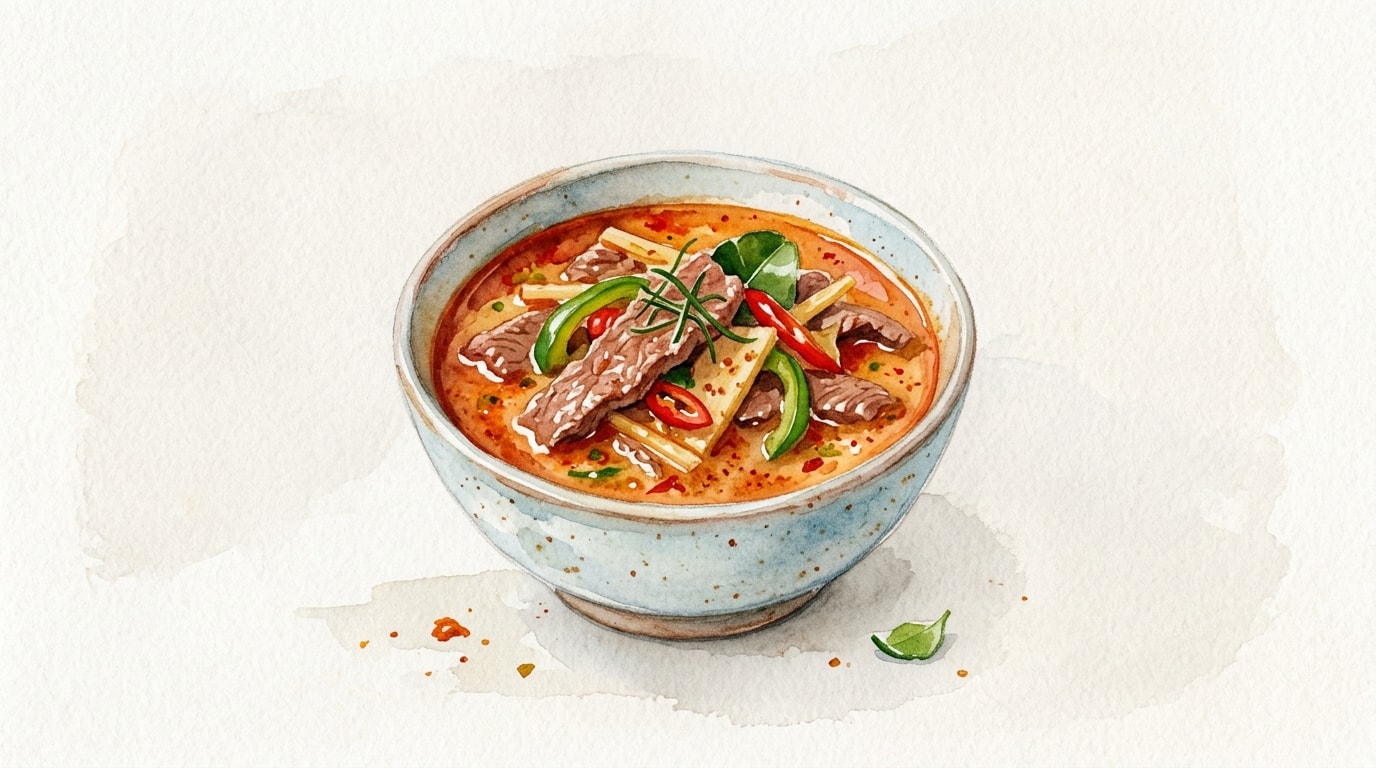
Pour in the remaining thinner coconut milk. Bring the curry to a gentle simmer. Add the quartered Thai eggplants and sliced bamboo shoots. Simmer until the eggplants are tender and the beef reaches an internal temperature of at least 63C/145F.
Stir in the fish sauce, palm sugar, and torn makrut lime leaves. Taste and adjust the seasoning. It should be an intense balance of salty, spicy, and slightly sweet. Remove from heat.
Fold in the fresh Thai basil leaves and sliced red spur chilies just before serving so they retain their bright color and aromatic qualities. Serve immediately with steamed jasmine rice.
Chef's Notes
- Cracking the coconut cream is the secret to an authentic Thai curry appearance. The floating red chili oil is entirely intentional and carries the fat-soluble flavor compounds of the aromatics.
- Do not substitute regular sweet basil for Thai basil. Thai basil (Horapa) contains distinct anise and licorice notes essential to the curry profile.
- Pounding a curry paste by hand rather than using a food processor crushes the plant cells, releasing essential oils that blade-chopping simply misses. The flavor difference is monumental.
- Makrut lime leaves should have their stiff central vein removed before tearing. Tearing the leaf rather than slicing it releases more aromatic oils into the sauce.
Storage
Refrigerator: 3 days — Flavors deepen overnight. Store fresh basil separately if possible to maintain vibrant color.
Freezer: 1 month — Texture of eggplant and bamboo shoots may soften significantly upon thawing. Beef remains tender.
Reheating: Reheat gently on the stovetop over medium-low heat until simmering. Avoid rapid boiling to prevent the coconut milk from splitting further.