Equipment
Ingredients
Meats
- 1000 g oxtail, cut into 2-inch cross sections
- 500 g beef shank, cut into large chunks
Aromatics and Base
- 30 ml vegetable oil
- 1 yellow onion, diced
- 4 garlic, minced
- 1500 ml beef broth, low sodium preferred
Color and Flavor
- 30 g annatto seeds
- 120 ml hot water
- 200 g unsweetened smooth peanut butter
- 60 g toasted rice flour
Vegetables
- 200 g eggplant, sliced on a bias
- 150 g string beans, cut into 3-inch lengths
- 150 g bok choy, ends trimmed, leaves separated
Accompaniment
- 100 g fermented shrimp paste, cooked bagoong alamang
Nutrition (per serving)
Method
Place the oxtail and beef shank in a Large Dutch oven and cover with cold water. Bring to a boil at 100C/212F for 10 minutes to draw out blood and impurities. Drain the water and rinse the meat thoroughly.
Return the rinsed meat to the cleaned Dutch oven. Pour in the beef broth and bring to a gentle simmer. Cover and cook over low heat for 2.5 to 3 hours until the meat is highly fork-tender and exceeds 74C/165F internal temperature. Once tender, remove the meat and reserve the remaining broth, skimming off excess fat.
While the meat braises, combine the annatto seeds and hot water in a mixing bowl. Let steep for 15 minutes, then pass the liquid through a fine mesh strainer into another bowl. Discard the spent seeds and reserve the vivid red annatto water.
In a heavy-bottomed Dutch oven, heat the vegetable oil over medium heat. Add the diced onion and minced garlic, sauteing until fragrant and translucent.
Return the tender meat to the pot along with the strained annatto water and 1000ml of the reserved beef broth. Bring the mixture to a gentle boil.
In a separate mixing bowl, whisk the toasted rice flour and peanut butter with 250ml of the warm reserved broth until a completely smooth slurry forms. Pour this slurry into the main pot, stirring constantly.
Simmer the stew uncovered, stirring frequently to prevent scorching on the bottom, until the peanut sauce thickens heavily and coats the back of a spoon. Season with a pinch of salt only if necessary, keeping in mind the shrimp paste served alongside is very salty.
In a medium saucepan filled with salted boiling water, blanch the string beans and eggplant for 3 minutes. Add the bok choy for 1 final minute, then drain all vegetables immediately to halt cooking.
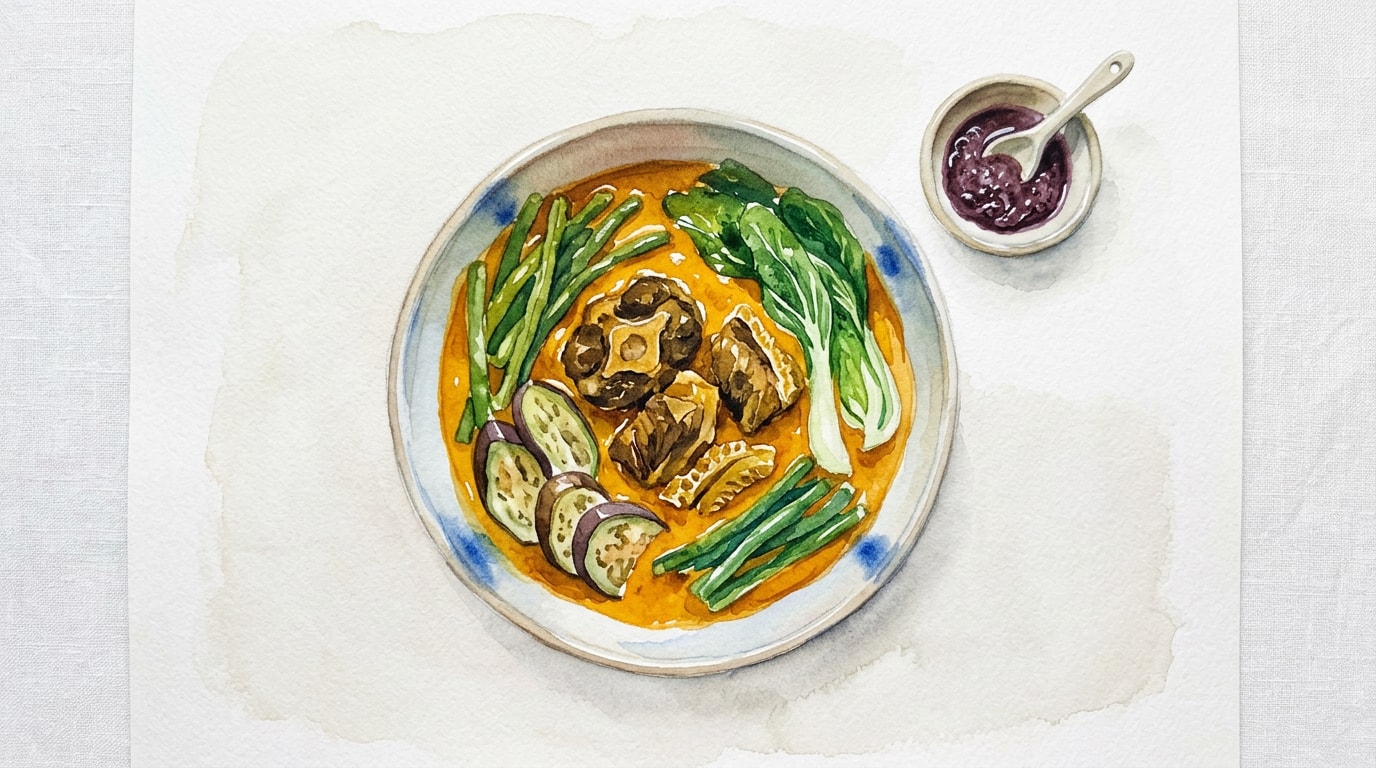
Transfer the tender meat and rich peanut sauce to a large serving bowl. Arrange the brightly colored blanched vegetables decoratively on top. Serve hot alongside warm cooked fermented shrimp paste.
Chef's Notes
- The secret to a pristine kare-kare sauce is blanching the oxtail first. Skipping this step results in a cloudy broth with a murky flavor profile.
- Bagoong (shrimp paste) is not optional for the authentic experience. Kare-kare is purposefully under-seasoned so that the sweet, salty, umami notes of the bagoong complete the dish.
- If you cannot find pre-toasted rice flour, you can easily make it by toasting regular rice flour in a dry skillet over medium-low heat until it smells nutty and turns a light beige color.
- If adhering strictly to a gluten-free diet, ensure your brand of shrimp paste does not contain hidden thickeners or soy sauce brewed with wheat.
Storage
Refrigerator: 3 days — Store bagoong separately. The peanut sauce will thicken significantly in the fridge; thin with a splash of water when reheating.
Freezer: 1 month — Freeze only the meat and sauce. Blanched vegetables will become mushy upon thawing and should be prepared fresh.
Reheating: Warm gently in a saucepan over medium-low heat, stirring frequently to prevent scorching the peanut base.