Equipment
Ingredients
Meat
- 2000 g beef brisket, whole, flat or point cut
Seasonings and Oil
- 20 g kosher salt
- 5 g black pepper, freshly ground
- 30 ml vegetable oil
Aromatics and Vegetables
- 3 yellow onions, sliced thinly
- 4 carrots, peeled and roughly chopped
- 3 celery, roughly chopped
- 6 garlic, minced
Braising Liquid
- 50 g tomato paste
- 250 ml dry red wine
- 800 g crushed tomatoes
- 500 ml beef broth, low sodium
- 2 bay leaves
- 5 g fresh thyme, tied in a small bundle
Nutrition (per serving)
Method
Preheat the oven to 150°C/300°F.
Pat the beef brisket completely dry on all sides with paper towels to ensure proper browning.
Season the brisket generously on all sides with kosher salt and freshly ground black pepper.
Heat the vegetable oil in a large Dutch oven over medium-high heat. Using tongs, carefully place the brisket in the pot and sear until a deep brown crust forms, about 6 to 8 minutes per side. Remove the brisket to a large cutting board or platter and set aside.
Reduce the heat under the Dutch oven to medium. Add the sliced onions, chopped carrots, and celery to the residual beef fat. Sauté, stirring occasionally with a wooden spoon, until the onions soften and begin to brown, about 10 minutes.
Stir in the minced garlic and tomato paste. Cook, stirring constantly, until the tomato paste darkens to a brick-red color and becomes deeply fragrant, about 2 to 3 minutes.
Pour in the dry red wine to deglaze the pot. Scrape up any browned bits stuck to the bottom of the pan with the wooden spoon. Simmer until the wine has reduced by half, about 5 minutes.
Stir in the crushed tomatoes, beef broth, bay leaves, and fresh thyme bundle. Return the seared brisket to the Dutch oven along with any resting juices. The liquid should come about halfway up the sides of the meat. Bring the liquid to a gentle simmer on the stove.
Cover the Dutch oven tightly with its lid and transfer to the preheated oven. Braise until the brisket reaches an internal temperature of about 93°C/200°F and is entirely fork-tender, about 3 to 4 hours.
Carefully transfer the brisket to a clean cutting board. Tent loosely with aluminum foil and let the meat rest for at least 30 minutes before slicing to allow the muscle fibers to relax and retain moisture.
Using a sharp chef knife, slice the rested brisket thinly across the grain.
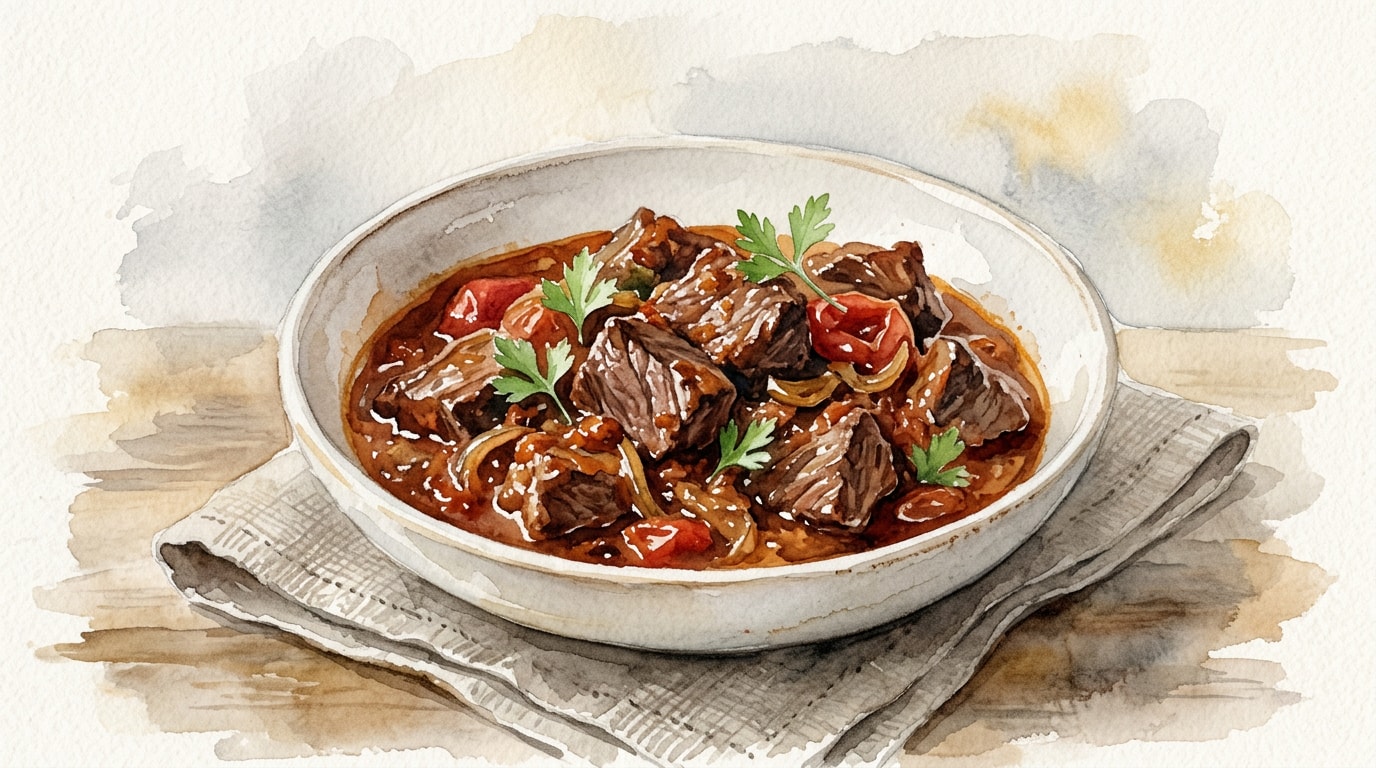
Skim any excess surface fat from the tomato gravy remaining in the Dutch oven. Discard the bay leaves and thyme bundle. Serve the sliced brisket warmly coated in the rich gravy.
Chef's Notes
- Brisket is fundamentally a tough cut of meat loaded with collagen. Slow, moist cooking is required to melt this collagen into gelatin, which surrounds the muscle fibers and provides the signature melt-in-the-mouth texture.
- For the absolute best flavor and easiest slicing, cool the entire Dutch oven after cooking and refrigerate it overnight. The next day, you can easily lift off the solidified fat cap, slice the cold brisket flawlessly, and gently reheat the slices directly in the gravy.
- Browning the meat thoroughly and taking the time to caramelize the tomato paste deeply are non-negotiable steps. These reactions build the robust, complex foundation of the gravy that plain boiling cannot achieve.
- Always slice brisket strictly across the grain. The long, robust muscle fibers must be physically shortened by your knife, otherwise the meat will feel stringy to chew regardless of how perfectly it was cooked.
Storage
Refrigerator: 5 days — Store sliced meat submerged in the gravy to prevent drying out.
Freezer: 3 months — Freeze meat and gravy together in an airtight container.
Reheating: Thaw overnight in the refrigerator if frozen. Reheat gently in a covered pan over medium-low heat or in a 150C oven until warmed through.