Equipment
Ingredients
Aromatics and Broth
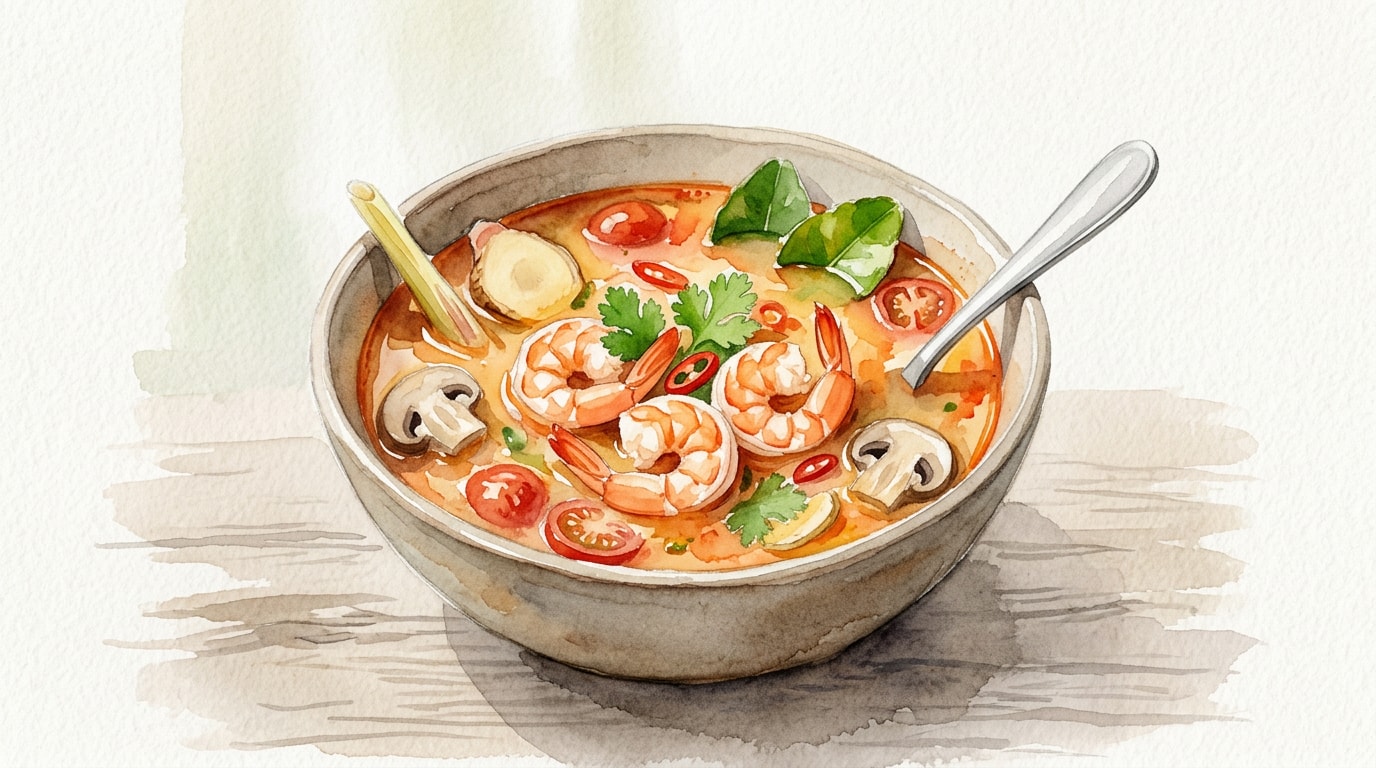
- 800 ml fish stock
- 2 lemongrass stalks, trimmed and bruised
- 20 g galangal, sliced into thin rounds
- 5 makrut lime leaves, torn, central stems removed
- 4 birds eye chilies, lightly crushed
Soup Body
- 300 g shrimp, large, peeled and deveined, tails left on
- 150 g oyster mushrooms, torn into bite-sized strips
- 100 g cherry tomatoes, halved
Seasoning and Garnish
- 30 g nam prik pao
- 45 ml fish sauce
- 60 ml fresh lime juice
- 10 g palm sugar, finely chopped
- 15 g fresh cilantro, roughly chopped
Nutrition (per serving)
Method
Using a pestle, lightly pound the trimmed lemongrass stalks and birds eye chilies on your cutting board just enough to bruise them and release their essential oils.
Pour the fish stock into a medium saucepan and bring to a rolling boil over high heat.
Add the bruised lemongrass, crushed chilies, sliced galangal, and torn makrut lime leaves to the boiling stock. Reduce the heat and simmer gently to infuse the broth with the aromatics.
Stir the nam prik pao and chopped palm sugar into the infused broth until fully dissolved and the liquid takes on a rich, reddish-orange hue.
Add the torn oyster mushrooms and halved cherry tomatoes to the saucepan. Simmer just until the mushrooms begin to soften and release their moisture.
Carefully slide the prepared shrimp into the simmering broth. Cook gently until they turn completely opaque and bright pink, reaching an internal temperature of 63 degrees Celsius or 145 degrees Fahrenheit.
Remove the saucepan from the heat immediately to prevent the residual heat from overcooking the delicate shrimp.
Off the heat, stir in the fish sauce and fresh lime juice. Taste the broth and adjust the seasoning if necessary, looking for an aggressive but harmonious balance of sour, salty, and spicy notes.
Use a ladle to portion the hot soup into individual bowls, ensuring an even distribution of the shrimp, mushrooms, and broth. Garnish generously with freshly chopped cilantro and serve immediately.
Chef's Notes
- The holy trinity of Tom Yum consists of lemongrass, galangal, and makrut lime leaves. Never substitute galangal with regular ginger; they belong to the same family but have completely different, non-interchangeable flavor profiles.
- Traditional Thai dining etiquette leaves the woody aromatics (lemongrass, galangal, lime leaves) in the bowl for beautiful presentation and continued flavor extraction, but they are absolutely not meant to be eaten by the diner.
- For the absolute best base flavor, buy whole shrimp with their heads and shells intact. Peel the shrimp, but briefly fry the shells and heads in a tiny bit of oil, then boil them in water for 15 minutes to create an authentic, intensely flavorful homemade shrimp stock.
- Nam Prik Pao is a roasted chili jam containing shrimp paste, garlic, shallots, and chilies. It provides the deep red color and savory sweetness characteristic of the 'Nam Khon' (creamy) or richer style clear broths. Ensure you use a good quality brand from a Thai grocer.
Storage
Refrigerator: 2 days — Remove the woody aromatics (lemongrass, galangal, lime leaves) before storing to prevent the broth from becoming overly bitter.
Reheating: Warm gently in a saucepan over medium-low heat until steaming. Do not allow it to come to a rolling boil, or the shrimp will overcook.