Equipment
* optional
Ingredients
Broth and Aromatics
- 1000 ml water or light chicken broth
- 2 lemongrass, outer layers removed, cut into 5cm pieces
- 30 g galangal, sliced into 5mm rounds
- 6 makrut lime leaves, stems removed, torn in half
- 4 bird's eye chilies, stems removed
Main Additions
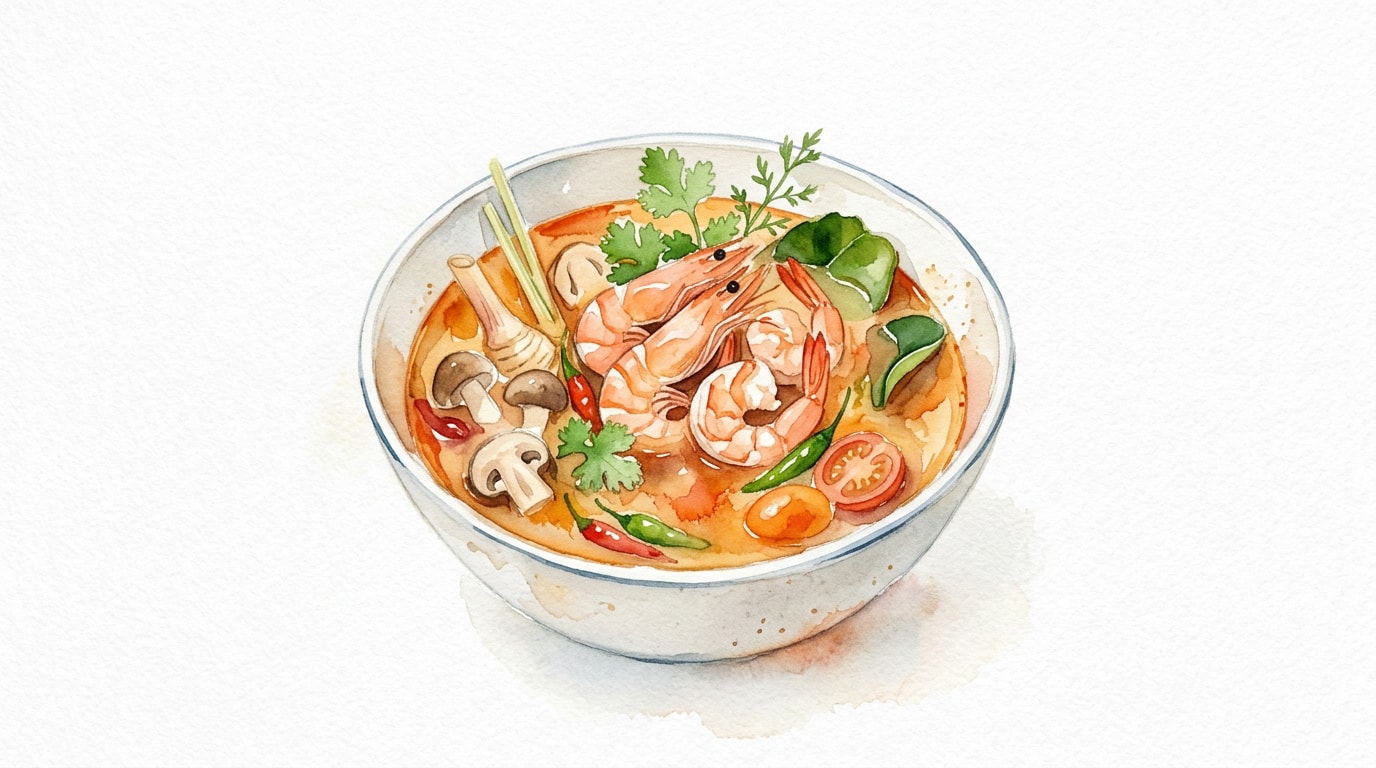
- 300 g shrimp, peeled and deveined, tails left on
- 150 g oyster mushrooms, torn into bite-sized pieces
- 100 g grape tomatoes, halved
Seasoning and Finish
- 30 g nam prik pao, thai chili jam
- 45 ml fish sauce
- 60 ml lime juice, freshly squeezed
- 15 g cilantro, roughly chopped
Nutrition (per serving)
Method
Using a mortar and pestle or the heavy handle of a chef's knife, firmly bruise the lemongrass pieces and whole chilies until they split slightly. This releases their essential oils.
In a medium saucepan, bring the water or broth to a rolling boil over high heat (100C/212F). Add the bruised lemongrass, galangal slices, torn makrut lime leaves, and bruised chilies. Reduce heat to medium and let simmer for 5 minutes.
Add the torn oyster mushrooms and halved grape tomatoes to the fragrant broth. Continue to simmer until the mushrooms soften slightly, about 3 minutes.
Stir in the nam prik pao (chili jam) and fish sauce. Add the shrimp to the gently bubbling broth. Cook just until the shrimp curl, turn completely opaque, and reach an internal temperature of 63C/145F.
Immediately remove the saucepan from the heat. Stir in the fresh lime juice. Taste the soup and adjust the seasoning if necessary, looking for a balance of sour, salty, and spicy.
Ladle the hot soup into bowls, ensuring an even distribution of shrimp and mushrooms. Garnish generously with roughly chopped cilantro and serve immediately.
Chef's Notes
- Pounding or heavily bruising the lemongrass, galangal, and chilies is essential to extract their maximum flavor into the quick-cooking broth without needing a long simmer.
- Do not eat the lemongrass, galangal, or whole lime leaves. They are traditionally left in the bowl for presentation and continued flavor infusion, but should be eaten around by the diner.
- For a richer, creamier variation known as Tom Yum Nam Khon, stir in 60ml of evaporated milk or coconut milk at the very end of cooking, just before adding the lime juice.
- Always balance the holy trinity of Thai cooking at the end: sour from the lime, salty umami from the fish sauce, and sweet heat from the nam prik pao.
Storage
Refrigerator: 2 days — Remove aromatics like lemongrass and galangal before storing to prevent excessive bitterness.
Reheating: Gently reheat on the stove over medium-low heat until just simmering. Do not boil, or the shrimp will become rubbery.