Equipment
Ingredients
Noodles
- 200 g rice vermicelli noodles, dried
Curry Base
- 15 ml coconut oil
- 50 g thai red curry paste
- 3 garlic, minced
- 15 g ginger, peeled and grated
- 400 ml full-fat coconut milk
- 250 ml seafood or chicken stock
- 30 ml fish sauce
- 15 g palm sugar
- 4 kaffir lime leaves, bruised and torn
Protein & Vegetables
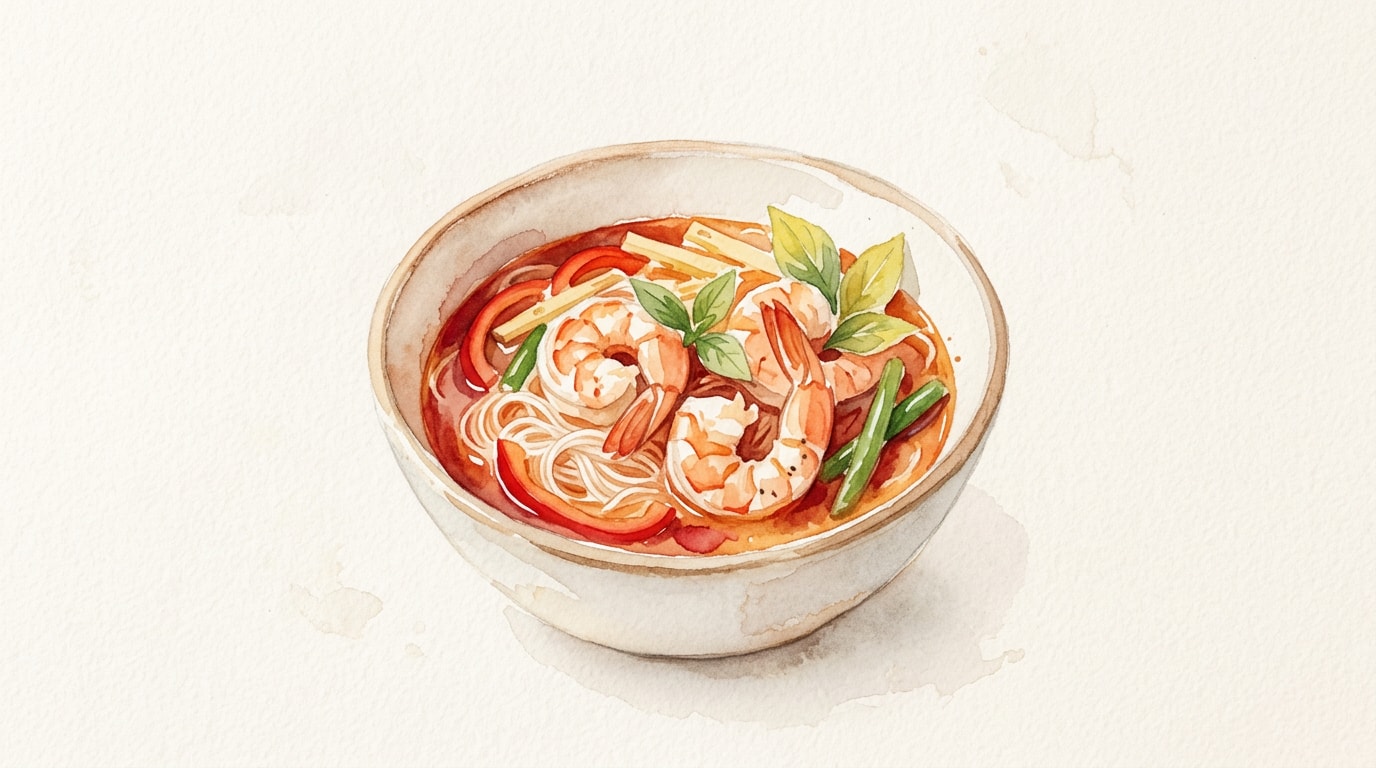
- 400 g raw king prawns, peeled, deveined, tails left on
- 150 g red bell pepper, thinly sliced
- 100 g snow peas, trimmed
Garnishes
- 30 ml fresh lime juice
- 10 g thai basil leaves, picked from stems
- 10 g fresh cilantro, roughly chopped
- 2 red bird's eye chilies, thinly sliced
Nutrition (per serving)
Method
Bring a medium saucepan of water to a boil. Remove from heat, add the rice noodles, and soak until tender according to package directions. Drain, rinse under cold water to stop the cooking process, and set aside.
Heat the coconut oil in a large wok over medium heat. Add the red curry paste, minced garlic, and grated ginger. Cook, stirring constantly, until the oils separate from the paste and it becomes highly fragrant.
Pour in the coconut milk and stock, stirring to dissolve the curry paste completely. Stir in the fish sauce, palm sugar, and torn kaffir lime leaves. Bring the mixture to a gentle bubbling simmer.
Add the sliced red bell pepper to the simmering curry broth. Cook briefly until the peppers begin to soften but retain their vibrant color and crunch.
Gently place the raw prawns and trimmed snow peas into the bubbling liquid. Cook until the prawns turn completely opaque and pink, reaching an internal temperature of 74°C/165°F.
Remove the wok from the heat. Stir in the fresh lime juice. Taste the broth and adjust the seasoning if necessary, adding more fish sauce for saltiness or lime juice for acidity.
Divide the prepared rice noodles evenly among four warm serving bowls. Ladle the hot curry, prawns, and vegetables over the noodles. Garnish generously with fresh Thai basil, cilantro, and sliced bird's eye chilies.
Chef's Notes
- Frying the red curry paste in coconut oil unlocks the fat-soluble flavor compounds and spices, creating a dramatically more complex base than simply whisking the paste into cold liquid.
- For the best texture, soak rice noodles in hot water rather than actively boiling them on the stove. This prevents them from releasing too much starch and becoming gummy.
- The balance of Thai food relies on the interplay of salty, sweet, sour, and spicy. Do not skip the palm sugar; it does not make the dish sweet, but rather rounds out the harsh edges of the chilies and salty fish sauce.
- Leaving the tails on the prawns is traditional and adds a small amount of extra shellfish flavor to the broth as they poach, though they can be fully removed for easier eating.
Storage
Refrigerator: 2 days — Store the noodles and the curry broth in separate airtight containers to prevent the noodles from absorbing all the liquid and becoming mushy.
Reheating: Reheat the curry gently on the stovetop over medium-low heat until the prawns are just warmed through. Do not boil. Warm the noodles separately by pouring hot water over them, then drain and combine.