Equipment
Ingredients
Vegetables and Aromatics
- 800 g pumpkin, peeled, seeded, and cubed
- 1 yellow onion, diced
- 3 garlic, minced
- 1 fresh ginger, peeled and grated
Base and Liquids
- 30 ml coconut oil, melted
- 50 g vegan red curry paste
- 500 ml vegetable broth, warm
- 400 ml full-fat coconut milk
Seasoning and Garnish
- 15 ml tamari
- 15 ml lime juice, freshly squeezed
- 10 g brown sugar
- 10 g fresh cilantro, roughly chopped
- 20 g roasted pumpkin seeds, lightly toasted
Nutrition (per serving)
Method
Preheat the oven to 200°C/400°F and line a baking sheet with parchment paper.
Toss the cubed pumpkin with half of the coconut oil. Spread evenly on the baking sheet and roast in the preheated oven for 25 minutes until tender and caramelized at the edges.
While the pumpkin roasts, heat the remaining coconut oil in a large heavy-bottomed pot over medium heat. Add the diced onion, minced garlic, and grated ginger. Cook until softened and translucent.
Add the red curry paste to the aromatics. Cook, stirring constantly, until the paste deepens in color and becomes highly aromatic.
Transfer the roasted pumpkin to the pot. Pour in the vegetable broth and coconut milk, stirring to combine. Bring the mixture to a gentle boil, then reduce the heat and let it simmer.
Remove the pot from the heat. Carefully transfer the soup in batches to a blender, or use an immersion blender directly in the pot, and process until completely smooth and velvety.
Stir in the tamari, fresh lime juice, and brown sugar. Taste the soup and adjust the seasoning, adding more lime for acidity or sugar for sweetness if needed.
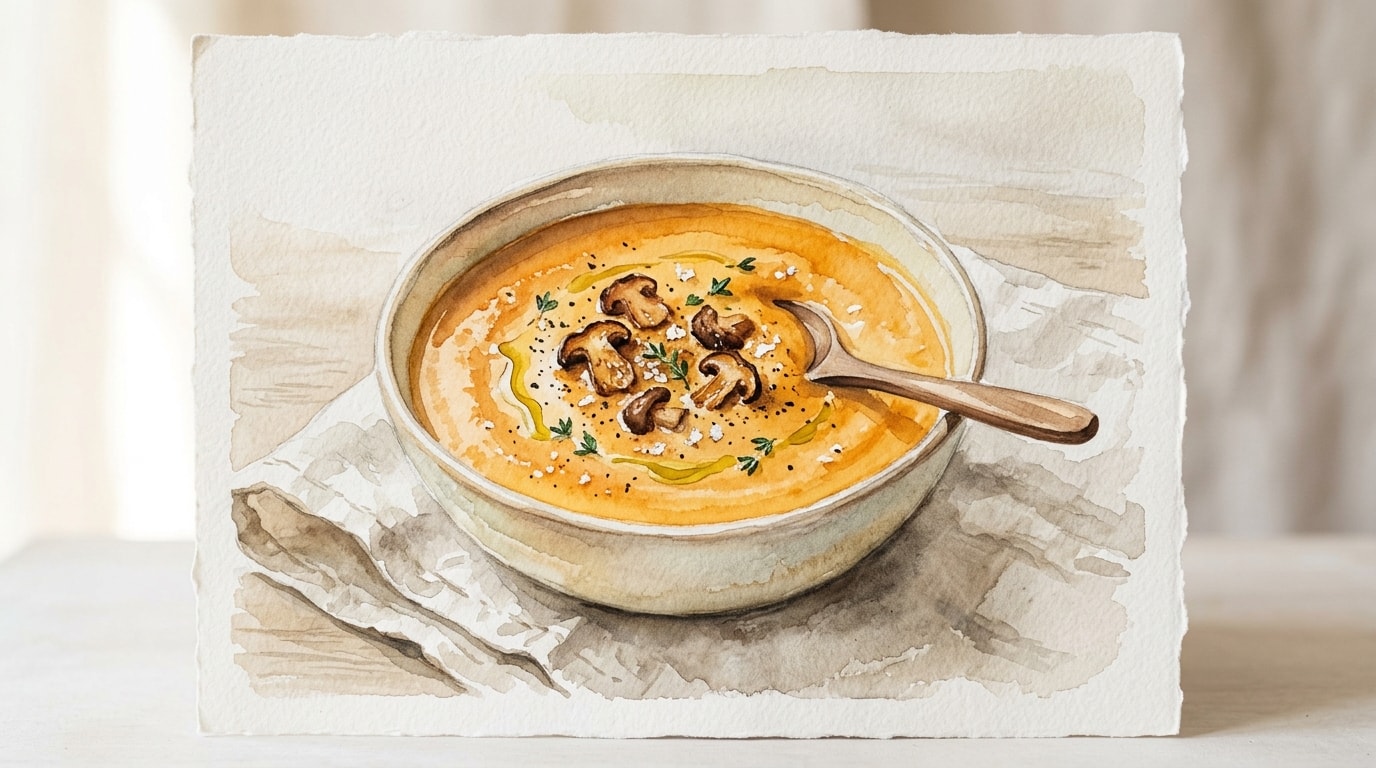
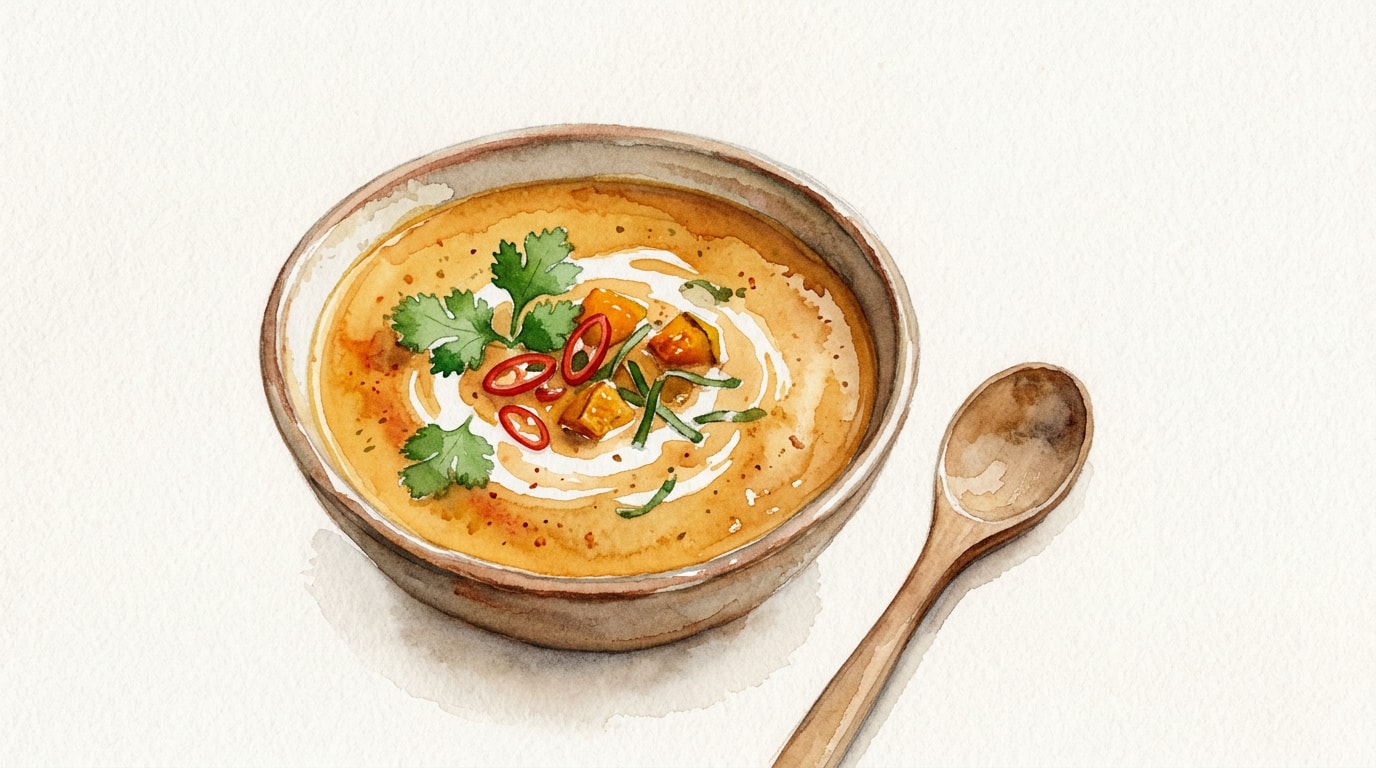
Ladle the hot soup into bowls. Top with freshly chopped cilantro and a scattering of roasted pumpkin seeds.
Chef's Notes
- Always check the ingredient label on your red curry paste if you are strictly vegetarian or vegan, as many traditional Thai pastes contain shrimp paste or fish extract.
- Frying the curry paste in oil before adding your main liquids is a crucial technique that blooms the spices and removes raw flavors, unlocking the paste's full aromatic potential.
- Kabocha squash or butternut squash provide the best dense texture and natural sweetness for this application compared to standard carving pumpkins, which are overly fibrous and watery.
- Roasting the pumpkin beforehand concentrates its sugars through the Maillard reaction, providing a far deeper flavor profile than simply boiling the raw squash in the broth.
Storage
Refrigerator: 4 days — Store in an airtight container. The flavors will deepen overnight.
Freezer: 3 months — Leave headspace in the container as the liquid will expand. Thaw overnight in the refrigerator.
Reheating: Reheat gently on the stovetop over medium-low heat, stirring frequently to prevent the coconut milk from separating.