Equipment
Ingredients
Noodles
- 250 g rice noodles, dry, medium width
Coconut Shrimp Broth
- 400 g shrimp, peeled, deveined, tails removed
- 15 ml coconut oil
- 3 garlic, minced
- 15 g fresh ginger, grated or finely minced
- 50 g thai red curry paste
- 400 ml coconut milk, full-fat, well shaken
- 250 ml seafood broth
- 15 ml fish sauce
- 15 g brown sugar
- 30 ml lime juice, freshly squeezed
Garnishes
- 100 g bean sprouts, washed and drained
- 20 g fresh cilantro, roughly chopped
- 30 g scallions, thinly sliced
- 40 g roasted peanuts, crushed
- 10 g red chilies, thinly sliced
- 4 lime wedges
Nutrition (per serving)
Method
Bring a large pot of water to a rolling boil at 100°C/212°F. Cook the rice noodles according to the package instructions until tender but with a slight bite. Drain in a colander, rinse thoroughly with cold water to stop the cooking process and prevent sticking, then set aside.
Mince the garlic and grate the fresh ginger using a chef's knife or microplane. Prepare all your garnishes by slicing the scallions and chilies, chopping the cilantro, and crushing the peanuts.
Heat the coconut oil in a large wok or skillet over medium heat. Add the minced garlic, grated ginger, and red curry paste. Sauté the aromatics for 2 to 3 minutes until the oils begin to separate from the paste and the mixture becomes highly fragrant.
Pour the full-fat coconut milk and seafood broth into the wok. Stir continuously to dissolve the toasted curry paste into the liquids. Bring the mixture to a gentle simmer at approximately 90°C/195°F. Stir in the fish sauce and brown sugar until the sugar completely dissolves.
Add the prepared shrimp to the gently simmering coconut broth. Poach the shrimp for 3 to 4 minutes, ensuring the internal temperature reaches at least 63°C/145°F, taking care not to let the liquid boil vigorously to avoid tough seafood.
Remove the wok from the heat. Stir in the freshly squeezed lime juice. Taste the broth and adjust the seasoning if necessary, balancing the salty fish sauce, sweet sugar, and sour lime juice to your preference.
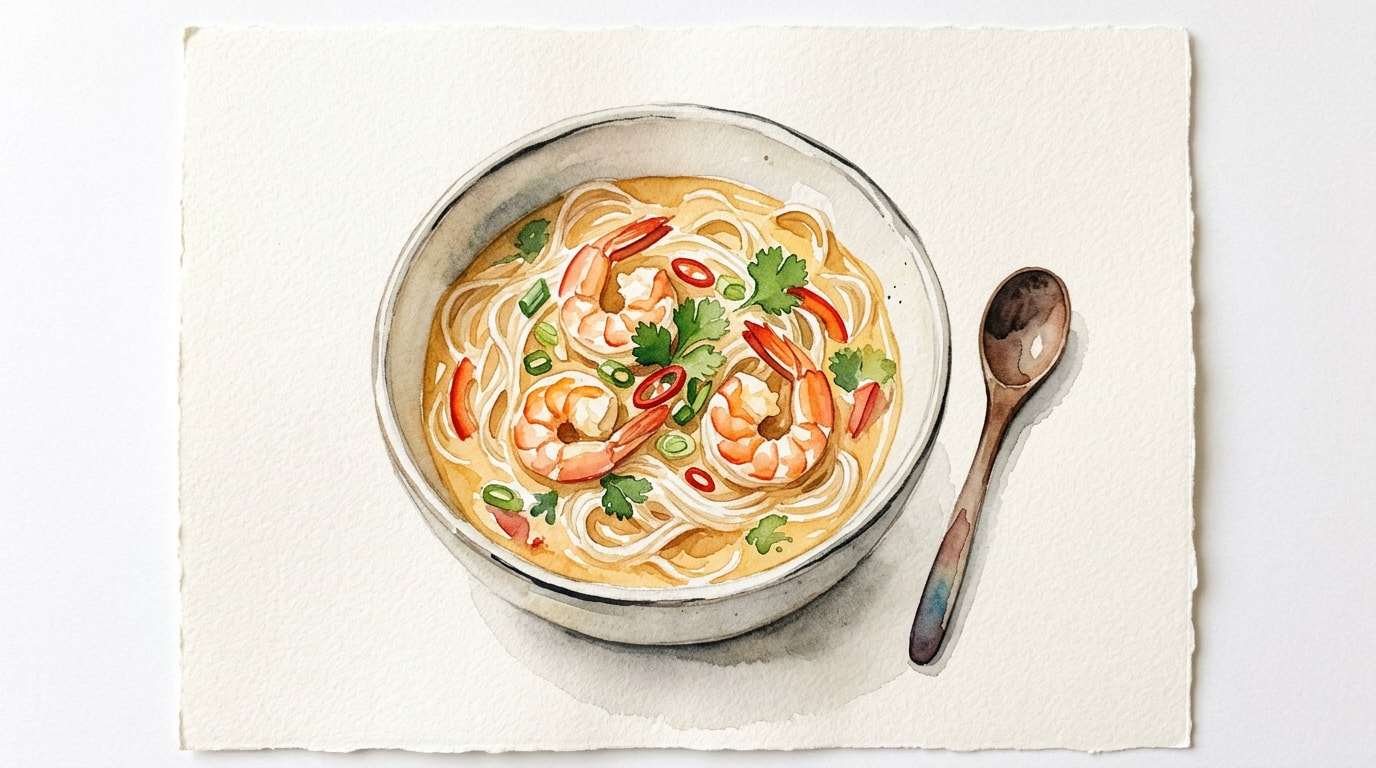
Divide the cooked and cooled rice noodles evenly among 4 deep serving bowls. Using a ladle, generously pour the hot coconut shrimp sauce over the noodles, ensuring each bowl gets an equal amount of shrimp and broth.
Top each bowl with a handful of fresh bean sprouts, chopped cilantro, sliced scallions, and crushed peanuts. Add sliced red chilies for extra heat if desired. Serve immediately with a lime wedge on the side.
Chef's Notes
- Toasting the curry paste in oil before adding the liquids is a critical technique called 'blooming'. It releases fat-soluble flavor compounds and significantly deepens the complexity of the dish.
- The fundamental pillar of Thai cuisine is the balance of flavors: spicy, sour, sweet, and salty. Always taste your broth before serving. If it tastes flat, it usually needs more acidity (lime) or salt (fish sauce).
- If you prefer a thicker, creamier sauce similar to a traditional curry rather than a noodle soup, reduce the amount of seafood broth to 125ml and simmer the sauce longer to reduce before adding the shrimp.
- Rinsing rice noodles under cold water stops the cooking process and washes away excess surface starch, which prevents them from clumping together in a gummy mass while you finish the sauce.
Storage
Refrigerator: 3 days — Store the noodles, broth, and garnishes in separate airtight containers to prevent the noodles from becoming mushy.
Freezer: 1 month — Only the coconut shrimp broth can be frozen. Do not freeze the noodles or fresh garnishes.
Reheating: Reheat the broth gently on the stove over medium-low heat until piping hot. Blanch leftover noodles in hot water for 30 seconds to revive their texture before serving.