Equipment
Ingredients
Pasta and Boiling Water
- 400 g linguine
- 4000 ml water
- 30 g salt
Sauce Base
- 150 g pancetta, diced
- 15 ml extra virgin olive oil
- 3 garlic, thinly sliced
- 400 g cherry tomatoes, halved
- 1 g red pepper flakes
Finishing and Garnish
- 50 g pecorino romano, finely grated
- 15 g fresh basil, torn
- 2 g black pepper, freshly ground
Nutrition (per serving)
Method
Bring a large pot of water to a rolling boil at 100 degrees Celsius or 212 degrees Fahrenheit. Add the heavy measure of salt, then the linguine. Cook for 9 minutes, or exactly 1 minute less than the package instructions for al dente. Dip a liquid measuring cup into the pot to reserve at least 250ml of the starchy pasta water before draining.
While the pasta water comes to a boil, place the diced pancetta and olive oil in a large, cold skillet. Set over medium heat and cook slowly until the fat renders and the pancetta becomes thoroughly crispy, about 7 minutes.
Add the sliced garlic and red pepper flakes directly into the rendered pancetta fat. Stir constantly for 1 minute until the garlic is extremely fragrant and just turning pale gold. Be very careful not to let it brown.
Increase the heat to medium-high and add the halved cherry tomatoes to the skillet. Cook undisturbed for 2 minutes, then toss. Continue cooking until the tomatoes begin to soften, collapse, and release their sweet juices into the pork fat, about 5 minutes.
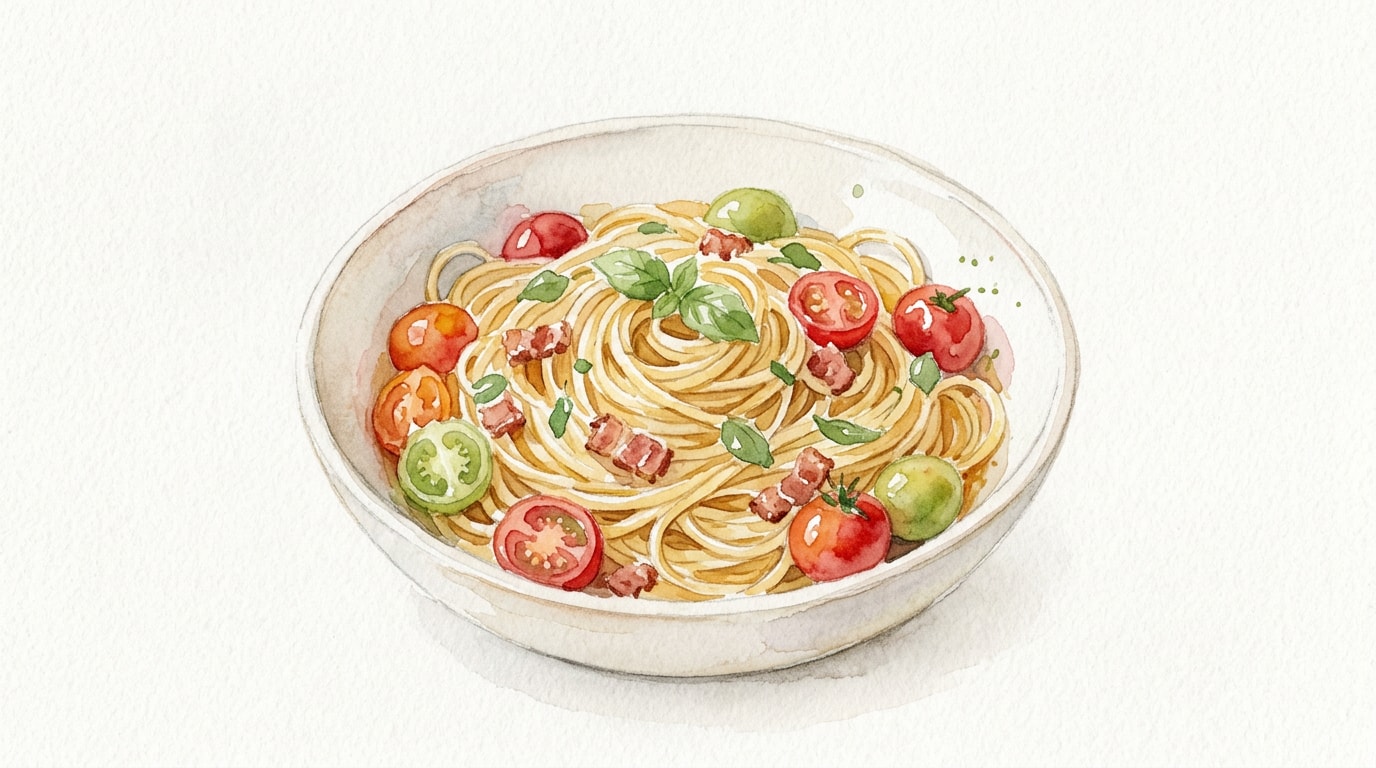
Transfer the undercooked linguine directly into the skillet with the tomatoes using tongs. Pour in 120ml of the reserved hot pasta water. Toss the pasta vigorously and continuously over medium-high heat until the starchy water and tomato juices emulsify into a glossy sauce that clings tightly to the noodles.
Remove the skillet from the heat completely. Fold in the grated Pecorino Romano, torn fresh basil, and freshly ground black pepper. Toss vigorously once more, adding a small splash of extra pasta water if the dish looks dry. Serve immediately.
Chef's Notes
- Starting the pancetta in a cold pan is a non-negotiable technique. It allows the fat to render slowly and completely, resulting in a crispier texture and preventing the exterior from burning before the inside cooks.
- The reserved pasta water is the most critical ingredient in this dish. Its starch acts as a physical binder, turning the rendered pork fat and tomato juices into a cohesive, creamy sauce rather than a greasy puddle.
- Tearing the fresh basil rather than chopping it with a knife prevents the edges from oxidizing and turning black, preserving its bright green color and releasing more of its essential oils.
Storage
Refrigerator: 3 days — Store in an airtight container.
Reheating: Reheat gently in a skillet over low heat with a splash of water to revive the emulsified sauce.