Equipment
Ingredients
Braised Beef Cheeks
- 800 g beef cheeks, trimmed of excess fat and silverskin
- 30 ml vegetable oil
- 1 onion, rough chopped
- 1 carrot, rough chopped
- 1 celery stalk, rough chopped
- 3 garlic cloves, crushed
- 440 ml stout beer
- 500 ml beef stock, high quality or homemade
- 4 fresh thyme
Barley Risotto
- 300 g pearl barley, rinsed
- 60 g unsalted butter, cubed, divided use
- 2 shallot, finely diced
- 120 ml dry white wine
- 1000 ml chicken stock, hot
- 60 g parmesan cheese, freshly grated
Gremolata Garnish
- 15 g fresh parsley, finely chopped
- 1 lemon, zested
- 10 g fresh horseradish, finely grated
Nutrition (per serving)
Method
Preheat the oven to 150°C (300°F). Pat the beef cheeks dry and season generously with salt and pepper.
In a Dutch oven over high heat, sear the beef cheeks in vegetable oil until deeply browned on all sides. Remove beef and set aside.
Lower heat to medium. Add onions, carrots, and celery to the pot. Sauté until softened and lightly browned.
Deglaze the pot with the stout, scraping the bottom to release fond. Return beef cheeks to the pot. Add beef stock, thyme, and garlic. Bring to a simmer, cover, and transfer to the oven.
About 45 minutes before the beef is done, start the risotto. Melt 30g butter in a wide pan over medium heat. Sweat the shallots until translucent but not browned.
Add pearl barley and toast for 2 minutes until nutty. Pour in wine and stir until fully evaporated.
Begin adding hot chicken stock one ladle at a time, stirring frequently. Allow liquid to absorb before adding the next ladle. Continue until barley is tender but retains a slight chew (al dente).
Remove beef from oven. Ideally, the meat should yield easily to pressure (internal temp approx 90°C/195°F+ for collagen breakdown). Remove cheeks and strain the liquid into a clean pan. Reduce liquid over high heat until it coats the back of a spoon (nappe consistency).
Remove risotto from heat. Beat in the remaining 30g butter and parmesan cheese vigorously to create a creamy emulsion (mantecatura). Season with salt to taste.
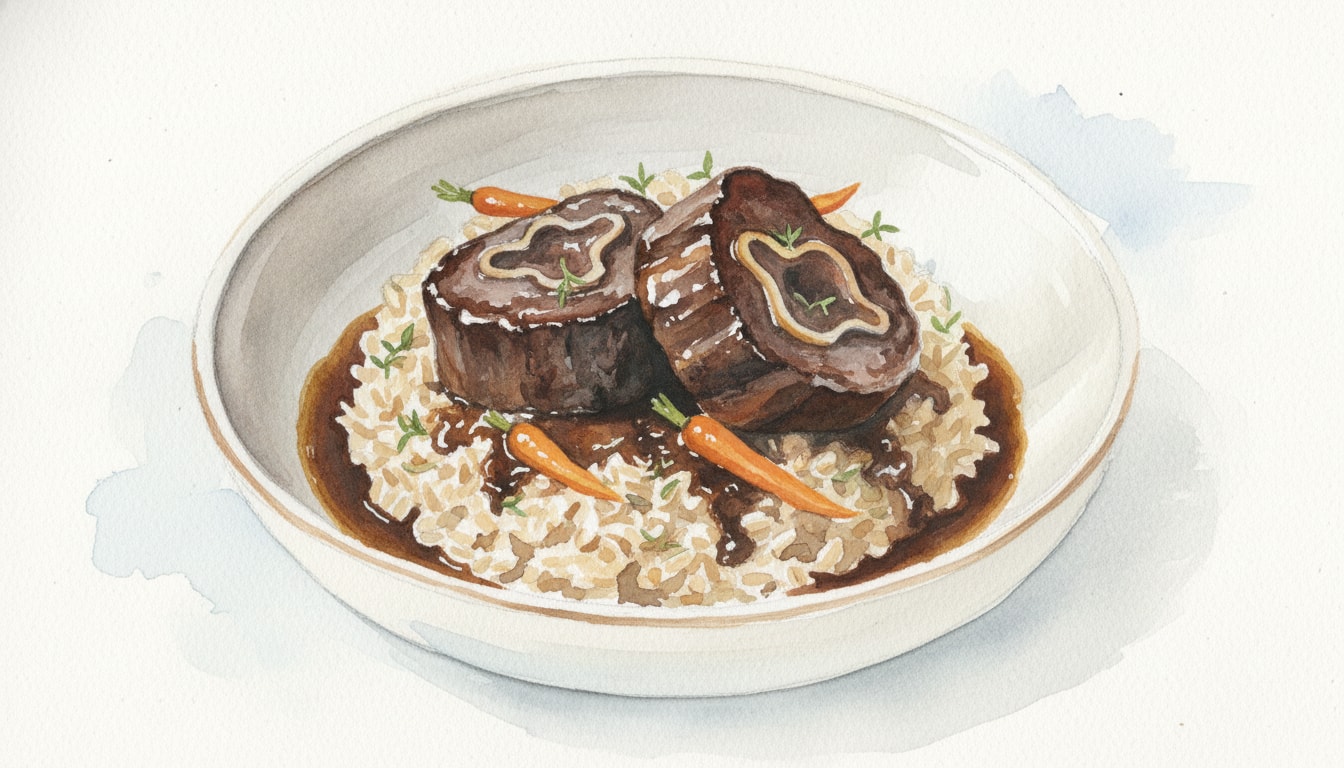
Mix the parsley, lemon zest, and horseradish. Plate a mound of risotto, top with a glazed beef cheek, drizzle with reduced sauce, and finish with the horseradish gremolata.
Chef's Notes
- Beef cheeks are rich in collagen. Unlike steak, you cannot cook them to 'medium-rare'; they must be cooked well past well-done until the connective tissue turns into gelatin.
- Barley is more forgiving than Arborio rice. It doesn't release starch as quickly, so you can add stock in larger batches, but the final 'beating in' of butter and cheese is crucial for that risotto consistency.
- For a deeper gloss on the beef, toss the cooked cheeks in the reduced sauce just before plating to glaze them completely.
- If you cannot find fresh horseradish, a high-quality jarred creamed horseradish can be mixed into the risotto at the end instead of used as a garnish.
Storage
Refrigerator: 3 days — Store beef and risotto in separate airtight containers. Risotto will thicken significantly when chilled.
Freezer: 3 months — Beef freezes excellently in its sauce. Barley risotto texture may degrade slightly upon freezing.
Reheating: Reheat beef gently in a pot. Reheat risotto with a splash of water or stock to loosen the starch.