Equipment
Ingredients
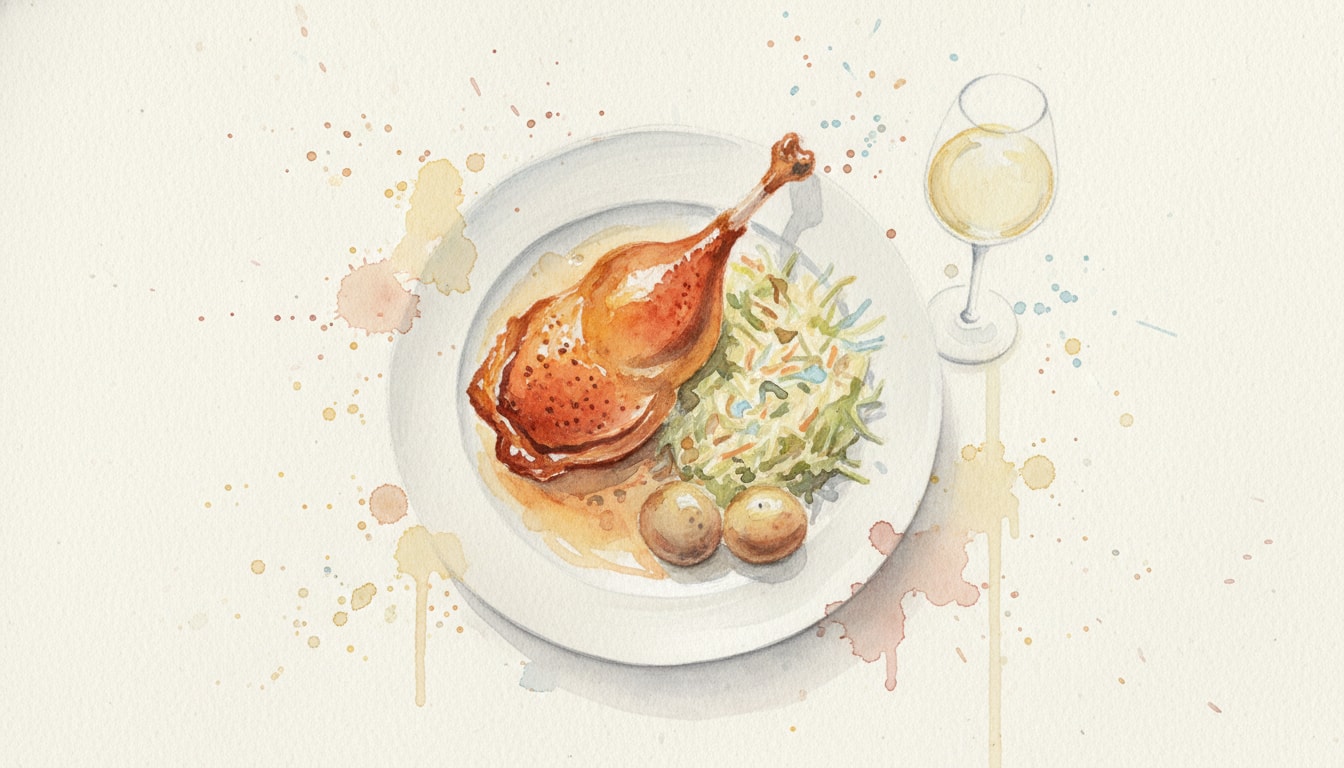
Duck
- 1 whole duck, thawed, giblets removed
- 15 g sea salt, coarse
- 5 g black pepper, freshly ground
Sauerkraut Base
- 1000 g raw sauerkraut, drained
- 30 g duck fat
- 2 yellow onion, thinly sliced
- 2 granny smith apples, peeled, cored, and sliced
- 4 garlic cloves, smashed
Braising Liquid & Aromatics
- 350 ml dry riesling
- 150 ml chicken stock
- 10 juniper berries
- 5 g caraway seeds
- 2 bay leaves
- 4 fresh thyme
Nutrition (per serving)
Method
The day before (recommended): Remove the duck from packaging and pat thoroughly dry with paper towels. Prick the skin all over with a sharp needle or knife tip, focusing on fatty areas (breast and thighs), being careful not to pierce the meat. Season generously with salt inside and out. Place uncovered in the refrigerator overnight to dry the skin.
Preheat your oven to 160°C (320°F). If you did not dry-brine overnight, prick and season the duck now, letting it stand at room temperature for 30 minutes. Rinse the sauerkraut in cold water and drain well in a colander to remove excess brine.
In a large roasting pan placed on the stovetop over medium heat, melt the duck fat. Add sliced onions and sauté for 5-8 minutes until softened and translucent.
Add the apple slices, garlic, juniper berries, caraway seeds, bay leaves, and thyme. Cook for another 2 minutes until fragrant. Stir in the drained sauerkraut, then pour in the Riesling and chicken stock. Spread this mixture evenly across the bottom of the pan.
Place a roasting rack directly over the sauerkraut mixture. Place the duck, breast side up, on the rack. (The duck should not be submerged; it should sit above the kraut so the fat renders down into it).
Roast in the center of the oven for approximately 2 hours. Halfway through, gently stir the sauerkraut underneath to prevent burning at the edges. Pierce the leg joint to check doneness; juices should run clear, or internal temperature of the thickest part of the thigh should reach 74°C (165°F).
Increase oven temperature to 220°C (425°F). Roast for an additional 15-20 minutes to deeply brown and crisp the skin. Watch closely to prevent burning.
Remove the duck from the oven and transfer to a cutting board. Rest for at least 20 minutes before carving. Meanwhile, taste the sauerkraut. If it is too dry, add a splash of water or stock. If it is too liquid, simmer on the stovetop to reduce.
Chef's Notes
- Pricking the skin is the most critical step. You must pierce the skin and fat layer without penetrating the meat, or juices will escape and dry out the bird.
- If the sauerkraut becomes too greasy from the rendered duck fat, use a ladle to skim the excess fat from the surface of the pan before serving. Save this 'liquid gold' for roasting potatoes later.
- For the wine, select a dry Alsatian Riesling or a Gewürztraminer. Avoid sweet wines, as the apples already provide natural sweetness.
- Always check the ingredients on your sauerkraut. For this recipe, raw fermented sauerkraut from the refrigerated section is superior to canned versions.
Storage
Refrigerator: 3 days — Store duck meat removed from the bone. Flavor of sauerkraut improves after 24 hours.
Freezer: 2 months — Sauerkraut freezes well; duck meat texture may degrade slightly upon thawing.
Reheating: Reheat sauerkraut in a pot. Crisp duck skin under a broiler or in a hot pan before serving.