Equipment
Ingredients
The Ribs
- 2 pork baby back ribs, membranes removed
Dry Rub
- 50 g dark brown sugar, packed
- 15 g smoked paprika
- 15 g kosher salt
- 10 g garlic powder
- 10 g onion powder
- 10 g black pepper, freshly ground
- 2 g cayenne pepper
Sticky Barbecue Sauce
- 240 ml ketchup
- 60 ml apple cider vinegar
- 45 g dark brown sugar
- 30 ml molasses
- 15 ml worcestershire sauce
- 15 g dijon mustard
Nutrition (per serving)
Method
Preheat the oven to 135C (275F). Ensure an oven rack is placed in the middle position.
Using a paper towel for grip, peel the tough silverskin membrane off the bone side of the ribs. Discard the membrane.
In a small mixing bowl, combine the brown sugar, smoked paprika, kosher salt, garlic powder, onion powder, black pepper, and cayenne pepper.
Generously rub the spice mixture all over both sides of the ribs, pressing it firmly into the meat.
Wrap each rack of ribs tightly in a double layer of heavy-duty aluminum foil to create a sealed packet, preventing any steam from escaping.
Place the foil-wrapped ribs seam-side up on a large baking sheet. Bake in the preheated oven for 2.5 to 3 hours, or until the meat shrinks back from the bones and is extremely tender.
While the ribs are baking, combine the ketchup, apple cider vinegar, dark brown sugar, molasses, Worcestershire sauce, and Dijon mustard in a medium saucepan.
Bring the sauce mixture to a gentle simmer over medium heat. Reduce the heat to low and cook for 15 minutes, stirring occasionally, until slightly thickened. Set aside.
Remove the ribs from the oven and carefully open the foil packets to release the trapped hot steam. Increase the oven temperature to its broil setting.
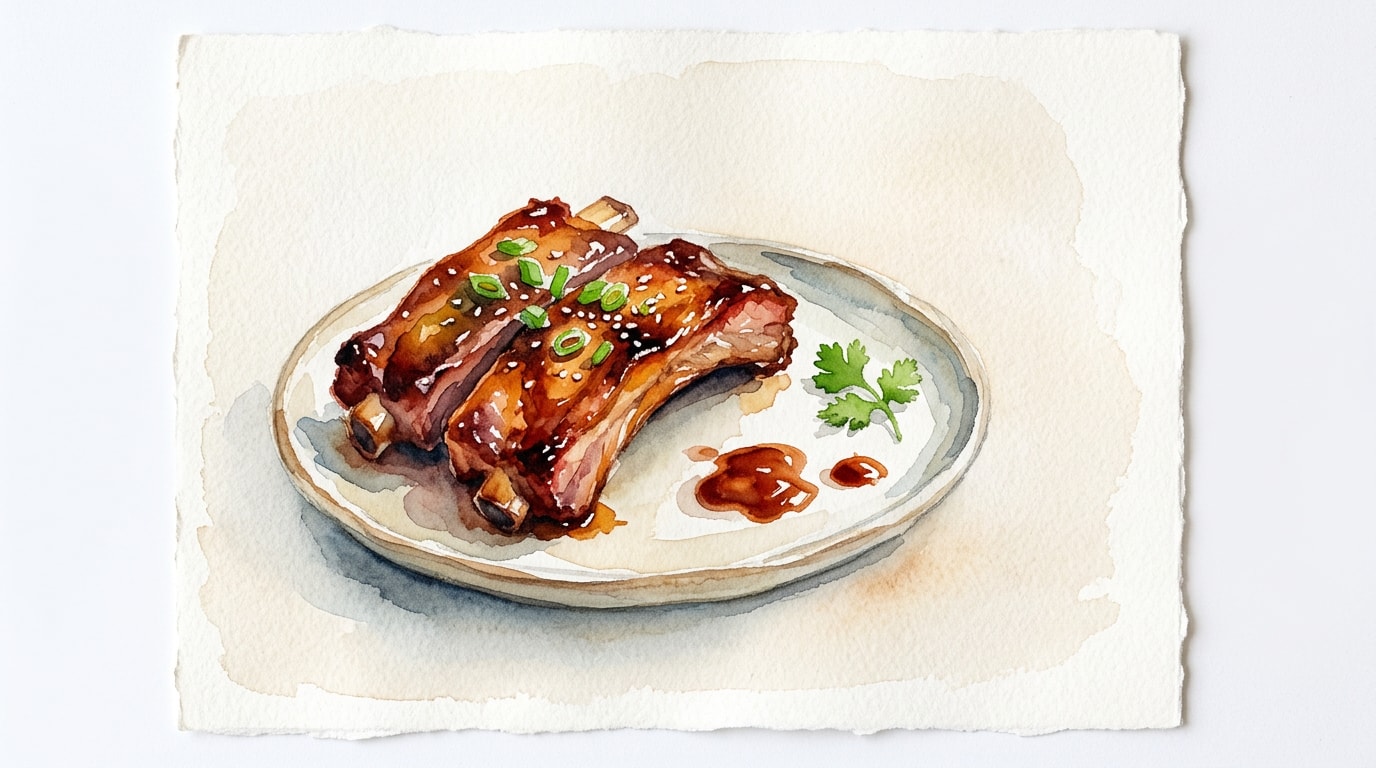
Transfer the ribs to a foil-lined baking sheet. Brush a generous layer of the homemade barbecue sauce over the top of the ribs.
Broil the ribs for 3 to 5 minutes, watching very closely to ensure the sugars in the sauce caramelize and become sticky without burning.
Remove the ribs from the broiler and let them rest for 10 minutes. Slice between the bones to separate, and serve with any remaining barbecue sauce on the side.
Chef's Notes
- Removing the membrane (silverskin) is non-negotiable for tender ribs. If left on, it cooks into a tough, leathery barrier that prevents the rub from penetrating the meat.
- For maximum flavor, apply the dry rub up to 24 hours in advance and leave the ribs uncovered in the refrigerator. This acts as a dry brine, drawing moisture in and deeply seasoning the pork.
- The low-and-slow cooking method bypasses normal doneness temperatures. While pork is safe to eat at 71C (160F), ribs are tough at that stage. You are aiming for an internal temperature around 93C to 96C (200F to 205F) to properly melt the connective tissues.
- If your ribs feel like they are literally falling apart when you try to move them, they are slightly overcooked for competition barbecue standards, but perfectly acceptable and beloved for backyard eating.
Storage
Refrigerator: 4 days — Store in an airtight container. Keep extra sauce separate if possible.
Freezer: 3 months — Wrap tightly in plastic wrap and aluminum foil before freezing.
Reheating: Cover loosely with foil and reheat in a 150C/300F oven until warmed through, about 20 minutes.