Equipment
Ingredients
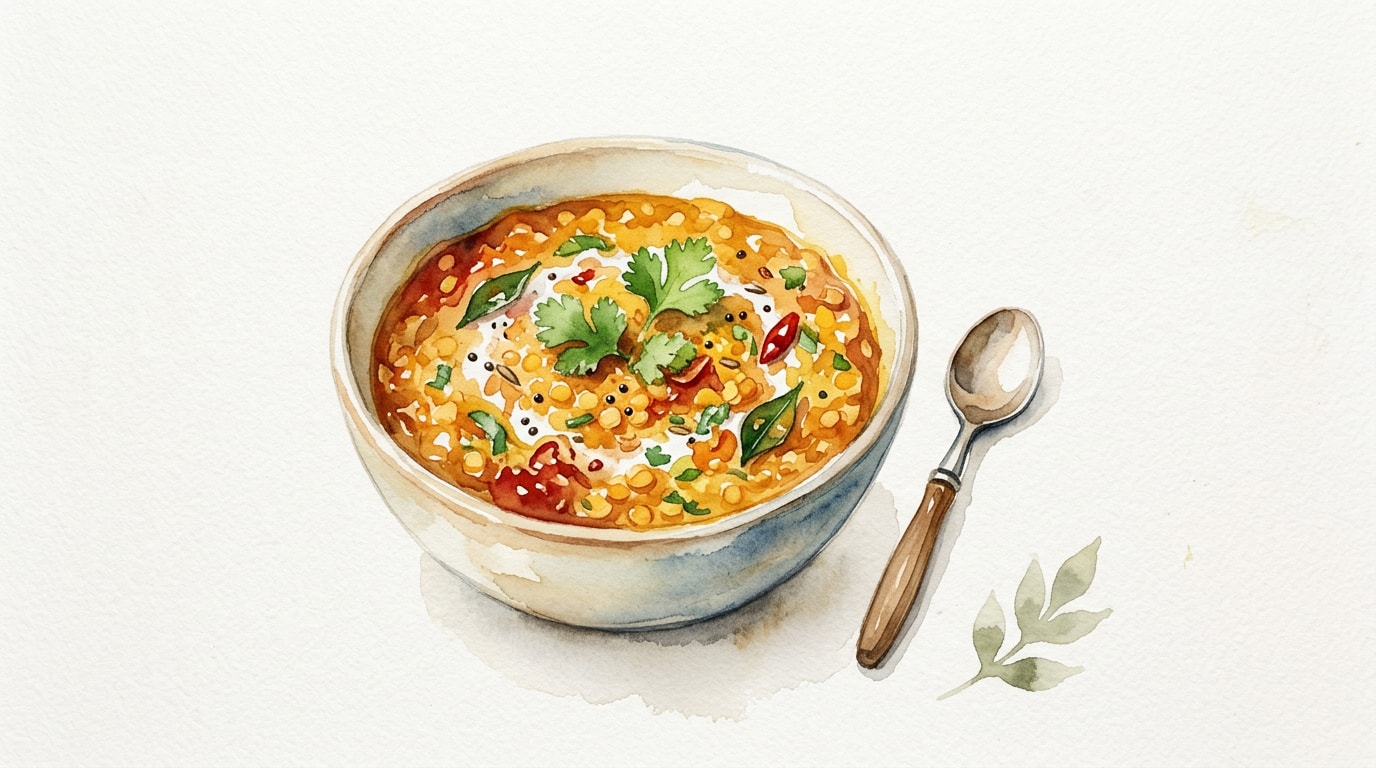
Base Dhal
- 200 g red lentils, dry
- 400 ml water
- 3 g turmeric powder
- 5 g unroasted sri lankan curry powder
- 1 pandan leaf, fresh or frozen
- 10 curry leaves, fresh
- 2 green chilies, slit lengthwise
- 30 g red onion, finely diced
- 10 g garlic, minced
Coconut Finish
- 200 ml thick coconut milk, well shaken
- 5 g salt
Tempering
- 30 ml coconut oil
- 3 g mustard seeds, whole black or brown
- 2 g cumin seeds, whole
- 3 dried red chilies, broken in half
- 10 curry leaves, fresh
- 10 g garlic, thinly sliced
- 30 g red onion, thinly sliced
Nutrition (per serving)
Method
Place the red lentils in a fine mesh sieve. Rinse thoroughly under cold running water until the water runs clear to remove excess starch. Drain well.
In a medium saucepan, combine the rinsed lentils, water, turmeric powder, unroasted curry powder, pandan leaf, the first portion of curry leaves, green chilies, diced red onion, and minced garlic. Place over medium heat until the liquid reaches 100°C/212°F and begins to boil.
Reduce the heat to low, cover the saucepan partially, and let the mixture simmer gently. Cook until the lentils are completely tender, break apart easily, and have absorbed most of the water.
Stir the thick coconut milk and salt into the cooked lentils. Bring the curry back to a very gentle simmer over low heat. Cook just until heated through, being careful not to let it boil vigorously, then remove from heat.
In a small frying pan, heat the coconut oil over medium-high heat (around 180°C/350°F). Add the mustard seeds and heat until they begin to aggressively pop and crackle.
Immediately add the cumin seeds, dried red chilies, remaining curry leaves, thinly sliced garlic, and sliced red onion to the hot oil. Sauté constantly until the onions turn deeply golden brown and the garlic is highly fragrant.
Pour the hot tempered spice mixture directly into the saucepan with the cooked dhal. Stir well to combine, distributing the aromatic oils evenly throughout the curry. Let rest briefly before serving.
Chef's Notes
- The tempering process, known as baduma or tarka, is absolutely essential for blooming the fat-soluble flavor compounds in the spices. Skipping this step results in a flat, one-dimensional curry.
- Unroasted Sri Lankan curry powder is traditionally used for vegetarian and seafood curries to keep the flavor profile bright and herbaceous, whereas the roasted counterpart is reserved for rich, heavy meats.
- Pandan leaf (rampe) adds a distinct, sweet, and nutty aroma that is quintessential to Sri Lankan cuisine. While the curry is still delicious without it, omitting pandan removes a foundational layer of authenticity.
- For the creamiest texture, use freshly extracted thick coconut milk (the first extraction) if available, rather than canned varieties which often contain stabilizers.
Storage
Refrigerator: 4 days — Thickens significantly as it cools. Store in an airtight container.
Freezer: 2 months — Texture may change slightly upon thawing but remains flavorful.
Reheating: Gently heat on the stovetop or in the microwave, stirring in a splash of water or extra coconut milk to loosen the consistency.