Equipment
Ingredients
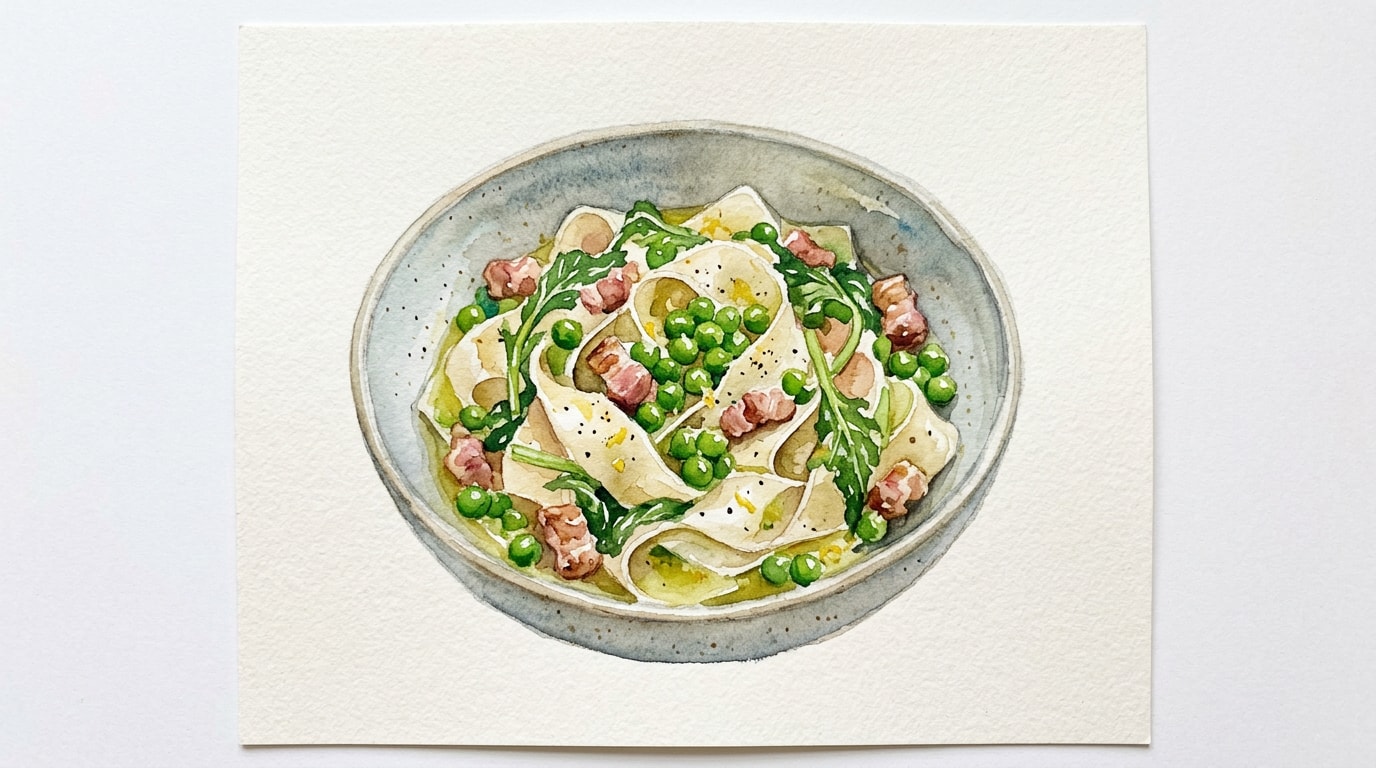
Pasta and Meat
- 400 g dried pappardelle pasta
- 150 g pancetta, diced into small cubes
Vegetables and Aromatics
- 150 g sweet green peas, fresh or thawed from frozen
- 150 g mustard greens, tough stems removed, roughly chopped
- 2 garlic, minced
Dairy and Finishings
- 200 g whole milk ricotta, chilled
- 50 g parmesan cheese, finely grated
- 1 lemon, zested
- 10 g fresh mint, roughly chopped
- 2 g black pepper, freshly cracked
- 120 ml starchy pasta water, reserved from boiling pasta
Nutrition (per serving)
Method
Bring a large pot of heavily salted water to a rolling boil at 100C/212F. Add the pappardelle and cook according to package instructions until al dente. Reserve at least 120ml of the starchy pasta water before draining.
While the pasta water heats, place the diced pancetta into a cold large skillet. Turn the heat to medium and cook slowly to render the fat.
Add the minced garlic and chopped mustard greens directly into the rendered pancetta fat. Sauté briefly until the garlic is fragrant and the greens are just wilted.
Stir the sweet peas into the skillet with the pancetta and greens. Toss gently to coat in the fat and heat through.
Transfer the drained pappardelle to the skillet. Sprinkle in the grated parmesan cheese and pour in half of the reserved pasta water. Toss vigorously with tongs over medium-low heat until the water, cheese, and fat emulsify into a silky sauce, adding more water if necessary.
Remove the skillet from the heat. Divide the pasta among serving bowls. Spoon dollops of fresh whole milk ricotta over each portion. Garnish generously with lemon zest, freshly cracked black pepper, and chopped mint.
Chef's Notes
- Starting pancetta in a cold pan is the secret to perfect rendering. It allows the fat to melt out slowly, crisping the meat in its own oils without burning the edges.
- Mustard greens bring a necessary sharp, peppery bite that acts as a counterbalance to the rich pork fat and sweet peas, keeping the dish from feeling overly heavy.
- Pasta water is an essential ingredient, not a byproduct. The suspended starches act as a binder, grabbing the melted parmesan and rendered pork fat to create a creamy, cohesive emulsion without needing heavy cream.
- Using whole milk ricotta is crucial here; skim versions lack the structural integrity and fat content required to stand up to the warm pasta, often turning watery upon contact.
Storage
Refrigerator: 3 days — Store leftover pasta and ricotta in separate airtight containers.
Reheating: Reheat pasta gently in a skillet over low heat with a splash of water. Add fresh ricotta dollops only after plating.