Equipment
Ingredients
Sofrito and Aromatics
- 150 g yellow onion, finely brunoised (1-2mm dice)
- 100 g carrot, finely brunoised
- 100 g celery, finely brunoised
- 15 g garlic, minced
- 5 g red chili flakes
Sauce Base
- 45 ml extra virgin olive oil
- 30 g tomato paste
- 800 g crushed tomatoes, canned, high quality
- 120 ml vegetable broth
Pasta and Finishing
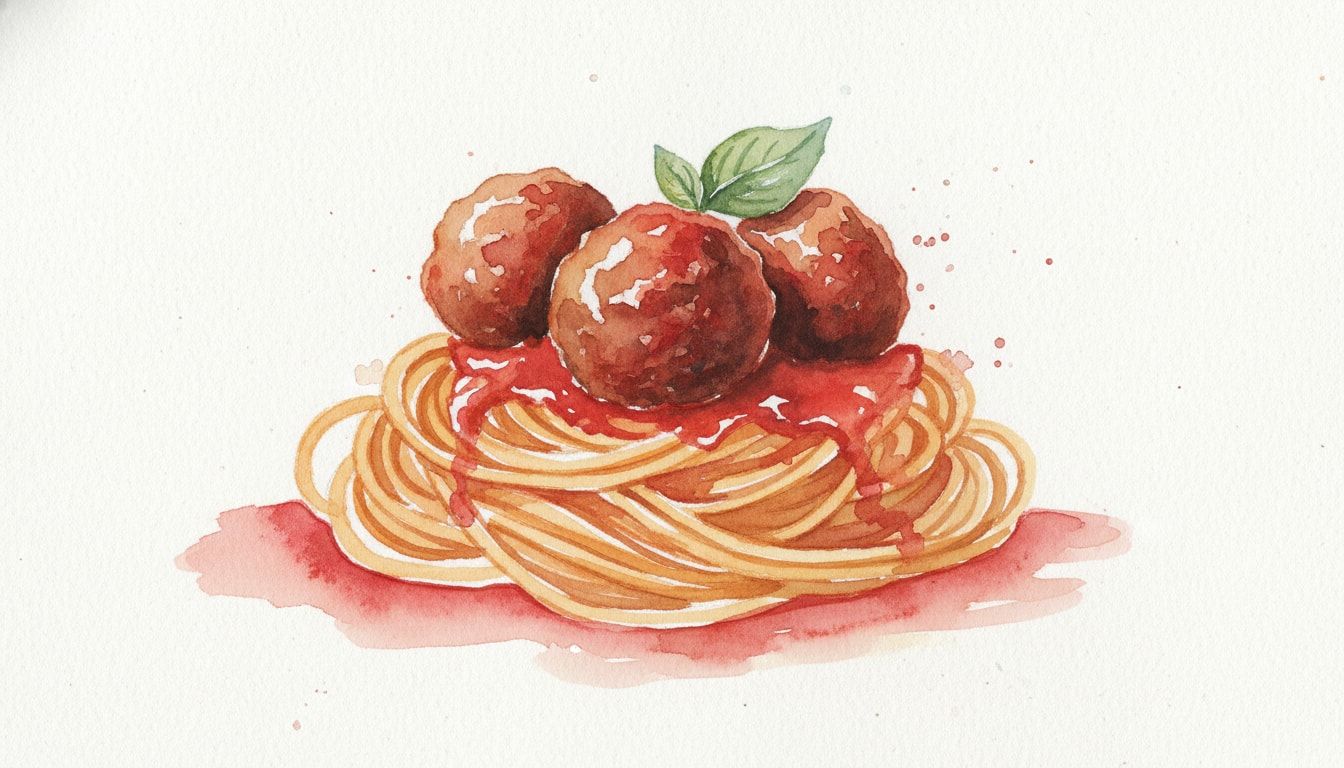
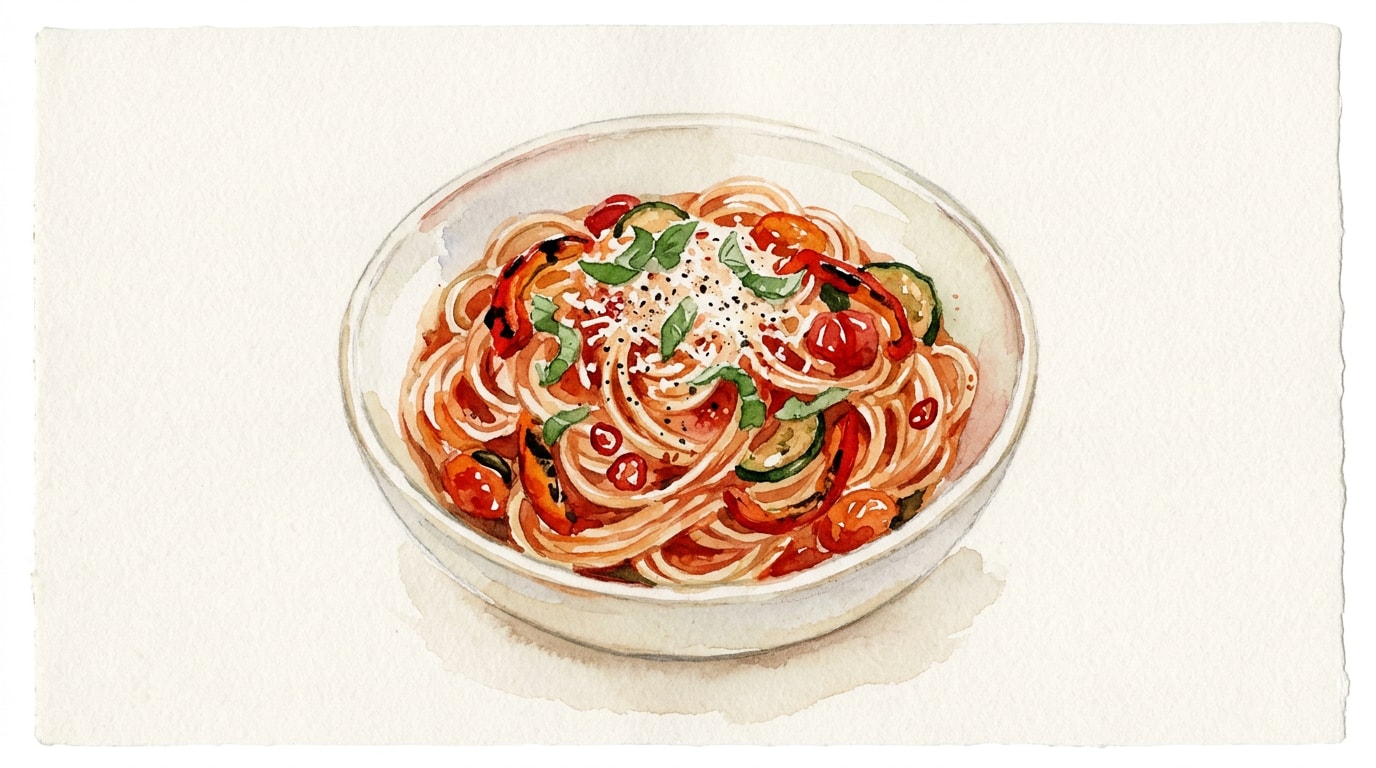
- 400 g dried spaghetti
- kosher salt
- black pepper
- 10 g fresh basil, torn
Nutrition (per serving)
Method
Using a chef's knife and cutting board, finely mince the yellow onion, carrot, and celery into uniform 1-2mm pieces.
Heat the extra virgin olive oil in a large Dutch oven over medium heat (around 160C/320F). Add the minced onion, carrot, and celery. Stir frequently with a wooden spoon until the vegetables are completely softened and deeply golden, but not burnt.
Clear a small space in the center of the Dutch oven. Add the minced garlic, red chili flakes, and tomato paste. Cook until the tomato paste darkens to a rust color and the aromatics are highly fragrant.
Pour in the crushed tomatoes and vegetable broth. Season lightly with kosher salt and black pepper. Bring to a gentle bubbling state, then lower the heat to maintain a slow, steady bubble (around 90C/195F). Cook uncovered.
While the sauce simmers, bring heavily salted water to a rolling boil (100C/212F) in a large pasta pot. Add the dried spaghetti and cook until just shy of al dente, usually 1 minute less than package directions. Reserve 120ml of the starchy pasta water before proceeding.
Using tongs, transfer the slightly undercooked spaghetti directly from the water into the simmering tomato sauce. Add a splash of the reserved pasta water. Vigorously toss the pasta in the sauce over medium heat until the sauce clings tightly to the noodles.
Remove the Dutch oven from the heat. Fold in the torn fresh basil and adjust final seasoning with salt and black pepper if necessary. Portion immediately into warm bowls.
Chef's Notes
- The secret to a complex vegetarian sauce is the 'sofrito' or 'battuto'. By chopping the onion, carrot, and celery extremely fine and taking the time to slowly caramelize them, you build a foundation of deep, savory sweetness that mimics the richness of meat.
- Do not rinse your pasta after boiling. The surface starches are essential for helping the tomato sauce emulsify and adhere to the noodles.
- If you prefer a perfectly smooth sauce rather than a rustic texture, you can use an immersion blender to puree the simmering sauce right before dropping the pasta in.
- The heat of red chili flakes blooms best in fat. Adding them during the toasting phase with the tomato paste ensures the spicy oils are evenly distributed throughout the entire dish.
Storage
Refrigerator: 4 days — Store pasta and sauce separately if possible to prevent the spaghetti from absorbing too much liquid and becoming mushy.
Freezer: 3 months — Freeze the sauce only. Cook fresh pasta when ready to serve.
Reheating: Gently warm the sauce in a pan over medium heat, adding a splash of water if it has thickened too much.