Equipment
Ingredients
Seafood and Meat
- 1000 g fresh littleneck clams, in shells
- 200 g mexican chorizo, casing removed
Pasta and Aromatics
- 400 g spaghetti
- 30 ml olive oil
- 150 g white onion, finely diced
- 20 g garlic, minced
- 3 dried chiles de arbol, lightly crushed
Broth and Garnish
- 400 g diced tomatoes, canned or fresh
- 120 ml dry white wine
- 20 g fresh cilantro, roughly chopped
- 30 ml lime juice, freshly squeezed
- 30 g kosher salt
Nutrition (per serving)
Method
Place the clams in a large mixing bowl of cold water with 10g of kosher salt. Let sit for 30 minutes to purge sand and grit, then scrub the shells clean and rinse thoroughly.
Bring a large pot of water to a vigorous boil at 100°C/212°F with the remaining 20g of salt. Cook spaghetti according to package directions, aiming for 2 minutes shy of al dente, as it will finish cooking in the sauce.
Heat the olive oil in a large skillet over medium-high heat. Add the raw Mexican chorizo, breaking it apart, and cook until the fat renders and the pork reaches an internal temperature of 74°C/165°F and is beautifully browned.
Add the diced white onion, minced garlic, and crushed chiles de arbol to the rendered chorizo fat. Sauté until the onions soften, become translucent, and absorb the vibrant red color of the oil.
Pour in the dry white wine to deglaze the skillet. Use a wooden spoon or tongs to scrape up any deeply flavored browned bits from the bottom. Simmer until the alcohol smell dissipates and the liquid reduces by half.
Stir in the diced tomatoes and bring the mixture to a gentle simmer. Allow the flavors to meld, creating a rich, spiced broth base.
Nestle the clean, purged clams directly into the simmering broth. Cover the skillet tightly with its lid and let the clams steam until they open wide, releasing their briny juices into the sauce.
Using tongs, transfer the undercooked spaghetti directly from the pot into the skillet. Toss the pasta vigorously in the clam broth and sauce over medium heat until the pasta is fully tender and coated in an emulsified sauce.
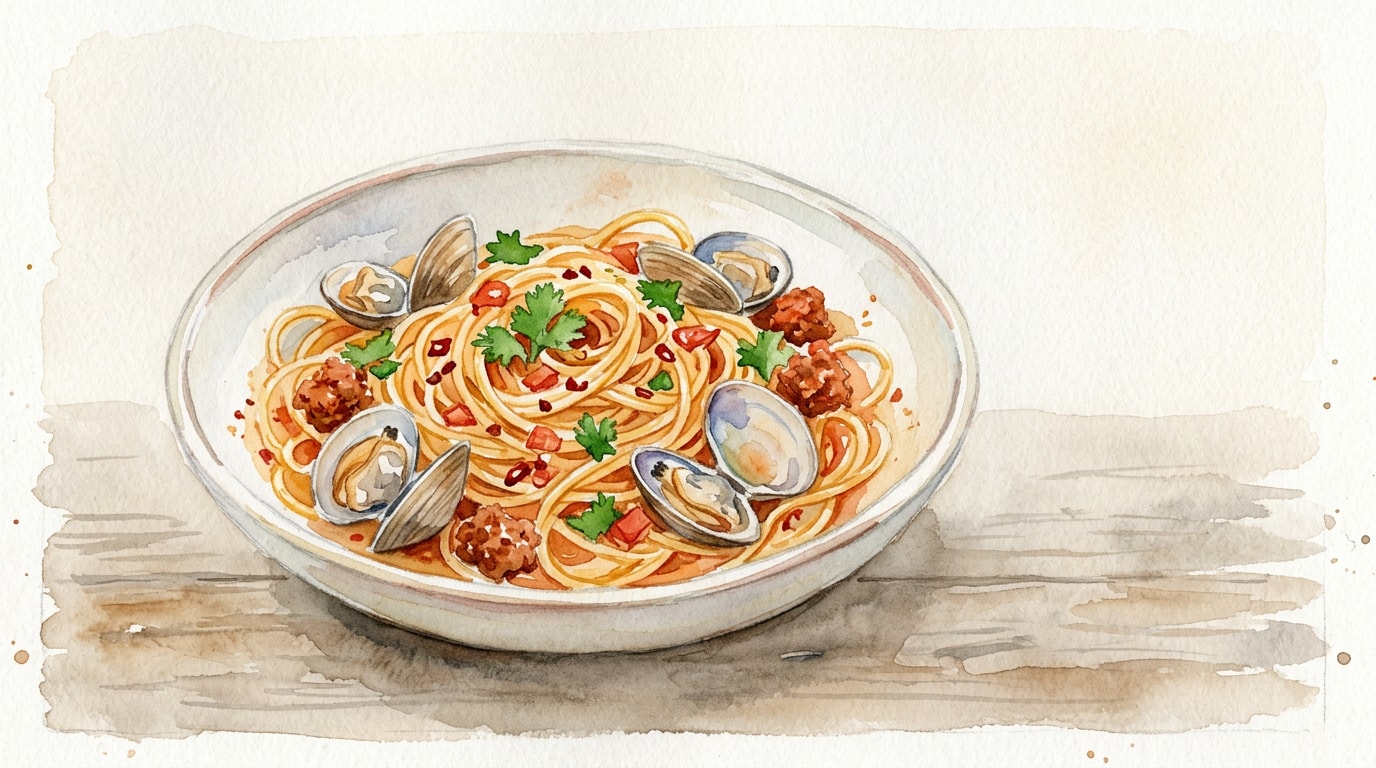
Remove from heat. Discard any clams that resolutely refuse to open. Stir in the freshly chopped cilantro and a bright squeeze of lime juice. Plate the dish directly from the skillet, ensuring an even distribution of clams and chorizo over the pasta.
Chef's Notes
- Mexican chorizo is a fresh, raw pork sausage heavily seasoned with chiles and vinegar, fundamentally different from cured, sliceable Spanish chorizo. Do not substitute cured chorizo without adjusting the recipe to include additional fat, smoked paprika, and a splash of apple cider vinegar.
- The secret to a luscious, non-watery seafood pasta is starch. By finishing the undercooked pasta directly in the clam and chorizo broth, the starches thicken the briny liquids into a cohesive glaze that clings to every strand.
- Toasting dried chiles de arbol briefly in a dry pan before crushing unlocks their full aromatic potential, but watch them closely as they can turn bitter if burnt.
- When purging clams, adding a tablespoon of cornmeal to the cold salted water is a traditional trick believed to encourage the clams to filter water more actively, expelling sand faster.
Storage
Refrigerator: 1 day — Remove clam meat from shells before storing to maximize space. Texture will degrade upon reheating.
Reheating: Reheat gently in a saucepan over low heat with a splash of water or broth to prevent the pasta from drying out and the seafood from rubberizing.