Equipment
Ingredients
Main Ingredients
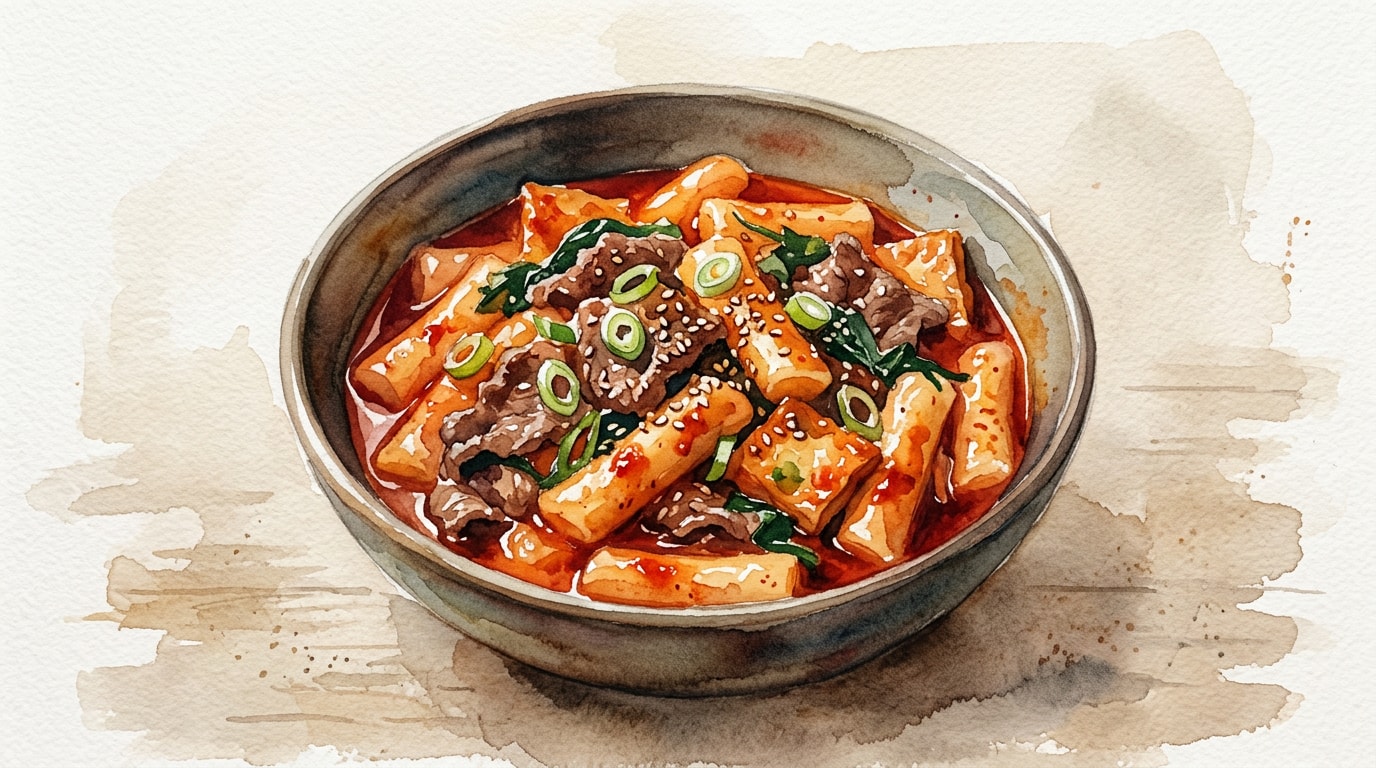
- 400 g garaetteok (korean cylinder rice cakes), separated
- 150 g thinly sliced beef brisket or ribeye, cut into bite-sized pieces
- 100 g korean flat fish cakes, cut into triangles or bite-sized squares
- 100 g green cabbage, chopped into large bite-sized squares
- 2 scallions, cut into 5cm lengths
Tteokbokki Sauce
- 400 ml anchovy broth
- 50 g gochujang (korean red chili paste)
- 15 g gochugaru (korean red chili flakes)
- 30 ml soy sauce
- 25 g granulated sugar
- 3 garlic, minced
Garnish
- 15 ml toasted sesame oil
- 5 g toasted sesame seeds
Nutrition (per serving)
Method
Place the rice cakes in a mixing bowl and cover with warm water to soak. Let them sit for 10 minutes to soften. Drain thoroughly before using.
In a small bowl, combine the gochujang, gochugaru, soy sauce, granulated sugar, and minced garlic. Stir until a thick, uniform paste forms.
Pour the anchovy broth into a large deep skillet or wok and bring to a rapid boil over medium-high heat.
Whisk the prepared chili paste mixture into the boiling broth until completely dissolved. Add the drained rice cakes, reducing the heat to medium to maintain a steady simmer.
Stir in the chopped green cabbage and flat fish cakes. Continue to simmer, stirring frequently to prevent the rice cakes from sticking to the bottom of the pan. Cook until the cabbage wilts and the sauce begins to reduce and thicken.
Add the thinly sliced beef and scallions to the pan. Wash hands immediately after handling raw meat to avoid cross-contamination. Stir continuously until the beef is fully cooked through to a safe internal temperature of 74C or 165F and no pink remains.
Remove the skillet from the heat. Drizzle the toasted sesame oil over the top and scatter the toasted sesame seeds evenly. Serve immediately while piping hot.
Chef's Notes
- Gochugaru dictates the heat level of this dish, while gochujang dictates the salty, sweet, and fermented flavor base. Adjust the gochugaru to modify spiciness without ruining the seasoning balance.
- Using traditional anchovy and kelp broth instead of plain water elevates the dish dramatically, providing a complex, savory umami backbone that balances the aggressive heat and sweetness.
- Because thinly sliced beef cooks in mere minutes, it must be added at the very end of the cooking process. Overcooking will render it tough, dry, and chewy.
- To achieve a glossy, restaurant-style finish, substitute half of the granulated sugar with Korean rice syrup or corn syrup.
Storage
Refrigerator: 3 days — Store in an airtight container. The rice cakes will harden in the fridge and require reheating with a splash of water to soften.
Reheating: Reheat in a pan over medium-low heat with 2 to 3 tablespoons of water or broth, stirring gently until the rice cakes regain their soft, chewy texture.