Equipment
Ingredients
Aromatics and Spices
- 30 ml olive oil
- 1 yellow onion, diced
- 4 garlic, minced
- 4 g ground cumin
- 4 g smoked paprika
- 1 g crushed red pepper flakes
- 1 g ground cinnamon
- 30 g tomato paste
Broth and Grains
- 1200 ml vegetable broth, low sodium preferred
- 150 g wheat berries, rinsed well
Vegetables and Beans
- 500 g butternut squash, peeled, seeded, and cut into 2cm cubes
- 240 g cooked chickpeas, rinsed and drained
Finishing
- 100 g kale, stems removed, leaves roughly chopped
- 15 ml lemon juice, freshly squeezed
- 5 g fine sea salt
Nutrition (per serving)
Method
Heat the olive oil in a large Dutch oven over medium heat. Add the diced yellow onion and cook until softened and translucent, stirring occasionally.
Stir in the minced garlic, ground cumin, smoked paprika, red pepper flakes, ground cinnamon, and tomato paste. Cook constantly until the spices are highly fragrant and the tomato paste deepens to a dark brick-red color.
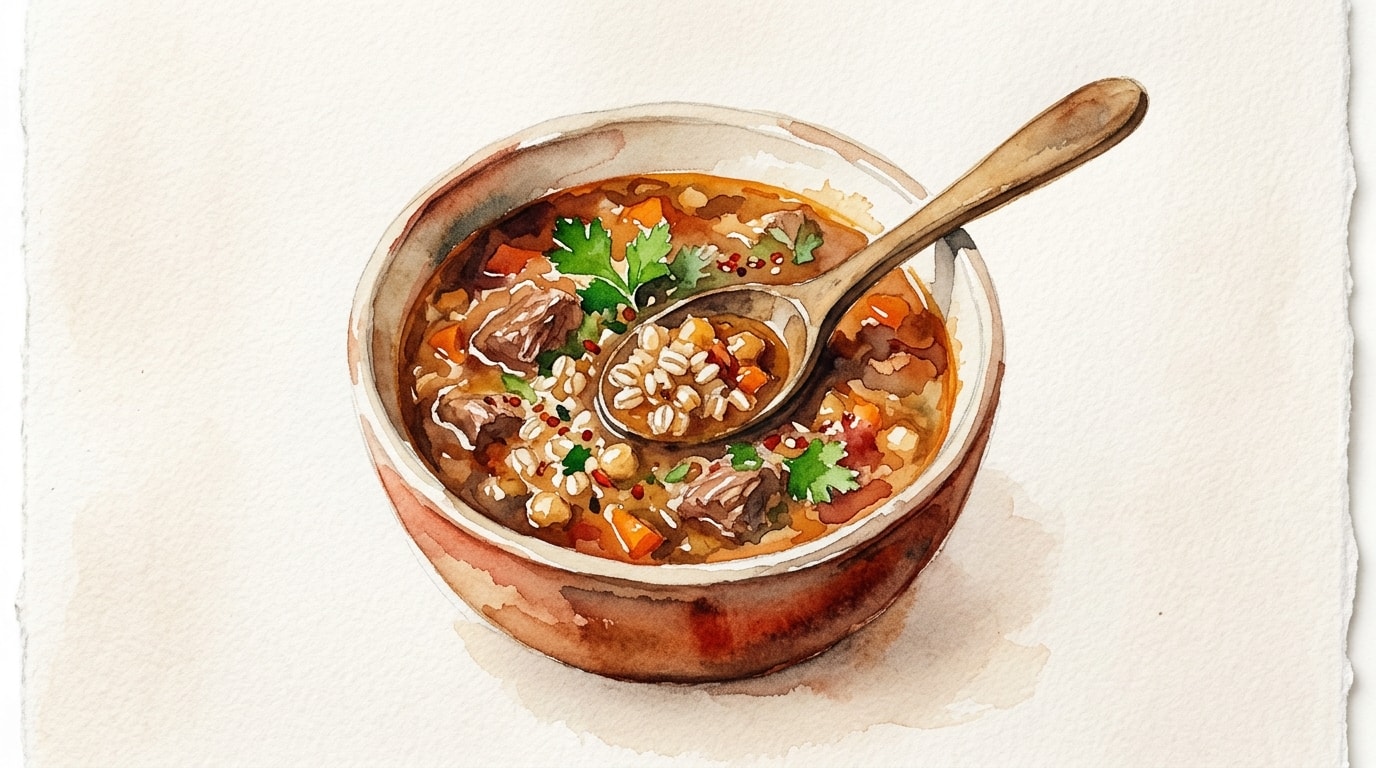
Pour in the vegetable broth, scraping the bottom of the pot with a wooden spoon to release any browned bits. Add the rinsed wheat berries. Bring the liquid to a rolling boil, then reduce the heat to low, cover, and simmer.
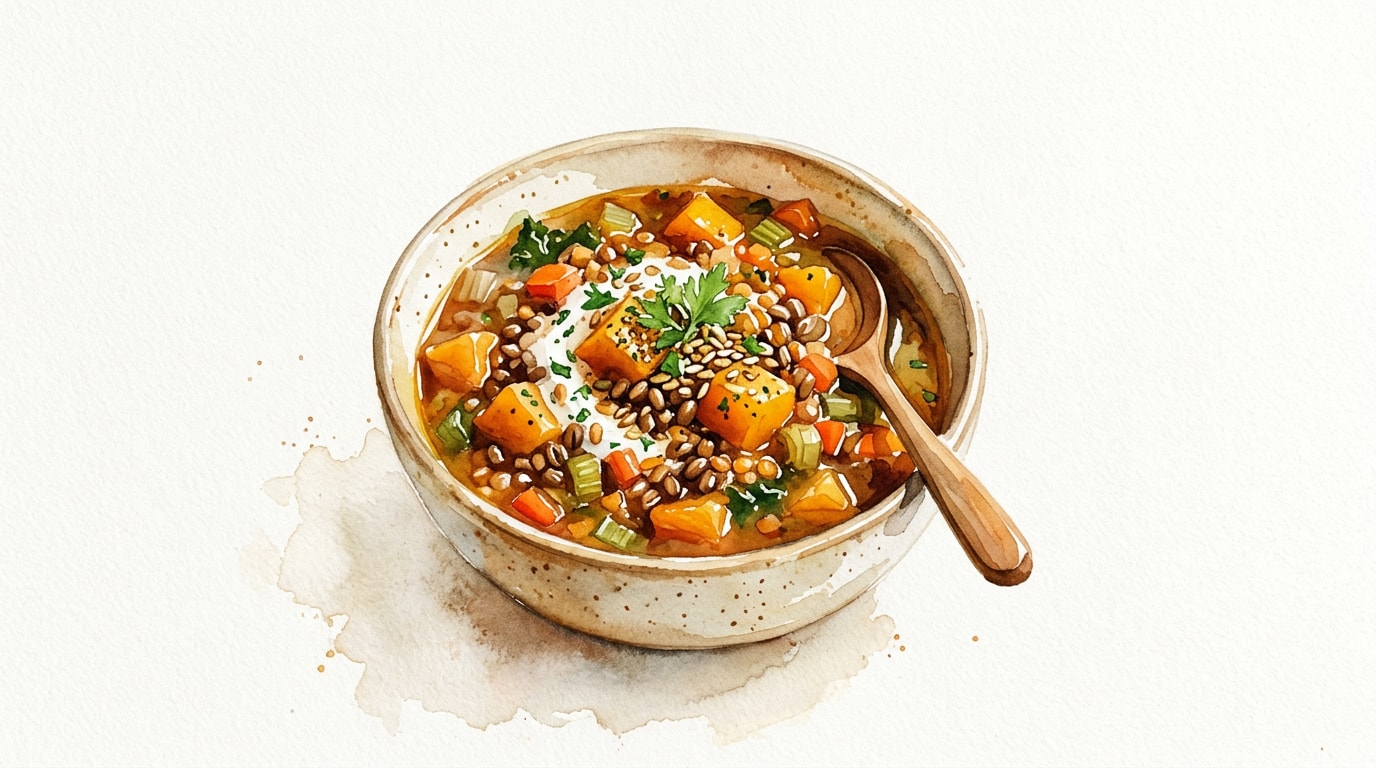
Remove the lid and gently stir in the diced butternut squash and cooked chickpeas. Recover the pot and continue to simmer until the squash is perfectly tender and the wheat berries are pleasantly chewy but fully cooked through.
Remove the pot from the heat. Fold in the chopped kale, fresh lemon juice, and sea salt. Let the stew sit off the heat, covered, until the residual heat wilts the greens into the broth.
Chef's Notes
- Wheat berries vary drastically based on their specific variety. Hard red winter berries hold their shape perfectly in stews but require the longest cooking times, whereas soft white berries will cook faster but may split open.
- For an even deeper flavor profile, try roasting the diced butternut squash in a 200 C (400 F) oven for 20 minutes before adding it to the stew during the final 10 minutes of simmering.
- Acid is crucial for waking up heavy, earthy winter dishes. If the stew tastes flat despite adequate salting, an extra dash of lemon juice or a splash of apple cider vinegar right before serving will brighten the entire pot.
- If you plan to freeze large batches, consider deliberately undercooking the squash slightly during the initial preparation so it does not turn mushy upon thawing and reheating.
Storage
Refrigerator: 5 days — The stew will thicken over time as the grains absorb broth. Add a splash of water when reheating.
Freezer: 3 months — Freeze in airtight containers. The squash may become slightly softer upon thawing.
Reheating: Reheat gently on the stovetop over medium heat, or in the microwave, adding liquid as needed.