Equipment
Ingredients
Seafood
- 600 g whole large shrimp, shell-on
Aromatic Salt Bed
- 1000 g coarse rock salt
- 6 green cardamom pods, lightly crushed
- 1 cinnamon stick, broken in half
- 3 star anise, whole
- 5 g black peppercorns, whole
- 1 jalapeño pepper, thickly sliced
Nutrition (per serving)
Method
In a deep cast iron skillet or ceramic baking dish, combine the coarse rock salt, lightly crushed cardamom pods, broken cinnamon stick, whole star anise, black peppercorns, and thickly sliced jalapeño. Toss well so the spices are evenly distributed throughout the salt.
Preheat the oven to 220°C (430°F). Place the dish with the salt mixture into the oven to preheat for 15 to 20 minutes. The salt must become blisteringly hot and extremely fragrant before adding the seafood.
While the salt is heating, thoroughly pat the shell-on shrimp completely dry using paper towels. Ensure no surface moisture remains, as water will cause the hot salt to dissolve, stick to the shells, and over-season the meat. Remember to wash your hands thoroughly after handling raw seafood to prevent cross-contamination.
Carefully remove the extremely hot dish from the oven using thick oven mitts. Working quickly with long metal tongs, nestle the dried shrimp deeply into the salt bed, covering them partially or completely with the hot aromatic salt.
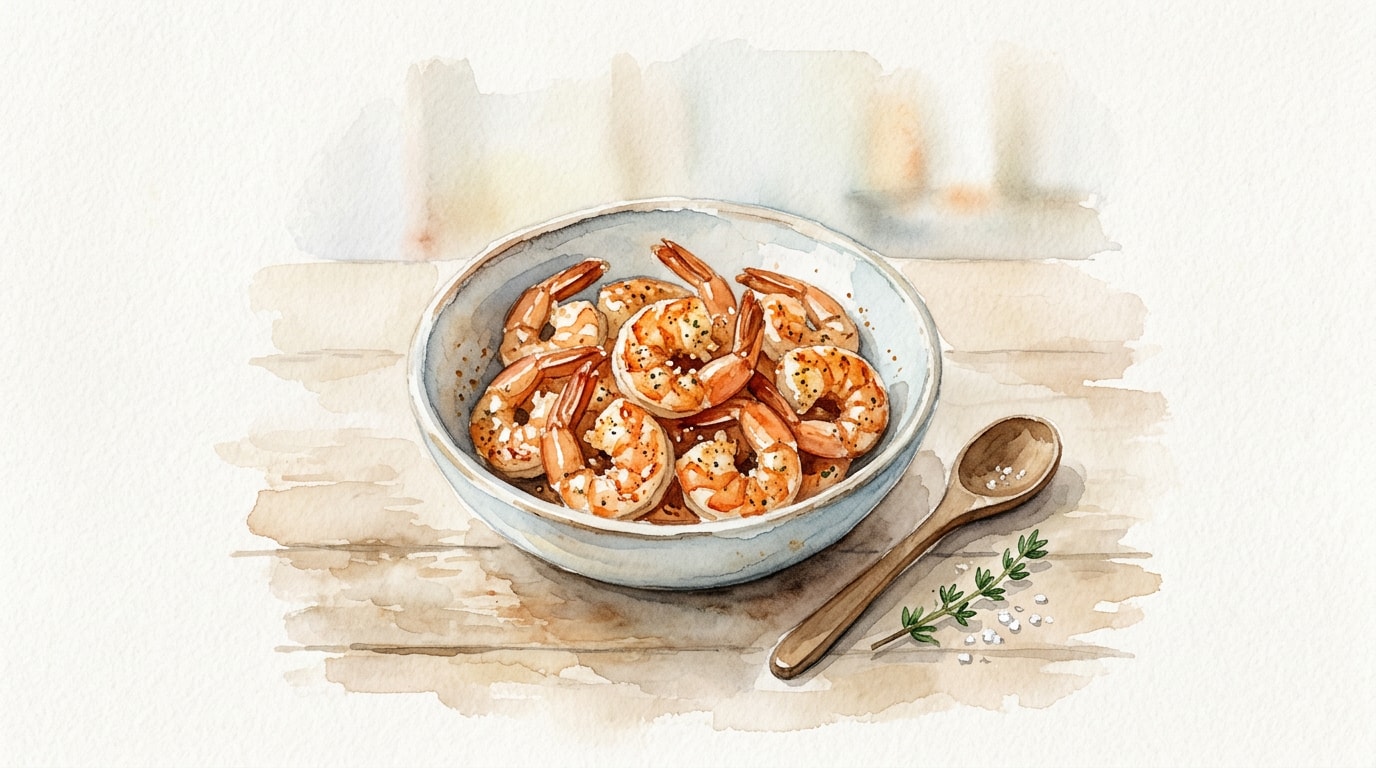
Return the dish to the oven and roast for 5 to 7 minutes. The precise time depends on the size of the shrimp. They are cooked when the shells turn bright pink, the meat turns opaque, and the internal temperature reaches 63°C (145°F).
Immediately extract the shrimp from the hot dish using tongs, giving them a firm tap or brush to remove any clinging salt crystals. Do not leave them in the dish or the residual heat will overcook them. Transfer to a serving platter and serve immediately.
Chef's Notes
- Shell-on shrimp is an absolute requirement for this technique. The shell acts as a protective barrier, allowing the meat to steam gently in its own juices while absorbing the aromatic oils without taking on excess sodium.
- Using coarse rock salt is vital; fine table salt will suffocate the ingredients and drastically over-season the dish due to its higher surface area contact.
- Do not throw away the spiced salt after one use. Once completely cooled, you can sift out any large debris and store the heavily flavored salt in an airtight container for another round of roasting.
- The jalapeño slices will dehydrate and release their volatile oils into the salt as it preheats. If you prefer a milder flavor, remove the seeds before slicing the pepper.
Storage
Refrigerator: 2 days — Store peeled in an airtight container. Best eaten fresh as reheating will overcook the delicate protein.
Reheating: Not recommended. If necessary, flash heat in a warm pan for 30 seconds or serve chilled over a salad.