Equipment
* optional
Ingredients
Détrempe (Dough Base)
- 250 g bread flour
- 160 ml water, room temperature
- 5 g instant yeast
- 5 g salt
- 15 g unsalted butter, melted and cooled slightly
Beurrage (Butter Block)
- 200 g unsalted butter, cold, high quality European style preferred
Spiced Sugar Coating
- 200 g granulated sugar
- 5 g orange zest
- 5 g ground cinnamon
- 3 g ground ginger
- 2 g ground cardamom
- 1 g ground clove
- 2 g salt
Pan Preparation
- 15 g unsalted butter, softened
Nutrition (per serving)
Method
Combine bread flour, water, instant yeast, salt, and melted butter in a stand mixer. Mix on low speed until a shaggy dough forms, then knead on medium speed for 5 minutes until smooth and elastic.
Transfer the dough to a lightly oiled bowl, cover, and let proof at room temperature for 1 hour. Deflate the dough, wrap tightly, and refrigerate for at least 4 hours or overnight to relax the gluten.
Place the cold butter for the beurrage between two sheets of parchment paper. Pound the butter with a rolling pin to soften it slightly, then roll it into a neat 15 by 15 centimeter square.
Roll the chilled dough on a lightly floured surface into a 15 by 30 centimeter rectangle. Place the butter square on one half of the dough, fold the other half over it, and pinch the edges to seal completely.
Turn the dough so the open seam faces away from you. Roll the dough into a 20 by 45 centimeter rectangle. Fold the dough into thirds like a letter. Wrap and chill in the refrigerator for 30 minutes.
Perform a second turn by rolling the dough again to a 20 by 45 centimeter rectangle and folding into thirds. Wrap and chill for another 30 minutes.
While the dough chills, rub the granulated sugar, orange zest, ground cinnamon, ground ginger, ground cardamom, ground clove, and salt together in a bowl until the mixture is deeply fragrant and the zest is evenly distributed.
Generously coat your work surface and the top of the dough with half of the spiced sugar mixture. Roll the dough to a 20 by 45 centimeter rectangle, pressing the sugar into the dough. Fold into thirds to trap the sugar inside. Chill for 30 minutes.
Thoroughly coat the cups of a 12-cup muffin tin with softened butter. Roll the dough out using the remaining spiced sugar into a 20 by 30 centimeter rectangle. Trim the edges and cut into 12 equal squares. Pull the four corners of each square into the center, pressing firmly to seal, and place each firmly into a muffin cup.
Cover the muffin tin loosely and let the pastries proof at room temperature until puffy and slightly jiggly, about 1 hour.
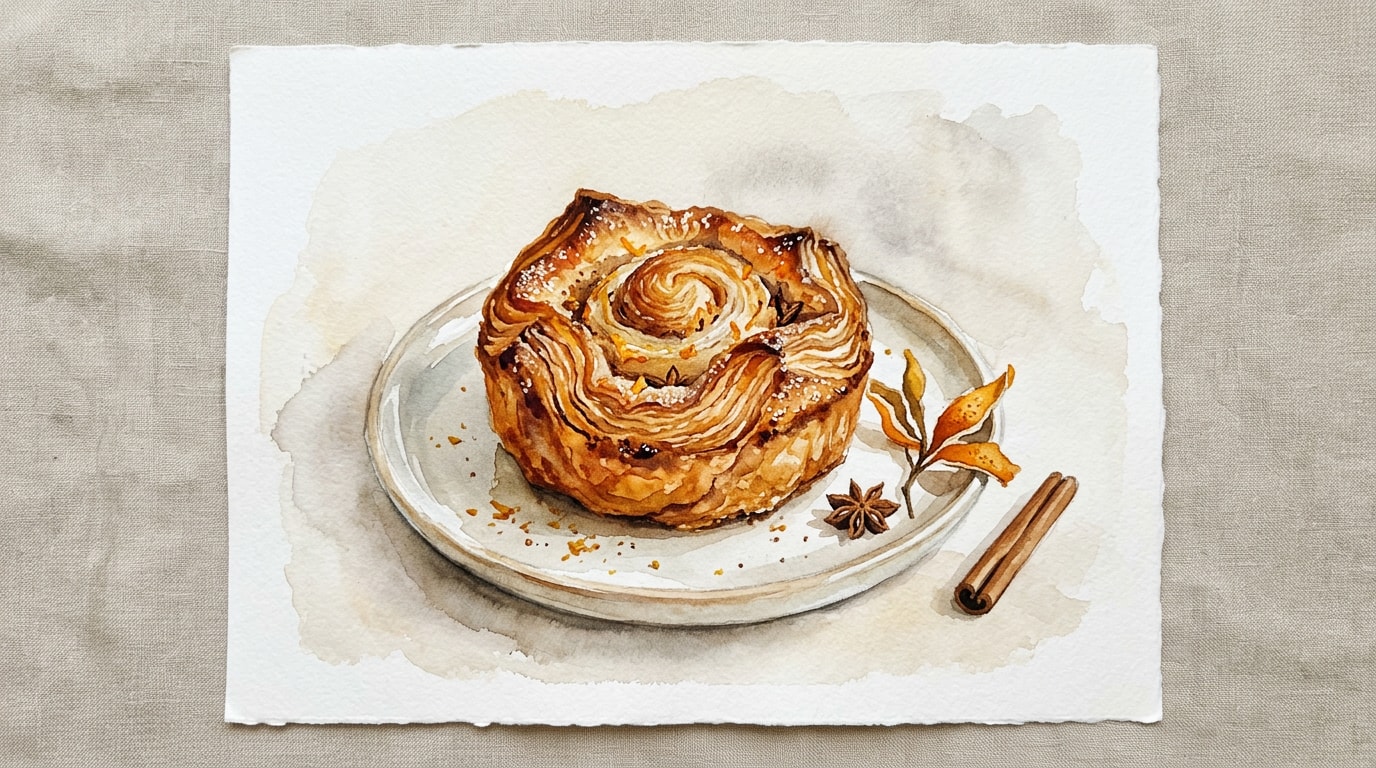
Bake in a preheated 200°C/400°F oven for 20 to 25 minutes. The sugar will bubble vigorously and the pastries will develop a deep mahogany color.
Immediately carefully turn the pastries out of the tin onto a wire rack. Use tongs or two forks to assist. Do not allow them to cool in the pan or the caramelized sugar will cement them in place.
Chef's Notes
- Temperature management is the key to all laminated doughs. If the butter ever feels soft or begins to melt while rolling, immediately place the dough in the freezer for 10 minutes.
- Do not add the sugar until the final turn. Sugar acts as a tenderizer and draws out moisture; adding it too early will turn the dough into an unworkable, sticky mess.
- Pounding the cold butter instead of just letting it warm up creates a pliable structure without melting the fat crystals, ensuring distinct, flaky layers.
- Use a dark, robust orange for zesting. The essential oils rubbed into the sugar are what carry the flavor through the intense heat of caramelization.
- A heavy-duty aluminum muffin tin yields the best balance between proper heat conduction for caramelization and preventing the sugar from burning.
Storage
Freezer: 1 month — Freeze unbaked, shaped pastries in the tin. Bake directly from frozen, adding 5 to 10 minutes to the bake time.
Reheating: Refresh baked pastries in a 175°C/350°F oven for 5 minutes to crisp the caramel.