Equipment
Ingredients
Pasta
- 400 g spaghetti
- 4000 ml water
- 30 g salt
Sauce
- 15 ml extra virgin olive oil
- 150 g prosciutto, torn into bite-sized ribbons
- 2 garlic, minced
- 250 ml heavy cream, room temperature
- 150 g frozen peas, thawed slightly
- 60 g parmesan cheese, freshly grated
- 2 g black pepper, freshly cracked
Nutrition (per serving)
Method
Bring the large pot of salted water to a rolling boil at 100°C/212°F. Add the spaghetti and cook until al dente, about 1 minute less than the package instructions. Reserve at least 100ml of starchy pasta water before draining the noodles.
While the pasta boils, heat the olive oil in the large skillet over medium heat. Add the torn prosciutto and saute until crispy, which should take about 3 minutes. Remove half of the crisped prosciutto to a paper towel-lined plate to use later as a garnish.
Reduce the skillet heat to medium-low. Add the minced garlic to the pan with the remaining prosciutto and saute briefly until fragrant, stirring constantly to prevent burning.
Pour the heavy cream into the skillet, stirring to scrape up any browned bits from the bottom. Bring the mixture to a gentle simmer and let it reduce slightly to concentrate the flavors.
Stir the frozen peas into the simmering cream sauce. Continue to cook until the peas are heated through and become tender.
Transfer the drained spaghetti directly into the skillet with the cream sauce. Sprinkle in the grated parmesan cheese and add a splash of the reserved pasta water. Toss vigorously with tongs to emulsify the sauce until it clings evenly to the pasta.
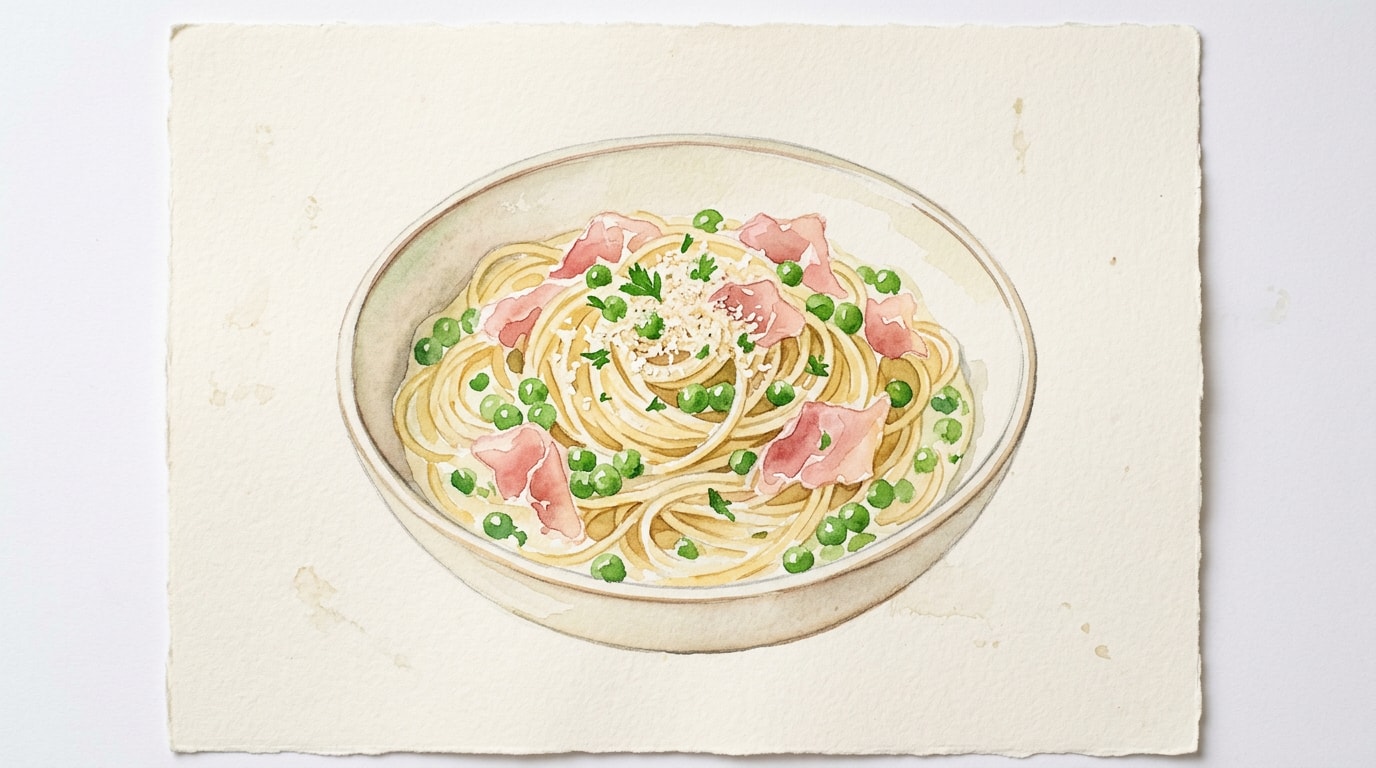
Portion the pasta into warmed serving bowls. Top each serving with the reserved crispy prosciutto and extra black pepper. Serve immediately while hot.
Chef's Notes
- Reserving starchy pasta water is the secret to all Italian pasta sauces. The starch acts as a binder, bridging the gap between the fat in the cream and the water, creating a cohesive, velvety glaze.
- Prosciutto is already heavily cured and salted. Taste your sauce before adding any extra salt at the end, as the meat, parmesan, and pasta water will contribute significant salinity.
- Frozen peas are actually preferable to fresh peas for this dish. They are flash-frozen at peak ripeness, ensuring a sweeter flavor and more consistent texture year-round.
- Always grate your own parmesan from a block. Pre-grated cheeses contain cellulose powder to prevent clumping in the bag, which will prevent your sauce from achieving a silky texture.
Storage
Refrigerator: 3 days — Store in an airtight container. The pasta will absorb sauce over time.
Reheating: Reheat gently in a skillet over medium-low heat with a splash of milk or water to help reconstitute the emulsion.