Equipment
* optional
Ingredients
Lamb Ragu
- 1000 g boneless lamb shoulder, cut into 5cm pieces
- 30 ml olive oil
- 1 yellow onion, finely diced
- 1 carrot, finely diced
- 1 celery, finely diced
- 4 garlic, minced
- 30 g tomato paste
- 250 ml dry red wine
- 800 g crushed tomatoes
- 250 ml beef stock
- 2 fresh rosemary, whole sprigs
- 4 fresh thyme, whole sprigs
- 2 bay leaf
- 10 g kosher salt
- 5 g black pepper, freshly ground
Potato Gnocchi
- 1000 g russet potatoes, whole, unpeeled
- 250 g type 00 flour
- 1 egg, beaten
- 5 g kosher salt
Garnish
- 50 g parmigiano-reggiano, freshly grated
- 10 g fresh parsley, finely chopped
Nutrition (per serving)
Method
Pat the pieces of lamb shoulder dry with paper towels and season generously on all sides with kosher salt and black pepper.
Heat olive oil in a large skillet over medium-high heat until shimmering, around 190°C/375°F. Sear the lamb in batches until a deep brown crust forms on all sides.
Transfer the seared lamb pieces to the bowl of a slow cooker, leaving the rendered fat in the skillet.
Reduce the heat under the skillet to medium. Add the diced onion, carrot, and celery. Cook until the vegetables soften and the onion is translucent.
Stir the minced garlic and tomato paste into the vegetables. Cook until the tomato paste deepens in color to a dark brick red.
Pour the red wine into the skillet to deglaze, scraping up any browned bits stuck to the bottom of the pan. Allow the liquid to reduce by half.
Add the crushed tomatoes and beef stock to the skillet, bring to a brief simmer, then pour the entire vegetable and tomato mixture over the lamb in the slow cooker.
Tuck the whole sprigs of rosemary, thyme, and the bay leaves into the liquid in the slow cooker.
Cover and cook on high heat for 4 hours, or until the lamb is meltingly tender and easily falls apart when pressed.
While the lamb cooks, preheat an oven to 200°C/400°F. Pierce the whole, unpeeled potatoes a few times with a fork and bake them on a baking sheet until completely tender.
As soon as the potatoes are cool enough to handle but still hot, halve them and press the flesh through a potato ricer onto a clean, lightly floured work surface. Allow the steam to escape and cool for 10 minutes.
Drizzle the beaten egg over the riced potatoes and sprinkle evenly with the measured salt. Sift the type 00 flour over the top of the mixture.
Using a bench scraper or your hands, gently fold the mixture over itself until it just begins to come together into a shaggy mass.
Knead the dough very gently and briefly, just until smooth and uniform. Do not overwork it.
Divide the dough into four pieces. Roll each piece into a rope about 2cm thick, then cut the rope into small 2cm pillows. Dust lightly with flour to prevent sticking.
Once the lamb is finished braising, use a slotted spoon to remove the meat pieces to a board. Shred the lamb using two forks, discarding any large pieces of fat.
Return the shredded lamb to the sauce in the slow cooker. Locate and discard the herb stems and bay leaves. Skim excess fat from the surface if desired.
Bring a large pot of generously salted water to a rolling boil at 100°C/212°F. Drop the gnocchi into the water in batches. Cook until they float to the surface, then allow them to cook for 30 seconds longer.
Using a slotted spoon, remove the floating gnocchi directly from the boiling water and transfer them into the warm lamb ragu. Toss very gently to coat.
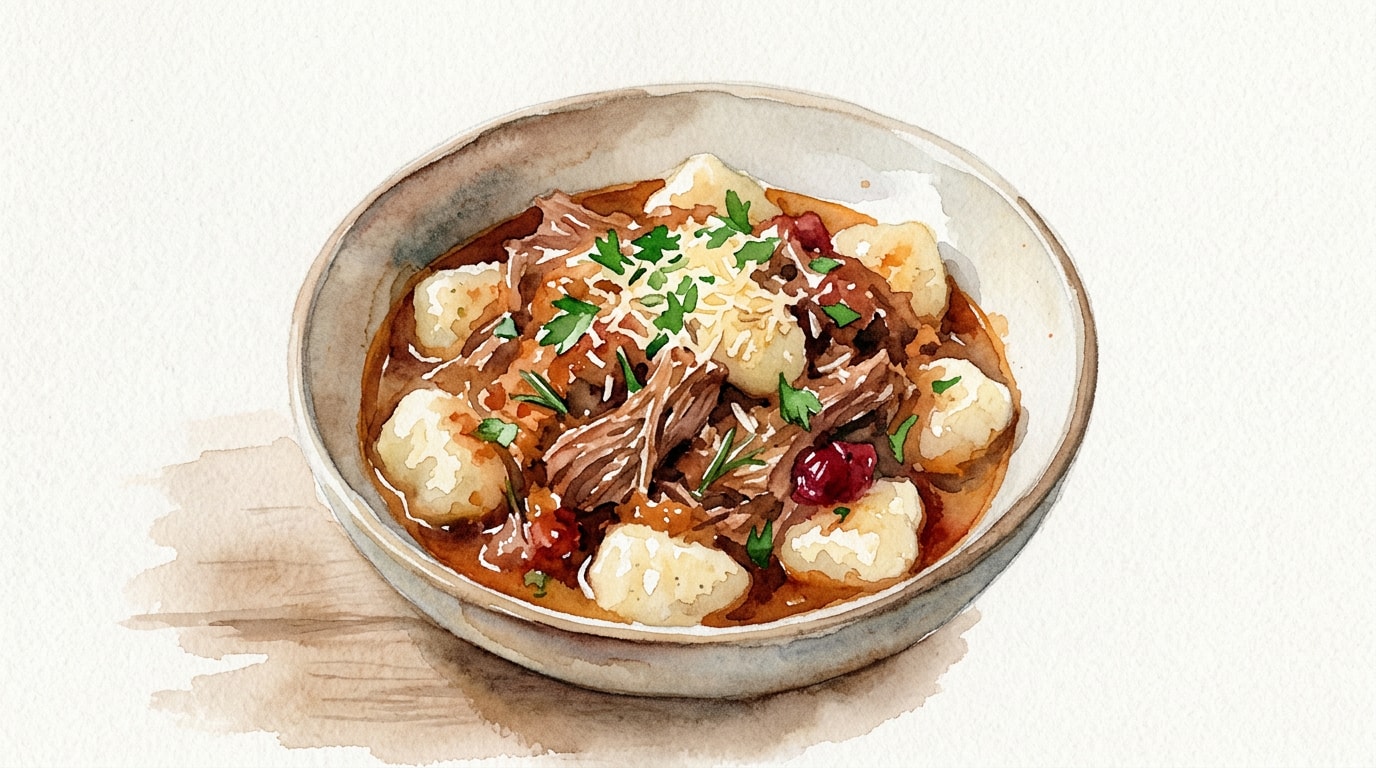
Portion the gnocchi and ragu into warm, shallow bowls. Garnish generously with grated Parmigiano-Reggiano and fresh chopped parsley.
Chef's Notes
- Baking the potatoes instead of boiling them is the single most important technique for light gnocchi. Boiling introduces water into the potato, which then requires more flour to absorb it, resulting in a dense, leaden dumpling.
- Allowing the riced potatoes to steam off and cool slightly is critical before adding the egg; if the potatoes are too hot, the egg will prematurely cook or scramble in the dough.
- When braising the lamb, do not rush the searing step. The Maillard reaction developed in the skillet builds the foundational flavor profile for the entire dish.
- If your slow cooker tends to retain a lot of moisture, you may find the ragu a bit thin at the end. You can transfer the sauce to a wide pot on the stove and simmer rapidly for 15 minutes to reduce and concentrate the flavors.
Storage
Refrigerator: 4 days — Store gnocchi and ragu separately if possible to prevent gnocchi from absorbing too much liquid and becoming mushy.
Freezer: 3 months — Freeze ragu and uncooked gnocchi separately. Do not freeze cooked gnocchi in sauce.
Reheating: Reheat ragu gently on the stovetop. Boil frozen gnocchi directly from the freezer without thawing.