Equipment
Ingredients
Rice
- 400 g short-grain rice, rinsed well
- 480 ml water
Beef and Marinade
- 300 g flank or ribeye steak, cut into thin strips
- 45 ml soy sauce
- 15 ml mirin
- 15 ml sesame oil
- 10 g granulated sugar
- 2 garlic, minced
Vegetables
- 150 g spinach, washed
- 150 g shiitake mushrooms, stems removed, sliced
- 150 g carrot, julienned
- 150 g cucumber, julienned
- 100 g kimchi, chopped
Vegetable Seasonings
- 30 ml sesame oil
- 2 garlic, minced
- salt
Bibimbap Sauce
- 60 g gochujang
- 15 ml sesame oil
- 15 ml water
- 10 g granulated sugar
- 5 g toasted sesame seeds
Toppings
- 4 eggs
- 30 ml sesame oil
Nutrition (per serving)
Method
Combine the rinsed short-grain rice and water in a medium saucepan or rice cooker. Bring to a boil at 100 degrees Celsius / 212 degrees Fahrenheit, then reduce to a simmer, cover, and cook until water is absorbed and rice is tender, about 15 minutes.
In a mixing bowl, combine the thinly sliced steak with soy sauce, mirin, 15ml sesame oil, 10g sugar, and half of the minced garlic. Toss well to coat and set aside to marinate for at least 20 minutes.
Bring a pot of water to a boil. Blanch the spinach for 1 minute until wilted, then immediately drain and rinse under cold water. Squeeze out as much excess liquid as possible. Season in a bowl with a pinch of salt, a dash of sesame oil, and a small amount of minced garlic.
Heat a small amount of sesame oil in a small frying pan over medium-high heat. Quickly saute the julienned carrots with a pinch of salt until slightly softened but still crisp, about 2 minutes. Remove from the pan, then repeat the process for the shiitake mushrooms until browned. Keep the cucumber raw but mix with a pinch of salt.
Whisk together the gochujang, 15ml sesame oil, water, 10g sugar, and toasted sesame seeds in a small bowl until smooth to create the bibimbap sauce.
Heat a skillet over high heat. Add the marinated steak in a single layer and sear until cooked through and nicely browned on the edges, ensuring the internal temperature reaches at least 74 degrees Celsius / 165 degrees Fahrenheit for food safety. Transfer the meat to a plate.
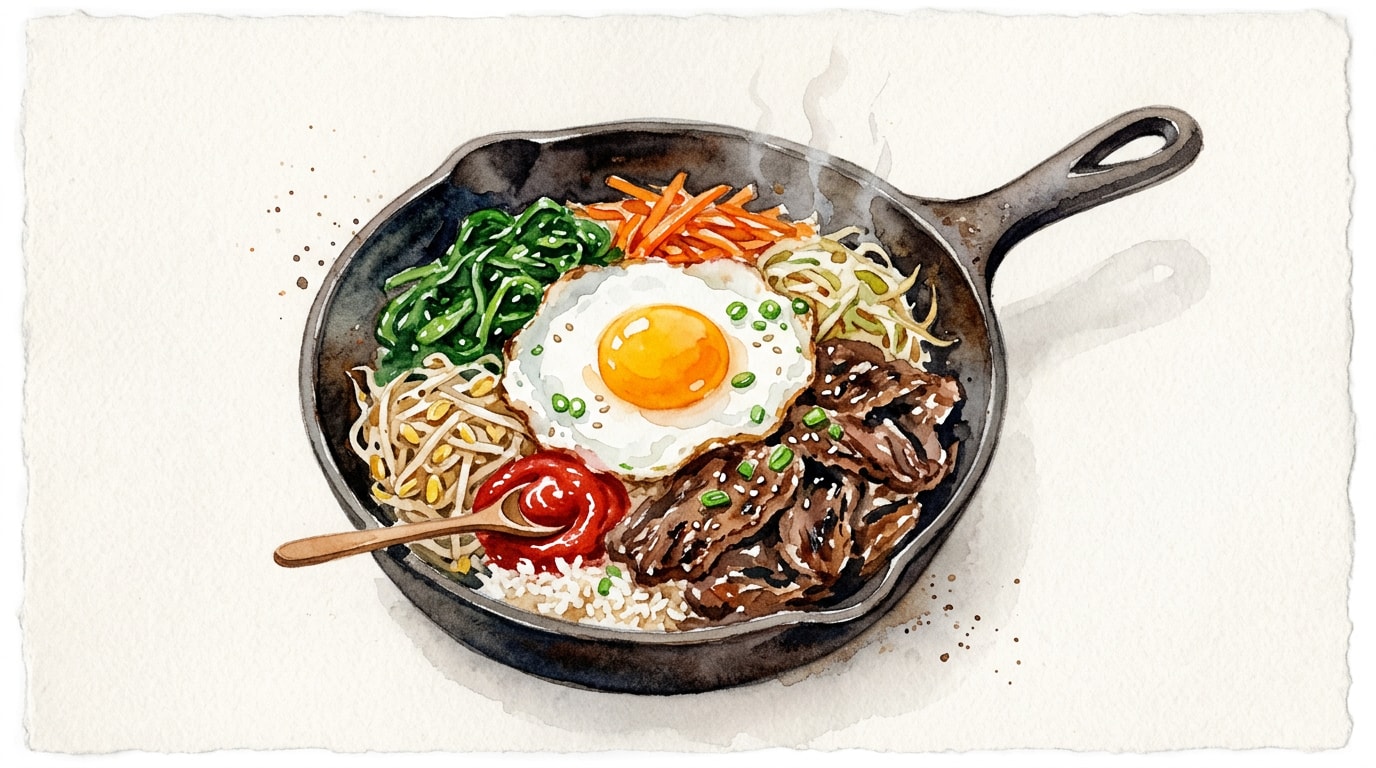
Generously coat the bottom of a large cast iron skillet with 30ml of sesame oil. Place the cooked rice in the skillet, pressing it down firmly into an even layer. Heat over medium-high heat until you hear the rice crackling loudly and it forms a golden, crispy crust on the bottom, about 5 to 7 minutes.
While the rice is crisping, fry the eggs in a separate pan sunny-side up until the whites are set but the yolks remain runny. Note: Use pasteurized eggs if serving vulnerable populations.
Remove the cast iron skillet from the heat. Arrange the cooked steak, seasoned spinach, carrots, shiitake mushrooms, fresh cucumber, and kimchi in distinct, colorful sections over the hot rice. Place the fried eggs directly in the center.
Serve the skillet immediately while still sizzling, with the gochujang sauce on the side. To eat, drizzle the sauce over the ingredients and vigorously mix everything together until the egg yolk coats the rice and the crispy bits are evenly distributed.
Chef's Notes
- The hallmark of a great Dolsot-style bibimbap is 'nurungji', the golden crust of toasted rice at the bottom. Generous oil and patience are key; do not move the rice once it is pressed into the pan.
- Uniformity in slicing your vegetables is visually appealing and ensures a harmonious bite where no single ingredient dominates the texture.
- Do not skip squeezing the blanched spinach. Excess water is the enemy of a beautifully sizzling cast iron pan.
- Always prepare the vegetables separately. While it creates more dishes, individual seasoning highlights the unique flavor profile of each component.
Storage
Refrigerator: 3 days — Store components separately in airtight containers. Mixed leftovers can be stored but will lose the crispy rice texture.
Reheating: Reheat rice and meat in a skillet with a splash of sesame oil or microwave components separately. Fry a fresh egg for best results.