Equipment
Ingredients
Aromatics & Base
- 15 ml coconut oil
- 50 g thai red curry paste
Liquids & Seasoning
- 400 ml full-fat coconut milk, canned, unshaken
- 120 ml water or seafood stock
- 15 ml fish sauce
- 10 g palm sugar, finely chopped
Protein & Vegetables
- 500 g raw tiger prawns, peeled, deveined, tails left on if desired
- 150 g red bell pepper, cored and sliced into thin strips
- 100 g snow peas, trimmed
- 150 g bamboo shoots, canned, drained, sliced
Garnish
- 10 g fresh thai basil leaves
- 3 makrut lime leaves, torn, central vein removed
- 4 lime wedges
Nutrition (per serving)
Method
Prepare all vegetables and ensure the prawns are peeled and deveined. Keep raw seafood strictly separated from fresh vegetables on your cutting board.
Heat the coconut oil in a wok or large skillet over medium heat. Scoop the thick cream from the top of the unshaken coconut milk can and add it to the pan. Cook until it begins to bubble and the oil slightly separates.
Add the Thai red curry paste to the wok. Stir continuously with a wooden spoon until the paste is highly fragrant and mixed thoroughly with the coconut cream.
Pour in the remaining coconut milk, water (or stock), palm sugar, and torn makrut lime leaves if using. Stir well to dissolve the sugar and paste, bringing the mixture to a gentle simmer around 90°C/195°F.
Add the sliced red bell pepper, snow peas, and bamboo shoots to the simmering liquid. Cook until the vegetables are tender-crisp.
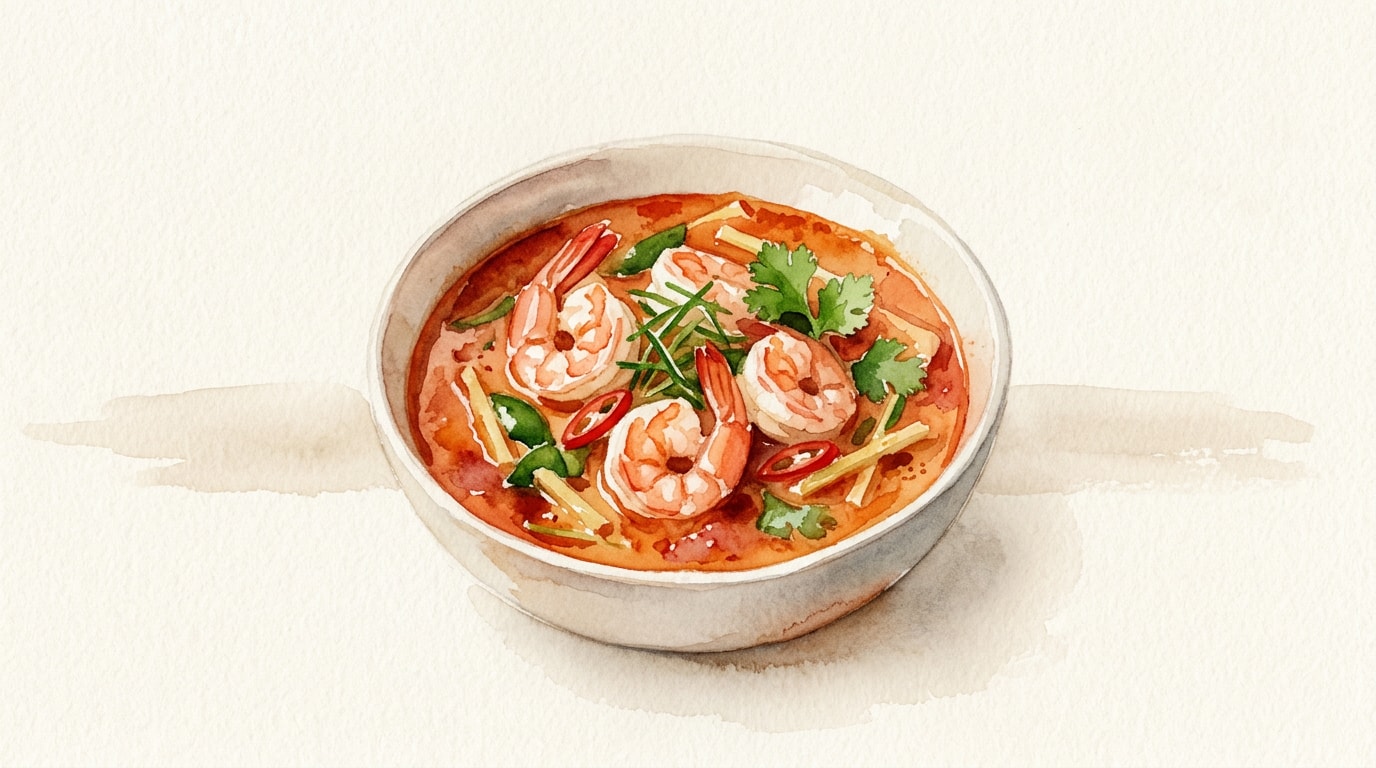
Gently stir in the raw prawns. Simmer until they turn pink and opaque, ensuring an internal temperature of 63°C/145°F for food safety. Do not overcook.
Remove the wok from the heat. Stir in the fish sauce. Taste the broth and adjust the seasoning if necessary, adding more fish sauce for saltiness or sugar for sweetness. Stir in the fresh Thai basil leaves to wilt them gently in the residual heat.
Ladle the hot curry into warm bowls. Serve immediately alongside steamed jasmine rice and lime wedges.
Chef's Notes
- Cracking the coconut cream is a traditional Thai culinary technique. By frying the thick cream skimmed from the top of the can until the oil separates, you create an incredibly aromatic base to fry your curry paste in, resulting in a more complex flavor profile.
- Commercial curry pastes vary wildly in sodium content and heat level. Brands like Mae Ploy tend to be saltier and spicier, whereas Thai Kitchen is significantly milder. Always taste the broth before adding the full measurement of fish sauce.
- Palm sugar provides a rounded, caramel-like sweetness that balances the salty fish sauce and spicy curry paste much more effectively than refined white sugar.
- For the best texture, purchase raw, untreated prawns. Pre-cooked prawns will immediately turn rubbery if simmered in a hot curry broth.
Storage
Refrigerator: 3 days — Prawns may become slightly firm upon reheating. Store in an airtight container.
Freezer: 1 month — Coconut milk may separate upon thawing. Stir well when reheating.
Reheating: Gently reheat on the stove over low heat to prevent the prawns from overcooking and the coconut milk from splitting.