Equipment
Ingredients
Aromatics and Vegetables
- 15 ml olive oil, for frying
- 50 g onion, chopped
- 2 garlic, crushed
- 40 g celery, chopped, including leaves
- ½ fennel, chopped, including fronds
- 2 tomato, chopped, fresh plum
Spices and Flavorings
- 2 g smoked paprika
- 2 star anise
- ⅛ g saffron
- 22 g tomato paste
- 35 ml pastis, anise and fennel liqueur
- 1 lemon, juice only
Liquids
- 175 ml white wine
- 300 ml fish stock
Seafood
- 8 mussels
- 150 g salmon, skinned and cut into 3cm chunks
- 150 g hake fillet, skinned and cut into 3cm chunks
Garnish and Seasoning
- 30 g parsley, fresh, chopped
- 2 g salt
- 1 g black pepper, freshly ground
- 100 g bread, sliced
Nutrition (per serving)
Method
Heat olive oil in a frying pan over medium heat. Sauté the chopped onion and crushed garlic until they become soft.
Add the celery and fennel to the pan. Continue to fry until the vegetables are softened, then season with salt and pepper.
Stir in the chopped tomatoes, smoked paprika, star anise, saffron, and tomato paste. Cook for 7 minutes (between 5-10 minutes) until the tomatoes soften and break down.
Pour 25ml of pastis into the pan. Simmer until the liquid has reduced by half.
Add the remaining 10ml of pastis, the lemon juice, and 100ml of white wine. Simmer until the wine has reduced by half.
Pour in the fish stock. Cover the pan and allow the mixture to simmer on low heat.
Place the mussels and the remaining 75ml of white wine in a separate saucepan over high heat. Cover and cook until the mussel shells open.
Strain the cooking liquid from the mussels into the main bouillabaisse base. Discard any mussels that remain closed.
Remove the star anise from the base. Turn off the heat and blend the soup with a stick blender until the texture is smooth.
Return the soup to low heat. Add the salmon and hake chunks along with the mussels. Poach gently for 5 minutes until the fish is opaque and reaches an internal temperature of 63°C/145°F.
Stir in the fresh parsley. Serve the stew hot in bowls with a drizzle of olive oil and bread on the side.
Chef's Notes
- For the most authentic flavor, use a variety of firm-fleshed white fish, and if possible, include some bony fish like scorpionfish or gurnard for a richer stock. The key is variety and freshness.
- Don't skip the pastis! This anise-flavored liqueur is crucial for the signature aroma and taste of a classic bouillabaisse. If you can't find it, a touch of Pernod or even a very mild ouzo can be a substitute, but use sparingly.
- When adding the fish, ensure the heat is low and the poaching time is brief. Overcooked fish will become dry and rubbery, detracting from the delicate textures of the stew.
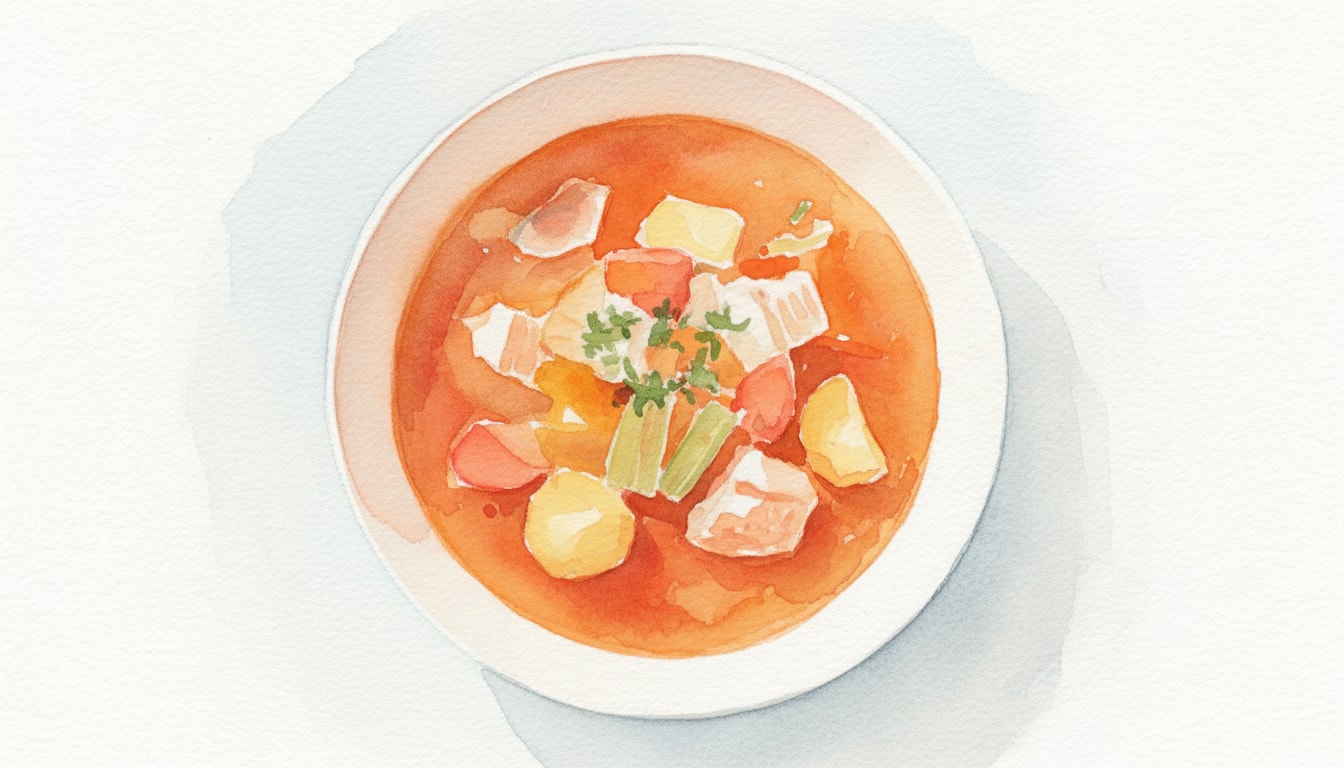
- The color of your bouillabaisse should be a rich, vibrant orange from the saffron and tomatoes. If it's too pale, you might need to increase the saffron or cook the tomato base a little longer.
- Serving the bread on the side allows guests to soak up the flavorful broth at their own pace. A drizzle of good quality olive oil just before serving adds a final touch of richness and aroma.
Storage
Refrigerator: 1 day — Store in an airtight container; seafood quality declines rapidly.
Reheating: Warm gently in a saucepan over medium-low heat until it reaches 74°C/165°F. Do not boil.