Equipment
Ingredients
Pasta
- 400 g spaghetti or linguine, dry
- 4000 ml water
- 40 g kosher salt
Pesto
- 60 g fresh basil leaves, washed and thoroughly dried
- 50 g pine nuts
- 2 garlic, peeled
- 60 g vegetarian parmesan cheese, finely grated
- 120 ml extra virgin olive oil, high quality
- 2 g kosher salt
- 1 g black pepper, freshly cracked
Nutrition (per serving)
Method
Place a dry skillet over medium heat. Add the pine nuts and toast for 3 to 5 minutes, tossing frequently, until fragrant and golden brown. Remove from the pan immediately to cool.
Bring the water to a rolling boil in a large pot. Add the 40g of salt, then add the pasta. Cook according to package instructions until al dente.
While the pasta cooks, add the cooled toasted pine nuts, garlic, grated cheese, salt, and pepper to a food processor. Pulse until finely ground.
Add the fresh basil leaves to the food processor. While pulsing, drizzle in the extra virgin olive oil in a steady stream until a coarse paste forms. Do not over-process.
Before draining the pasta, reserve about 120ml of the starchy pasta cooking water. Drain the pasta in a colander.
Transfer the hot drained pasta to a large mixing bowl. Add the pesto and a small splash of the reserved pasta water. Toss vigorously until the pasta is evenly coated and the sauce becomes creamy.
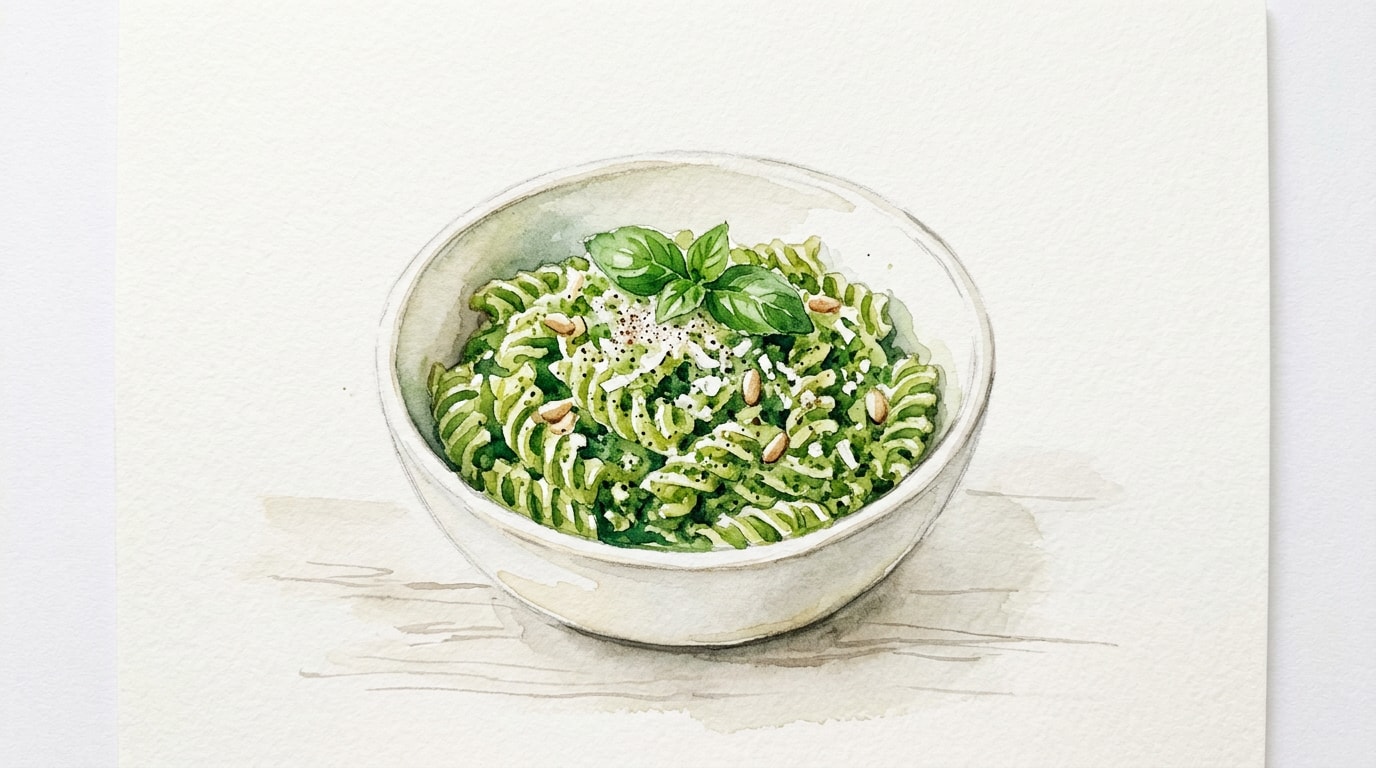
Divide the pasta among serving bowls. Garnish with an extra sprinkle of grated cheese, a few whole basil leaves, and a light drizzle of olive oil.
Chef's Notes
- For the absolute brightest green pesto, try blanching the basil leaves in boiling water for 10 seconds, then immediately plunging them into an ice bath before drying and blending.
- Emulsifying the pesto into the pasta using a splash of starchy pasta water is the secret to a creamy sauce rather than a greasy one. The starch binds the oil and water together.
- Ensure your basil leaves are completely dry before blending. Excess water will dilute the flavor and inhibit a proper emulsion with the oil.
- If you prefer a milder garlic flavor, blanch the peeled garlic cloves in boiling water for one minute before processing them.
Storage
Refrigerator: 3 days — Store pesto separately from pasta if possible to prevent pasta from absorbing all the oil and becoming dry.
Freezer: 3 months — Pesto can be frozen in ice cube trays; cooked pasta should not be frozen.
Reheating: Toss with a splash of warm water or olive oil in a pan over low heat until just warmed through. Do not overheat or the basil will turn bitter.