Equipment
* optional
Ingredients
Noodles
- 200 g dangmyeon (sweet potato glass noodles)
Vegetables
- 150 g fresh shiitake mushrooms, stems removed and sliced
- 1 red bell pepper, julienned
- 100 g carrots, peeled and julienned
- 1 yellow onion, thinly sliced
- 30 ml neutral oil
- 100 g baby spinach, washed
Sauce
- 60 ml tamari or gluten-free soy sauce
- 30 ml toasted sesame oil
- 30 g light brown sugar, packed
- 3 garlic, minced
- 10 g toasted sesame seeds
- 2 g black pepper, freshly ground
Nutrition (per serving)
Method
Preheat oven to 200C (400F). Bring a large pot of water to a rolling boil.
Place the sliced shiitake mushrooms, red bell pepper, carrots, and onion on a large sheet pan. Drizzle with neutral oil and toss until evenly coated. Spread into a single, even layer.
Roast the vegetables in the oven for 15 to 20 minutes until tender and caramelized at the edges, tossing halfway through.
While the vegetables roast, add the dangmyeon noodles to the boiling water. Cook according to package directions, usually 6 to 8 minutes.
During the last 30 seconds of the noodle boiling time, drop the baby spinach into the pot to quickly blanch.
Drain the noodles and spinach in a colander, and rinse thoroughly under cold water to stop the cooking and remove excess starch. Drain well and gently squeeze the spinach to remove excess water.
In a small bowl, whisk together the tamari, toasted sesame oil, brown sugar, minced garlic, sesame seeds, and black pepper until the sugar dissolves.
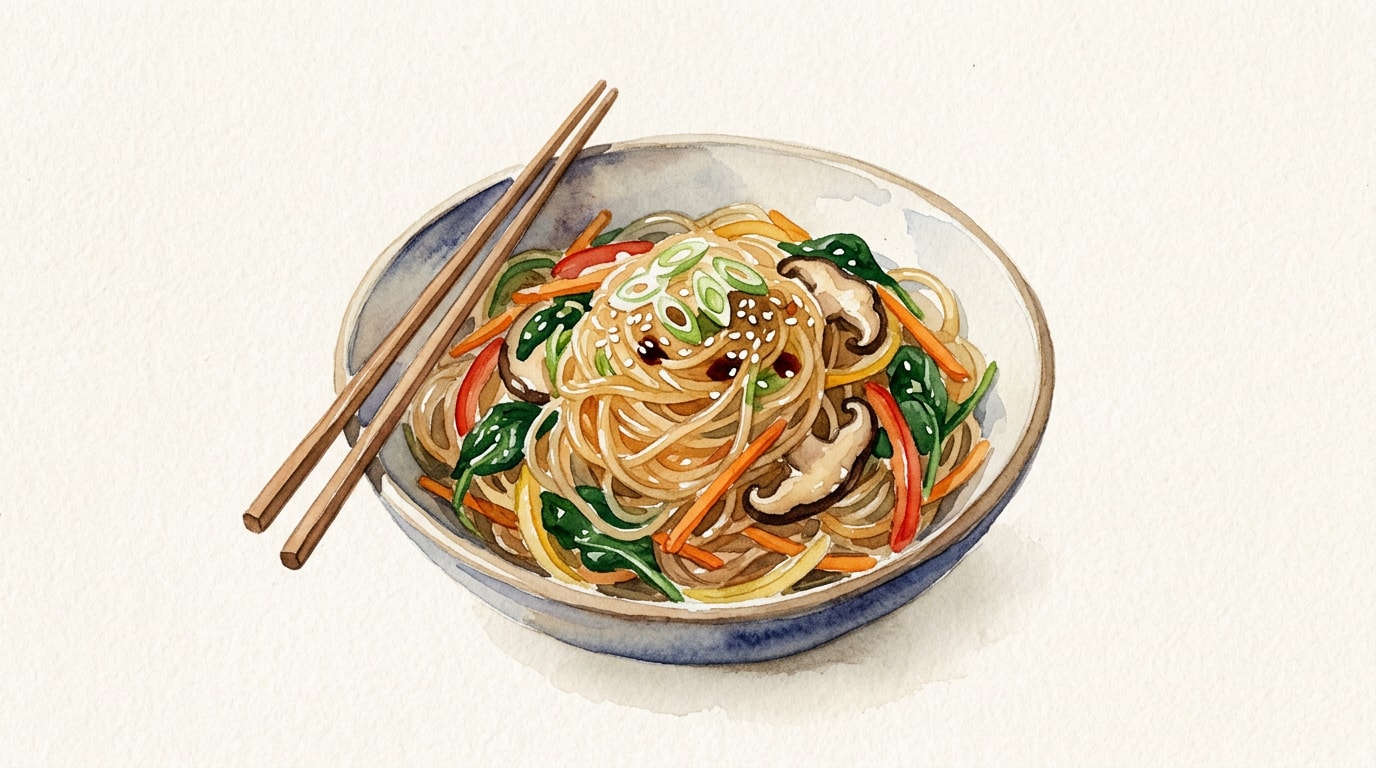
Transfer the drained noodles, spinach, and hot roasted vegetables into a large bowl. Pour the sauce over the top. Toss thoroughly until the noodles absorb the sauce and turn a light mahogany color. Serve warm or at room temperature.
Chef's Notes
- Sweet potato glass noodles are incredibly resilient, making them perfect for absorbing flavorful sauces without turning mushy, provided they are rinsed properly.
- Using a sheet pan allows the mushrooms and onions to develop slightly charred, deeply savory edges that mimic high-heat wok cooking without the constant stovetop attention.
- For the best texture, cut the cooked dangmyeon a few times with kitchen shears to make the extraordinarily long noodles easier to toss and eat.
- Japchae tastes best when the warm vegetables and noodles first meet the sauce, as the residual heat helps meld the flavors together.
Storage
Refrigerator: 4 days — Keep in an airtight container. The noodles will harden in the fridge.
Reheating: Microwave with a splash of water until the noodles regain their bouncy texture, or gently stir-fry in a pan with a little oil.