Equipment
Ingredients
Salad Base
- 200 g dry ramen noodles, seasoning packets discarded if present
- 250 g baby bok choy, base trimmed, leaves separated and halved lengthways
- 150 g sweet corn kernels, fresh or thawed from frozen
- 30 g scallions, thinly sliced
- 15 g fresh cilantro, roughly chopped
Sesame-Chile Dressing
- 45 g chinese sesame paste, stirred well before measuring
- 30 g chile crisp
- 30 ml soy sauce
- 15 ml chinkiang black vinegar
- 10 ml toasted sesame oil
- 10 g granulated sugar
- 2 garlic, finely minced
- 30 ml warm water
Nutrition (per serving)
Method
In a medium mixing bowl, vigorously whisk together the chinese sesame paste, soy sauce, chinkiang black vinegar, toasted sesame oil, granulated sugar, and minced garlic until a thick paste forms. Gradually whisk in the warm water until the dressing is smooth and evenly emulsified. Stir in the chile crisp and set aside to allow the flavors to meld.
Fill a large pot with water and bring to a rapid rolling boil at 100°C/212°F. Submerge the dry ramen noodles and cook according to package directions, typically about 3 minutes, stirring occasionally with chopsticks or a fork to separate the strands.
During the final 1 minute of the noodles' cooking time, drop the prepared baby bok choy and sweet corn kernels directly into the boiling water to blanch. The water temperature will drop slightly, but continue cooking until the bok choy stalks turn vibrant green.
Drain the contents of the pot immediately into a colander. Rinse aggressively under cold running water for at least 1 minute, tossing the noodles and vegetables by hand until they are completely cool to the touch. This halts the cooking process and removes excess surface starch.
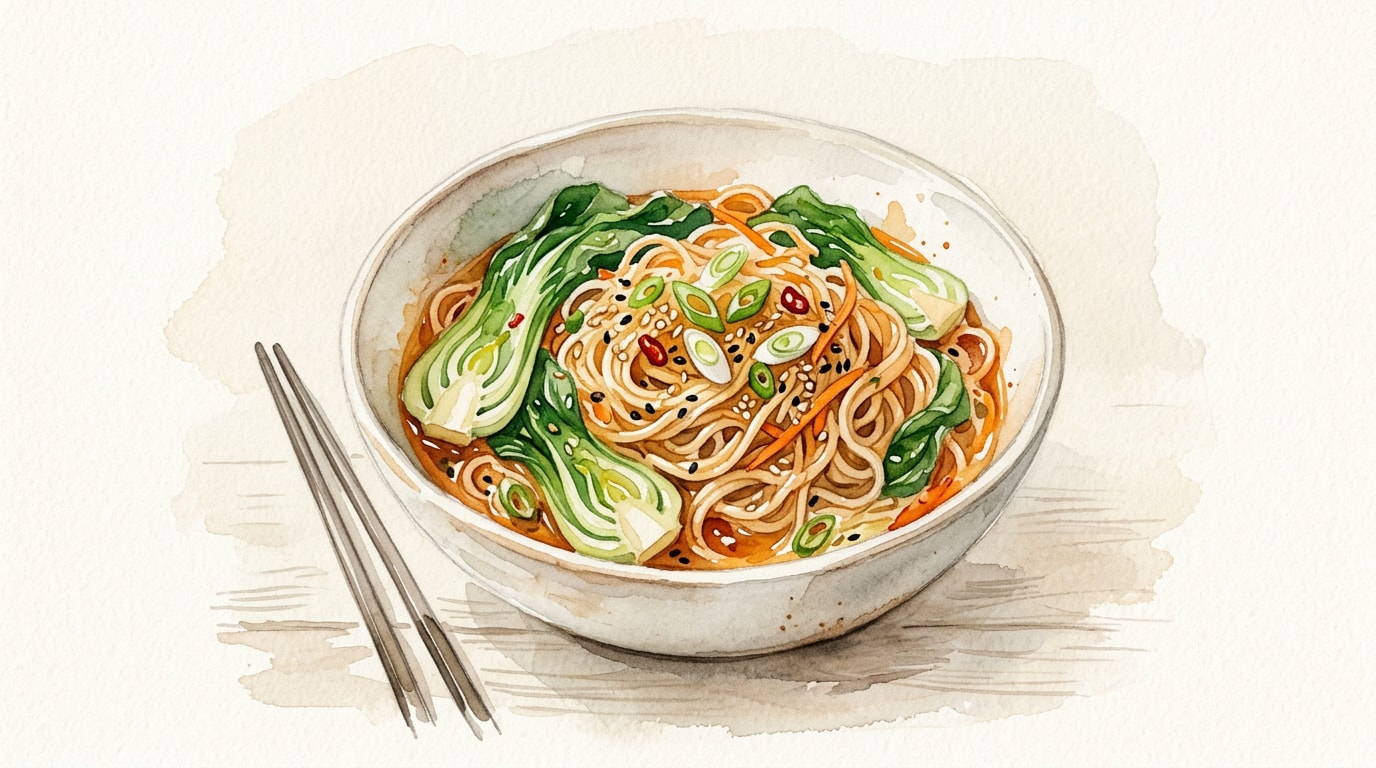
Transfer the drained noodles, bok choy, and corn to a large serving bowl. Pour the prepared sesame-chile dressing over the mixture, add the sliced scallions and chopped cilantro, and toss thoroughly until every noodle is evenly coated in the sauce. Serve immediately or chill.
Chef's Notes
- Seasonal Adaptability: This foundational formula easily adapts to any season. In spring, try blanched asparagus and snow peas; in winter, julienned root vegetables like carrots or kohlrabi provide excellent crunch.
- Sesame Paste Varieties: Chinese sesame paste is made from toasted seeds and has a deeper, nuttier flavor profile than Middle Eastern tahini, which uses raw seeds. If substituting tahini, adding a few extra drops of toasted sesame oil helps bridge the flavor gap.
- The Importance of Rinsing: Aggressively rinsing boiled noodles under cold water is not just to cool them down; it washes away gelatinized starches that would otherwise cause the noodles to stick together and turn pasty when mixed with dressing.
- Chile Crisp Nuance: Not all chile crisps are equal in heat or sodium. Taste yours before mixing the dressing. If it is particularly salty, reduce the soy sauce slightly; if it lacks heat, add a pinch of crushed red pepper flakes.
Storage
Refrigerator: 3 days — Store dressing and salad separately if possible to maintain noodle texture.