Equipment
Ingredients
Rof (Herb Stuffing)
- 30 g parsley, roughly chopped
- 10 g garlic, peeled
- 30 g scallions, chopped
- 1 small chili pepper, stemmed and seeded
- salt
- black pepper
Fish Base
- 800 g firm white fish fillets, cleaned and patted dry
- 60 ml vegetable oil
Tomato Broth & Vegetables
- 150 g yellow onion, finely chopped
- 130 g tomato paste
- 400 g diced tomatoes, canned, with juices
- 15 g garlic, minced
- 1000 ml vegetable broth
- 300 g green cabbage, cut into thick wedges with core intact
- 250 g sweet potato, peeled and cut into large chunks
- 200 g carrot, peeled and cut into large chunks
- 10 g fresh dill, chopped
- 1 bay leaf, whole
Rice
- 500 g broken rice, dry
Nutrition (per serving)
Method
In a mortar and pestle or food processor, combine the parsley, 10g of garlic, scallions, chili pepper, salt, and black pepper. Crush into a coarse, highly aromatic paste to create the Rof.
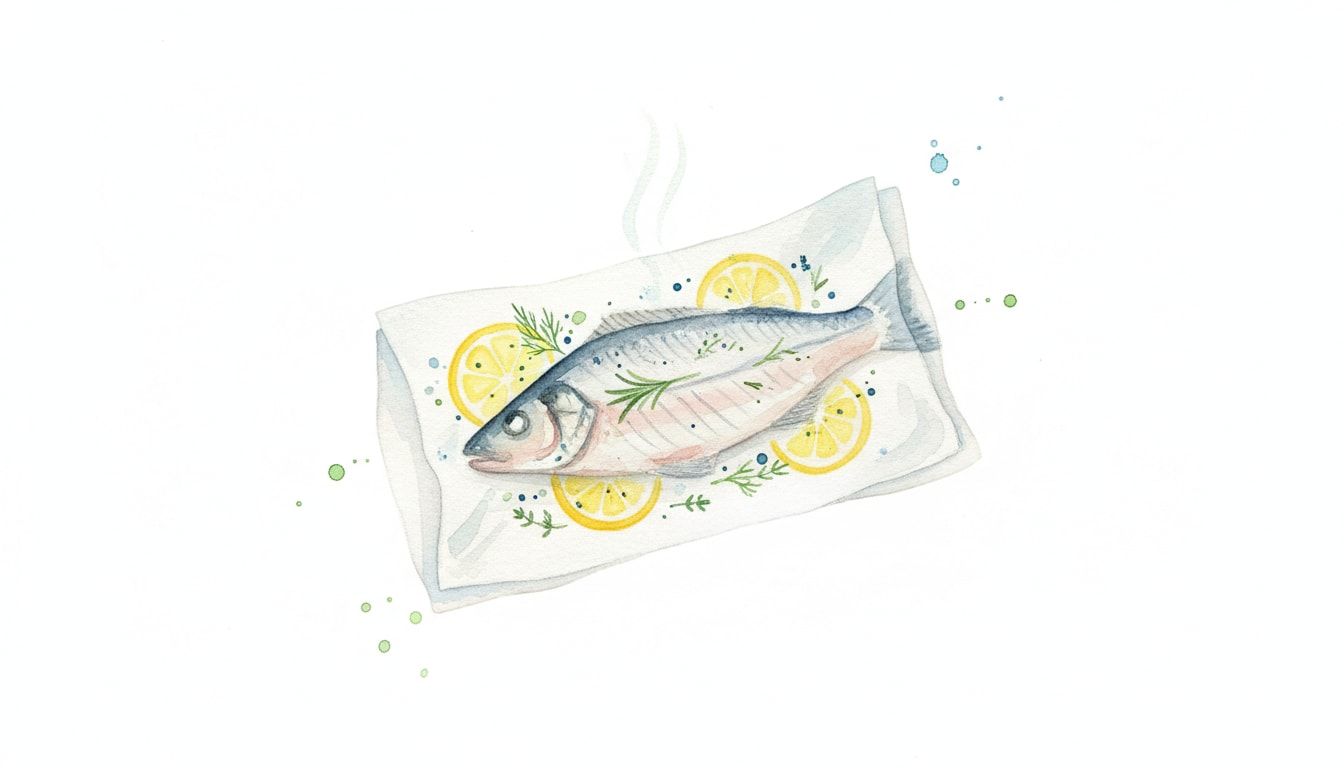
Score 2 to 3 deep slits into the flesh of the white fish fillets. Generously stuff the Rof paste into the slits. Wash hands and sanitize all surfaces immediately after handling raw fish to prevent cross-contamination.
Heat the vegetable oil in a large Dutch oven over medium-high heat. Sear the stuffed fish until lightly browned, about 3 minutes per side. Carefully remove the fish and set aside.
In the same Dutch oven with the residual oil, sauté the chopped yellow onion until softened. Add the tomato paste and cook, stirring frequently, until heavily darkened. Stir in the minced garlic and diced tomatoes.
Pour the vegetable broth into the pot, scraping the bottom to release any caramelized bits. Add the chopped dill and bay leaf, then bring the mixture to a rapid boil at 100°C/212°F.
Reduce the heat to medium-low. Submerge the green cabbage wedges, sweet potato chunks, and carrot pieces in the broth. Simmer partially covered for 25 minutes until the vegetables are fork-tender.
Return the seared fish to the simmering broth, nestling it among the vegetables. Cook gently for 5 to 7 minutes until the fish flakes easily and reaches a safe internal temperature of 74°C/165°F.
Using a slotted spoon, carefully remove the fish and all vegetables from the broth. Transfer them to a covered platter to rest and keep warm.
Place the broken rice in a fine-mesh sieve. Wash thoroughly under cold running water, agitating the grains until the water runs completely clear, then drain well.
Stir the washed broken rice into the remaining tomato broth in the Dutch oven. Cover with a tight-fitting lid, reduce heat to the lowest setting, and simmer for 35 to 40 minutes until all liquid is absorbed and the rice is fully cooked.
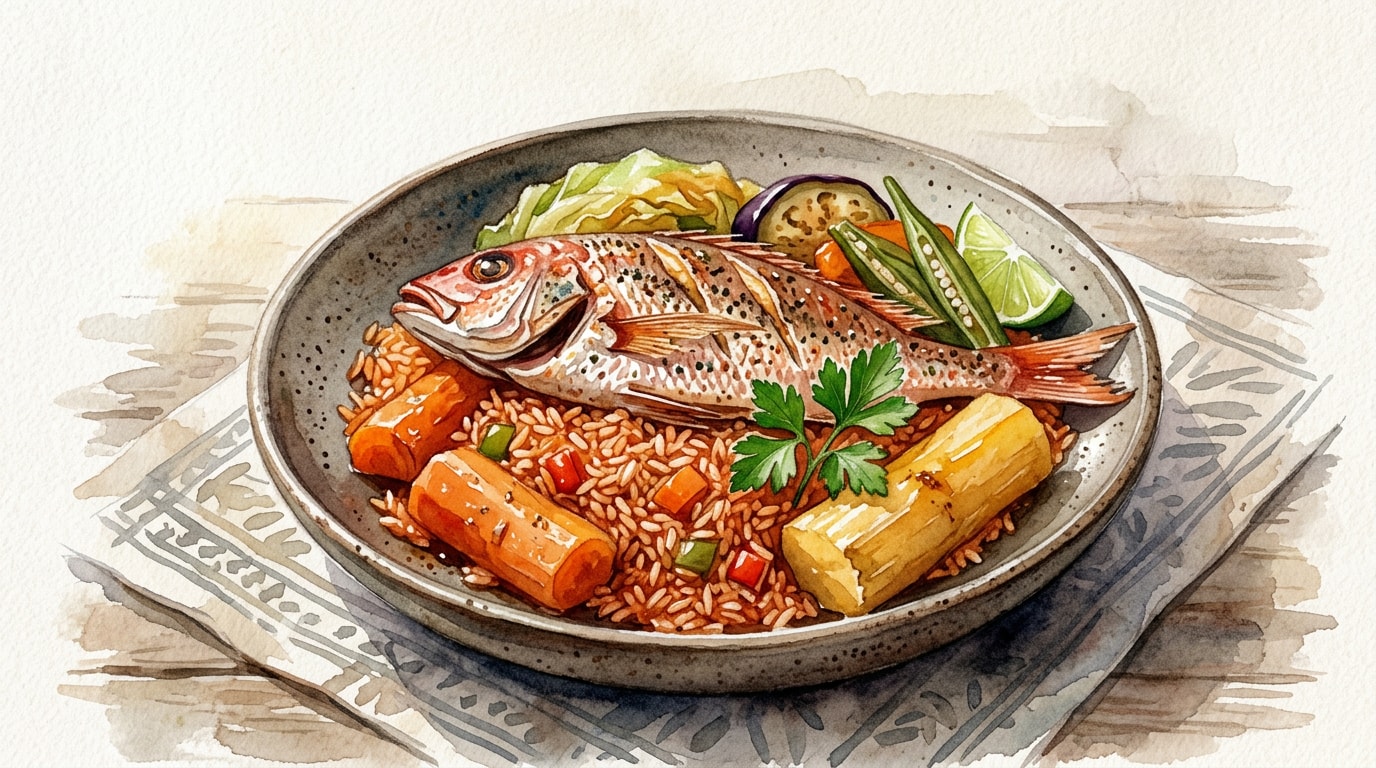
Fluff the cooked rice with a fork. Serve by spreading the vibrant red rice across a large communal serving platter, beautifully arranging the warm, tender vegetables and stuffed fish on top.
Chef's Notes
- Using 'broken rice' is essential for authentic Thiéboudienne. The fractured grains release starch differently than whole grains and absorb the rich tomato broth to yield a slightly sticky yet wonderfully distinct texture.
- Cooking the tomato paste until it darkens significantly in the oil (a technique called pinçage) builds the deep, slightly sweet, and umami-rich foundation that is crucial to authentic Senegalese cuisine.
- The herb stuffing, or Rof, not only flavors the fish from the inside out but permeates the cooking oil during the initial sear, laying down a highly aromatic base for the entire pot.
- For an even deeper traditional flavor profile, many recipes include a small piece of fermented dried fish (Guedj) or fermented locust bean (Netetou). A splash of fish sauce makes for a great modern substitute.
Storage
Refrigerator: 3 days — Store components separately if possible to maintain rice texture.
Freezer: 1 month — Vegetable textures will soften significantly upon thawing.
Reheating: Reheat gently on the stovetop with a splash of water, or microwave in 1-minute intervals.