Equipment
Ingredients
Tuna & Crust
- 300 g yellowfin tuna steaks, sashimi grade
- 20 g mixed sesame seeds
- 15 ml vegetable oil
- 2 g kosher salt
- 2 g black pepper, freshly cracked
Crispy Noodles
- 50 g dried rice vermicelli noodles
- 500 ml vegetable oil
Teriyaki Glaze
- 45 ml soy sauce
- 45 ml mirin
- 30 ml sake
- 15 g brown sugar
- 10 g fresh ginger, grated
Garnish
- 15 g scallions, thinly sliced
Nutrition (per serving)
Method
In a small mixing bowl, whisk together the soy sauce, mirin, sake, brown sugar, and grated fresh ginger. Set aside.
Pat the tuna steaks completely dry with paper towels. Season evenly with kosher salt and black pepper, then press the tuna firmly into the mixed sesame seeds to coat all sides.
Pour 500ml of vegetable oil into a wok or deep saucepan and heat to 200°C/390°F. Test with a single noodle strand; it should puff up immediately. Fry the rice vermicelli in two small batches. They will puff in 3 to 5 seconds. Immediately remove with tongs and drain on paper towels.
In a cast iron skillet, heat 15ml of vegetable oil over high heat until smoking. Carefully add the sesame-crusted tuna steaks. Sear for 45 to 60 seconds per side for a rare center, reaching an internal temperature of 45°C/115°F. Remove from the pan and let rest on a cutting board.
Wipe the cast iron skillet clean of any burnt seeds with a thick wad of paper towels. Pour the teriyaki glaze mixture into the skillet over medium heat. Simmer for 2 to 3 minutes until it reduces to a slightly syrupy consistency that coats the back of a spoon.
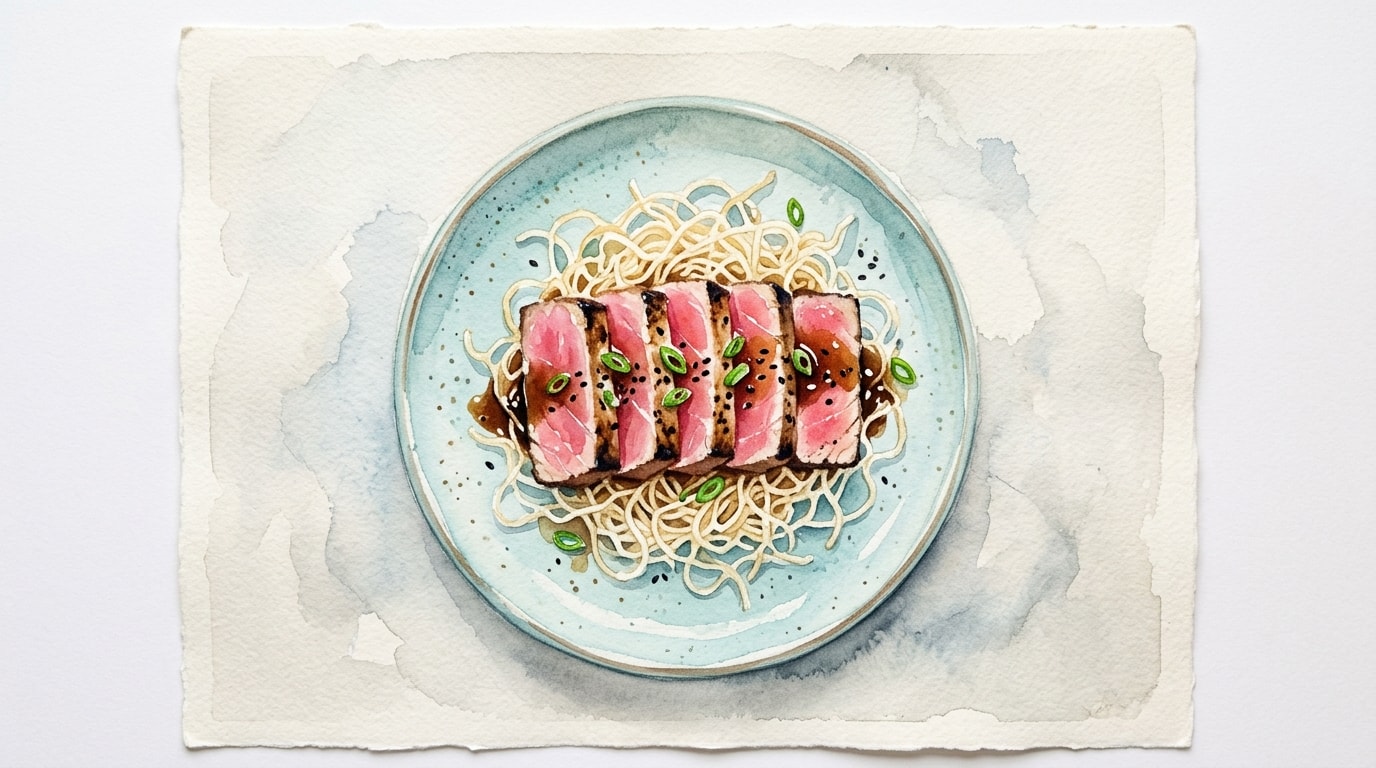
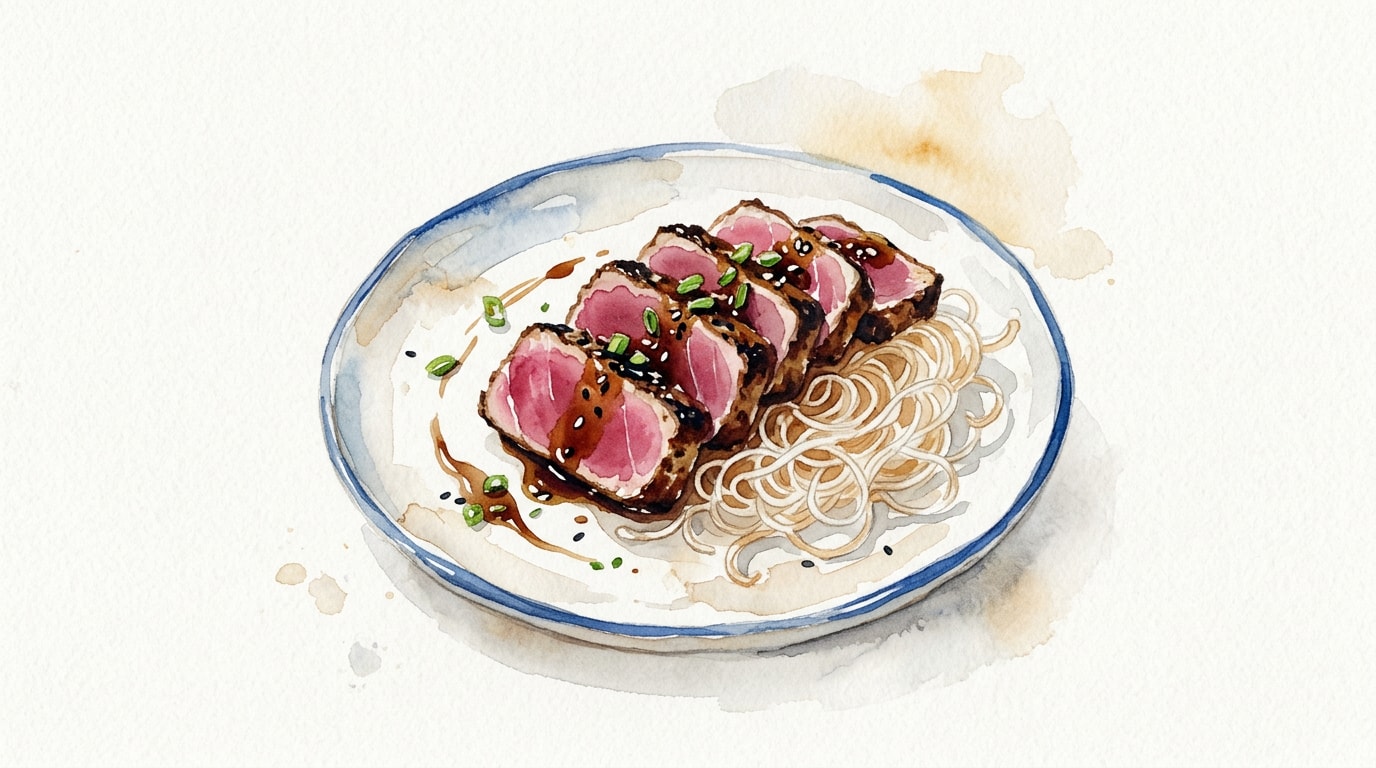
Using a very sharp knife, slice the rested tuna steaks against the grain into 1 centimeter thick strips. Create a bed of the crispy rice noodles on serving plates, fan the sliced tuna over the top, and generously drizzle with the reduced teriyaki glaze. Garnish with thinly sliced scallions.
Chef's Notes
- Always use sashimi-grade tuna for this recipe, as the center of the fish will remain raw. Proper sourcing is key to food safety and flavor.
- A cast iron pan provides the superior heat retention necessary for a hard, quick sear on the tuna without risking overcooking the delicate center.
- When reducing the teriyaki sauce, be mindful that it will continue to thicken slightly as it cools. Remove it from the heat just before it reaches your ideal serving consistency.
- Slicing tuna cleanly requires a very sharp knife. Do not saw back and forth; instead, use long, smooth strokes pulling toward yourself.
Storage
Refrigerator: 1 day — Best eaten immediately. Seared tuna loses its ideal texture when refrigerated.
Reheating: Not recommended to reheat tuna. Consume cold or at room temperature if leftover.