Equipment
Ingredients
Rabbit Paillards
- 300 g rabbit loins, boneless
- kosher salt
- black pepper, freshly ground
- 15 ml olive oil
Mustard-Parsley Sauce
- 1 shallot, finely diced
- 45 ml dry white wine
- 60 ml chicken stock
- 15 g dijon mustard
- 15 g whole grain mustard
- 30 g unsalted butter, cold, cut into cubes
- 10 g fresh parsley, minced
- 10 ml lemon juice, freshly squeezed
Nutrition (per serving)
Method
Place the rabbit loins between two sheets of plastic wrap. Using a meat mallet, gently pound them from the center outwards to an even 5 millimeter thickness.
Season both sides of the pounded rabbit paillards generously with kosher salt and freshly ground black pepper. Wash your hands and any contaminated surfaces thoroughly after handling raw rabbit to prevent cross-contamination.
Heat the olive oil in a stainless steel skillet over medium-high heat until shimmering. Sear the rabbit loins for 1 to 2 minutes per side until lightly browned and an internal temperature of 71°C (160°F) is reached. Transfer the rabbit to a plate to rest.
In the same skillet, reduce the heat to medium. Add the finely diced shallot and cook until translucent and fragrant, stirring frequently.
Pour the dry white wine into the skillet, scraping up any browned bits from the bottom of the pan with a wooden spoon or heatproof spatula. Let the wine bubble vigorously until almost completely evaporated.
Add the chicken stock to the skillet and allow it to simmer until the liquid is reduced by half.
Remove the skillet from the heat entirely. Whisk in the Dijon mustard and whole grain mustard until completely dissolved into the reduced liquid.
While whisking continuously, add the cold cubed butter one piece at a time. Continue to whisk until the sauce becomes glossy, opaque, and slightly thickened.
Stir in the minced fresh parsley and the lemon juice. Taste the sauce and adjust the seasoning with additional salt or pepper if necessary.
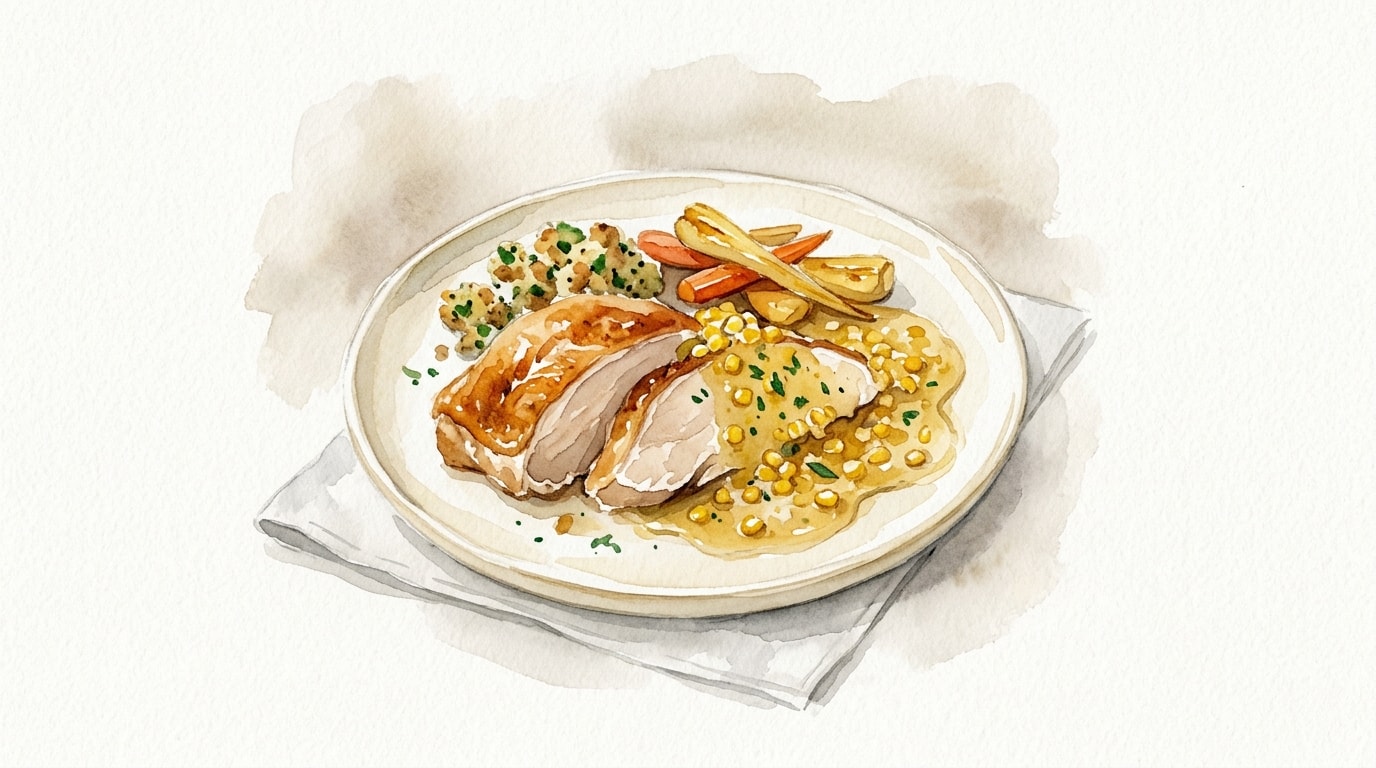
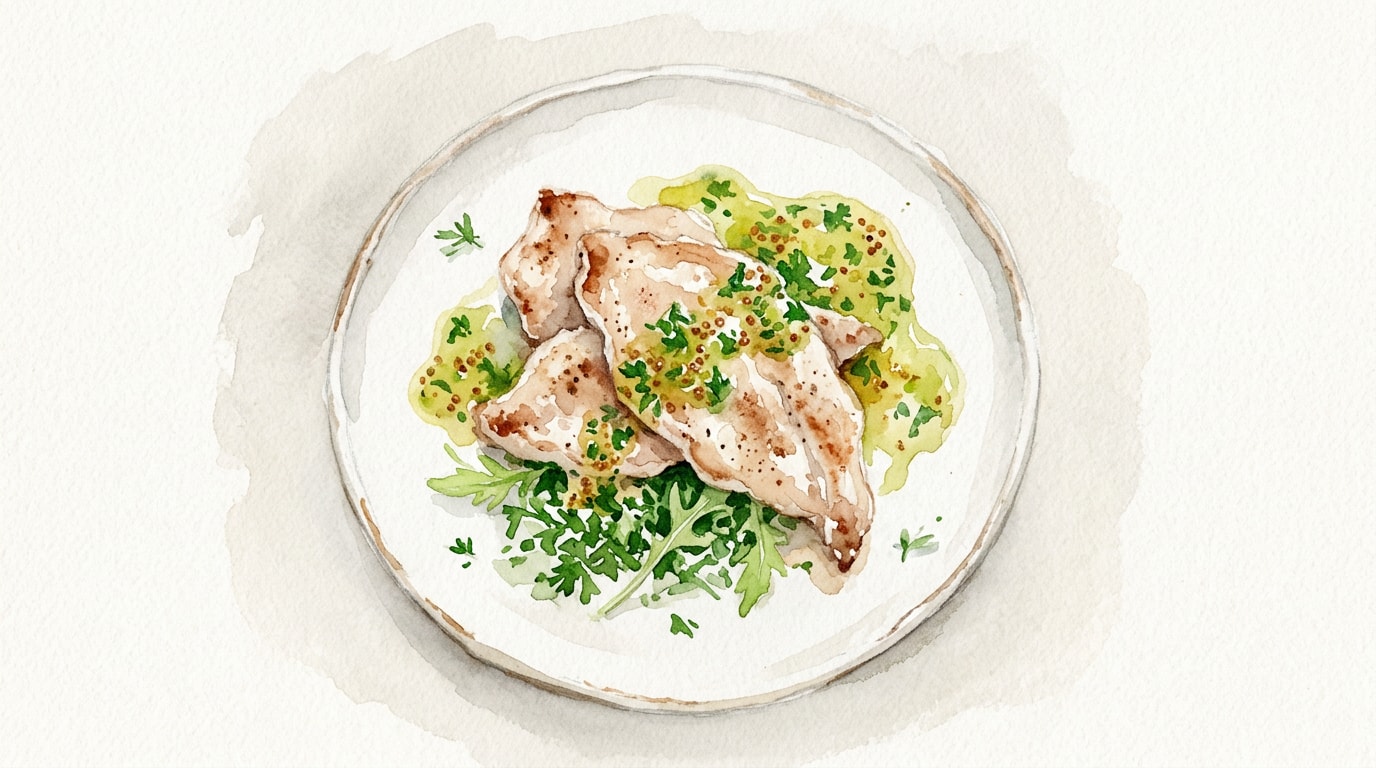
Transfer the rested rabbit paillards to individual serving plates. Spoon the warm mustard-parsley sauce generously over the top of the meat.
Chef's Notes
- Rabbit is incredibly lean poultry-like meat. Pounding it into paillards not only tenderizes it but ensures a lightning-fast cooking time, helping retain interior moisture.
- Always wash hands, cutting boards, and utensils immediately after handling raw rabbit to prevent cross-contamination, just as you would with raw chicken.
- Do not skip the resting phase for the meat. Even thin paillards need a few minutes for the muscle fibers to relax and reabsorb juices before serving.
- Mustards are sensitive to high heat. Boiling mustard can cause it to turn bitter and lose its distinct sharp profile, which is why it is incorporated off the heat.
Storage
Refrigerator: 3 days — Store meat and sauce in an airtight container.
Reheating: Reheat gently in a skillet over low heat until just warmed through. Do not boil or the meat will toughen.