Equipment
Ingredients
Cabbage Preparation
- 1 savoy cabbage, whole
Seafood Mousse
- 250 g skinless salmon fillet, diced and very cold
- 200 g shrimp, peeled, deveined, and very cold
- 150 ml heavy cream, very cold
- 1 egg white, very cold
- 10 g fresh dill, finely chopped
- 5 g kosher salt
- 2 g white pepper, finely ground
Tomato Braising Sauce
- 15 ml olive oil
- 50 g shallot, finely diced
- 10 g garlic, minced
- 60 ml dry white wine, such as Sauvignon Blanc or Pinot Grigio
- 400 g crushed tomatoes, canned
- 200 ml fish stock
- 2 g fresh thyme, whole sprigs
Nutrition (per serving)
Method
Fill a large bowl with ice water to create an ice bath. Bring a large pot of heavily salted water to a rolling boil over high heat.
Carefully peel 8 large, intact outer leaves from the Savoy cabbage. Reserve the remaining core for another use.
Submerge the cabbage leaves in the boiling water and blanch for 3 to 4 minutes until they are bright green and pliable.
Transfer the blanched leaves immediately to the ice bath using a slotted spoon to halt the cooking process. Once entirely cold, drain them and pat completely dry with paper towels.
Place the cold diced salmon, cold shrimp, egg white, kosher salt, and white pepper into the bowl of a food processor. Pulse repeatedly until the mixture forms a coarse, sticky paste.
Turn the food processor on continuously and slowly stream the cold heavy cream through the feed tube. Process only until a smooth, emulsified mousse forms, which should take about 15 to 20 seconds. Stop immediately to prevent the emulsion from splitting.
Transfer the delicate seafood mousse into a cold bowl. Gently fold in the finely chopped fresh dill, cover tightly, and refrigerate to keep it cold.
Heat the olive oil in a Dutch oven over medium heat. Add the finely diced shallot and saute for 3 to 4 minutes until completely softened and translucent.
Stir the minced garlic into the shallots and cook for an additional 1 minute until fragrant but not browned.
Pour the dry white wine into the pot to deglaze, scraping any fond from the bottom. Allow the wine to reduce by half, which should take about 2 to 3 minutes.
Add the crushed tomatoes, fish stock, and fresh thyme sprigs to the pot. Bring the liquid to a gentle simmer, then reduce the heat to low.
Lay one dry cabbage leaf flat on a cutting board. Use a chef knife to carefully shave down the thick central stem so the leaf lays completely flat. Place about 55 grams of the chilled seafood mousse in the lower center of the leaf.
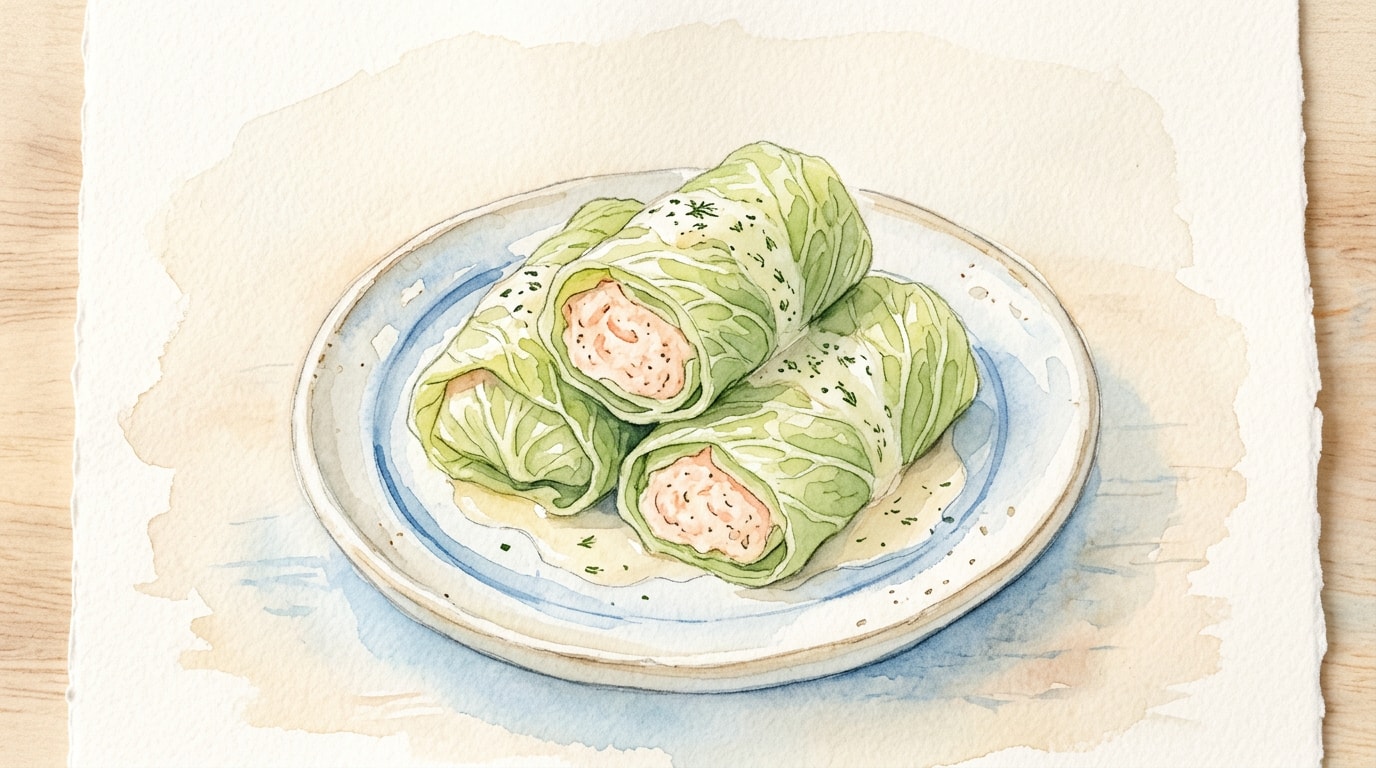
Fold the bottom of the leaf over the mousse filling, fold both sides inward tightly, and roll upward to create a neat, secure cylinder. Repeat with the remaining leaves and mousse.
Gently nestle the assembled cabbage rolls, seam-side down, into the simmering tomato broth in the Dutch oven.
Cover the Dutch oven with its lid and simmer gently over low heat for 20 to 25 minutes. The rolls are finished when the mousse feels firm to the touch and reaches an internal temperature of 63C/145F.
Carefully transfer the braised rolls to warm serving plates using a slotted spoon. Discard the thyme sprigs from the sauce, spoon the rich tomato broth generously over the cabbage rolls, and serve immediately.
Chef's Notes
- Temperature control is the absolute secret to a perfect mousseline. The friction from a food processor blade generates heat rapidly. Keep your fish, shrimp, and cream deeply chilled until the very second they enter the bowl.
- Do not skip the step of patting the blanched cabbage leaves completely dry. Any residual water will prevent the mousse from adhering to the inside of the leaf, leading to gaps in your final cut.
- To test the seasoning of your raw mousse safely, drop a small spoonful into simmering water for two minutes. Taste the cooked dumpling, and adjust the salt and pepper in your raw batch accordingly before rolling.
- Savoy cabbage is superior to standard green cabbage for this application. Its crinkled texture grips the sauce better, and the leaves are significantly more pliable and forgiving when rolling.
Storage
Refrigerator: 3 days — Store in an airtight container completely submerged in the tomato sauce to prevent drying out.
Freezer: 1 month — Freezing may slightly alter the delicate texture of the mousse, making it slightly denser.
Reheating: Reheat gently in a covered saucepan over medium-low heat until the internal temperature reaches 74C/165F.