Equipment
Ingredients
Meat and Searing
- 600 g veal tenderloin, cut into 2.5cm cubes
- kosher salt
- black pepper
- 30 g unsalted butter
- 15 ml olive oil
Cream Sauce
- 2 shallots, finely diced
- 120 ml dry white wine
- 200 ml heavy cream
- 15 g dijon mustard
Herbs
- 5 g fresh tarragon, finely chopped
- 5 g fresh parsley, finely chopped
Nutrition (per serving)
Method
Using paper towels, pat the veal cubes completely dry. This ensures they sear properly rather than steaming.
Season the veal cubes evenly with kosher salt and freshly ground black pepper.
Heat the unsalted butter and olive oil in a large heavy-bottomed skillet over medium-high heat until the butter begins to foam but not brown.
Add the veal cubes to the skillet in a single layer. Sear without moving them until a brown crust forms, then flip and brown the other sides. Do not overcrowd the pan; work in batches if necessary. This should take about 3 minutes total.
Use a slotted spoon to transfer the browned veal to a plate. Tent loosely with foil and set aside to rest.
Reduce the skillet heat to medium. Add the finely diced shallots and saute until they are translucent and aromatic, stirring frequently to prevent burning.
Pour the dry white wine into the skillet to deglaze. Scrape up any caramelized brown bits from the bottom of the pan using a wooden spoon. Allow the wine to simmer and reduce by half.
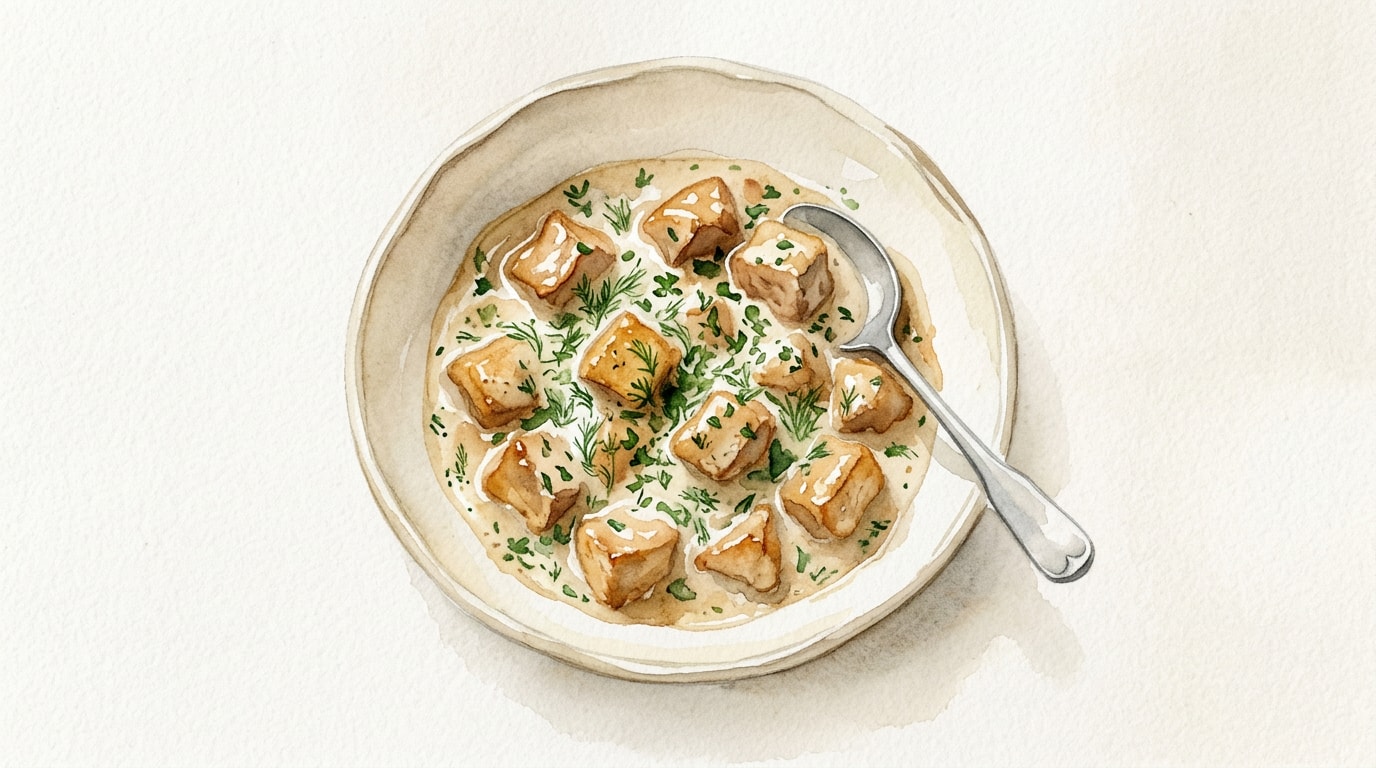
Whisk the heavy cream and Dijon mustard into the reduced wine. Bring to a gentle simmer and cook until the sauce thickens enough to coat the back of a spoon.
Return the resting veal and any accumulated juices on the plate to the skillet. Stir gently to coat the meat in the cream sauce. Warm through until the veal reaches an internal temperature of 63°C/145°F.
Remove the skillet from the heat. Stir in the chopped fresh tarragon and parsley. Taste the sauce and adjust seasoning with additional salt and pepper if needed. Serve immediately.
Chef's Notes
- Ensuring the veal is patted completely dry before searing is crucial. Surface moisture creates steam, which prevents the Maillard reaction needed for a flavorful crust.
- Using a combination of butter and oil raises the overall smoke point of the fat in the pan, allowing you to achieve the rich flavor of butter without the milk solids burning during a high-heat sear.
- The resting juices from the veal are culinary gold. Always pour them back into the sauce right before serving to amplify the savory depth.
- Tarragon has an assertive, slightly anise-like flavor that pairs beautifully with cream and white wine. It blooms quickly in heat, which is why it must be folded in off the heat at the very end.
Storage
Refrigerator: 3 days — Store in an airtight container. The sauce will thicken significantly as it cools.
Reheating: Reheat very gently on the stovetop over low heat, adding a splash of water or milk to loosen the sauce. Do not boil or the cream will curdle.