Equipment
Ingredients
Sea Bream & Salt Crust
- 1 sea bream, whole, gutted, gills removed, scales left on
- 1000 g coarse sea salt
- 3 egg whites
- 30 ml water
- 1 lemon, sliced into thin rounds
- 10 g fresh thyme, whole sprigs
Beurre Blanc
- 60 ml dry white wine
- 30 ml white wine vinegar
- 1 shallot, finely minced
- 150 g unsalted butter, very cold, cut into 1cm cubes
- 15 ml heavy cream
- kosher salt
- white pepper
Asparagus
- 300 g asparagus, woody ends trimmed
- kosher salt
Nutrition (per serving)
Method
Preheat the oven to 200 degrees Celsius (390 degrees Fahrenheit). Line a baking sheet with parchment paper.
In a large mixing bowl, combine the coarse sea salt, egg whites, and water. Mix thoroughly with your hands until the mixture holds its shape when squeezed, resembling wet sand.
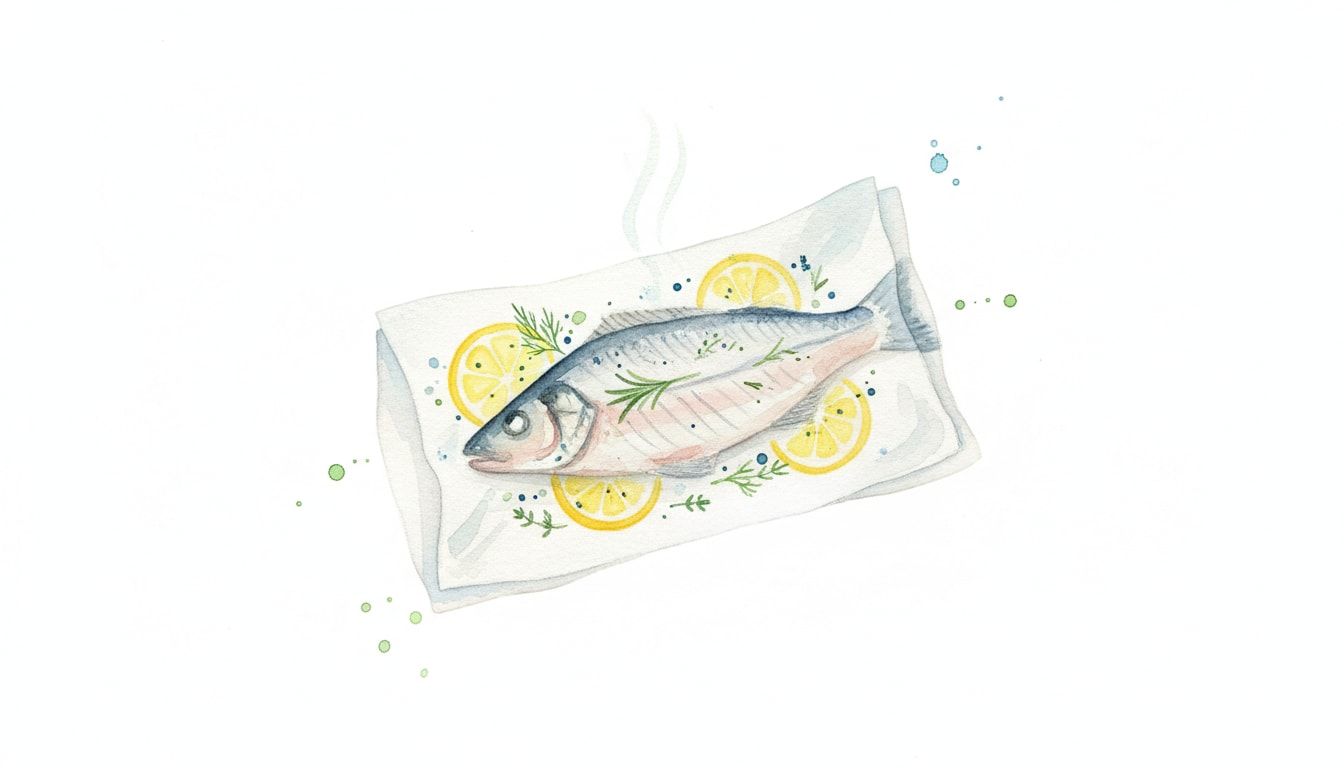
Pat the sea bream dry with paper towels inside and out. Stuff the cavity with the lemon slices and fresh thyme sprigs.
Spread a 1cm thick layer of the salt mixture onto the prepared baking sheet, slightly larger than the fish. Lay the stuffed fish on top, then pack the remaining salt mixture over the fish, pressing firmly to create a complete, airtight seal with no gaps.
Bake the salt-encased fish in the preheated oven for 30 minutes. A probe thermometer inserted through the crust into the thickest part of the fish should register 55 to 60 degrees Celsius (131 to 140 degrees Fahrenheit).
While the fish bakes, combine the white wine, white wine vinegar, and minced shallot in a small saucepan over medium heat. Simmer until the liquid is heavily reduced and syrupy, leaving only about 1 to 2 tablespoons of liquid in the pan.
Reduce the heat to the lowest setting. If using heavy cream to stabilize, whisk it in now. Whisk in the cold butter cubes one or two at a time, moving continuously. Wait until the butter is almost fully melted before adding the next pieces. The sauce should become thick, opaque, and glossy. Remove from heat, season with salt and white pepper to taste, and keep warm in a thermos or over a warm water bath.
Bring a medium saucepan of heavily salted water to a boil. Add the trimmed asparagus and blanch for 3 to 4 minutes until tender-crisp. Drain immediately and set aside.
Remove the fish from the oven and let it rest for 5 minutes. Using a mallet or the back of a heavy spoon, gently crack the salt crust around the edges. Lift off the top crust in large pieces and discard. Gently brush away any loose salt from the fish.
Carefully peel back the skin of the fish, which should detach easily. Lift the top fillet away from the spine using a fish spatula and transfer to a warmed plate. Pull the spine up and out, then remove the bottom fillet.
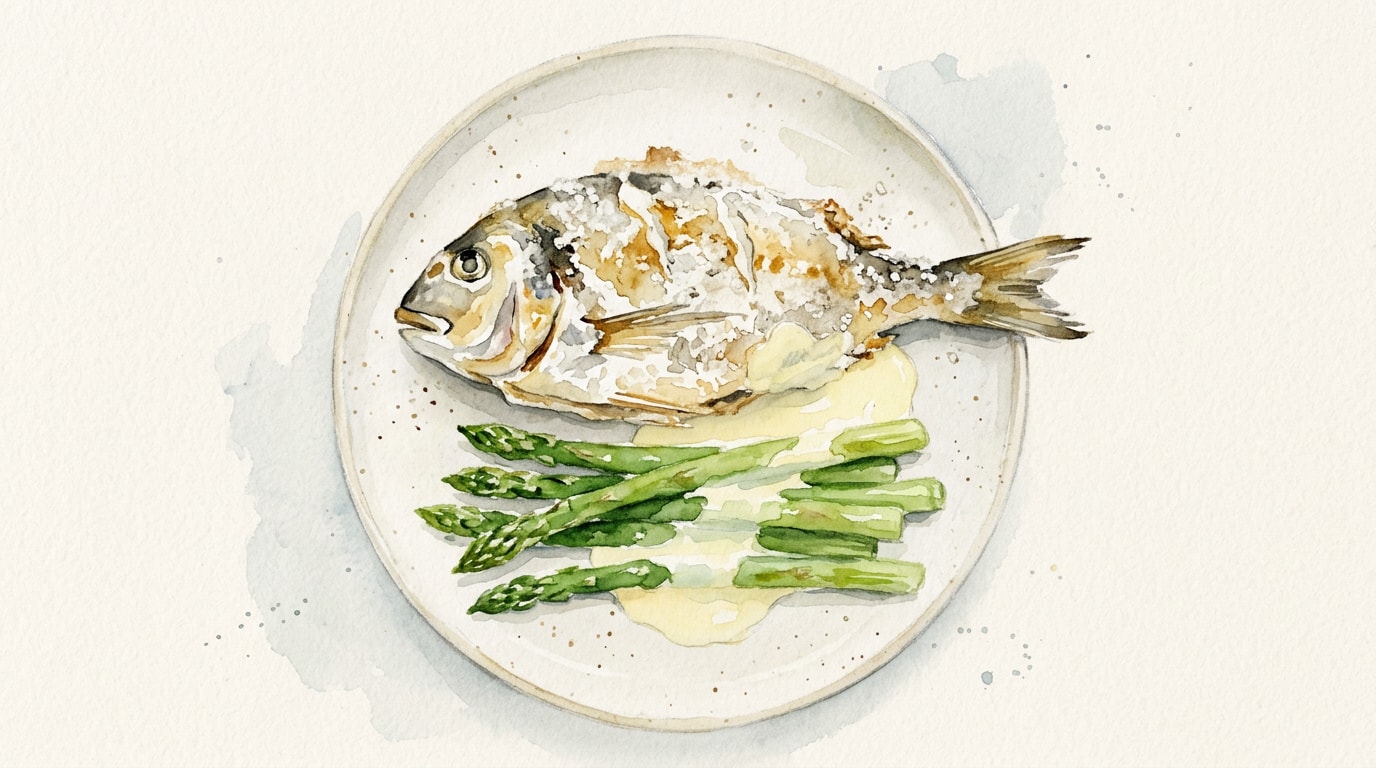
Arrange the blanched asparagus alongside the sea bream fillets. Spoon the warm beurre blanc generously over the fish and serve immediately.
Chef's Notes
- Leaving the scales on the sea bream is the secret to a perfect salt bake. The scales act as an impenetrable armor, allowing the fish to steam in its own juices without absorbing the surrounding salt.
- Egg whites and a splash of water bind the salt crystals together. The goal is the texture of wet sand ready for a sandcastle. If it crumbles, add water one teaspoon at a time.
- Beurre blanc relies on a delicate thermal balance. If you are worried about the sauce breaking while waiting for the fish, store it in a pre-warmed insulated thermos to hold it perfectly at serving temperature without risk of splitting.
- Do not guess the doneness of a salt-baked fish. Use an instant-read thermometer by piercing straight through the hard salt crust into the thickest part behind the head to hit exactly 55C to 60C.