Equipment
Ingredients
Lamb & Dredge
- 1000 g boneless lamb shoulder, trimmed and cut into 3cm cubes
- 30 g all-purpose flour
- 30 ml vegetable oil
- 5 g salt
- 2 g black pepper, freshly ground
Vegetables & Aromatics
- 1 yellow onion, diced
- 3 carrots, peeled and sliced into 2cm rounds
- 2 celery stalks, sliced
- 4 garlic cloves, minced
- 500 g waxy potatoes, peeled and cut into 3cm chunks
Broth & Finish
- 30 g tomato paste
- 150 ml dry red wine
- 500 ml beef stock, low sodium
- 15 ml worcestershire sauce
- 4 fresh thyme, sprigs
- 2 fresh rosemary, sprigs
- 2 dried bay leaves
- 150 g frozen peas, thawed
Nutrition (per serving)
Method
Pat the lamb cubes dry with paper towels. In a large bowl, toss the lamb with flour, salt, and pepper until evenly coated.
Heat half the vegetable oil in a large frying pan over medium-high heat. Sear the lamb in two batches, cooking for 3-4 minutes per batch until deeply browned on all sides. Transfer browned lamb directly to the slow cooker basin.
Add the remaining oil to the same pan. Add the onions, carrots, and celery. Sauté for 4-5 minutes until onions soften slightly. Add minced garlic and tomato paste, stirring constantly for 1 minute until fragrant.
Pour the red wine into the pan to deglaze, scraping up any browned bits (fond) from the bottom with a wooden spoon or spatula. Allow to bubble for 2 minutes to reduce the alcohol smell.
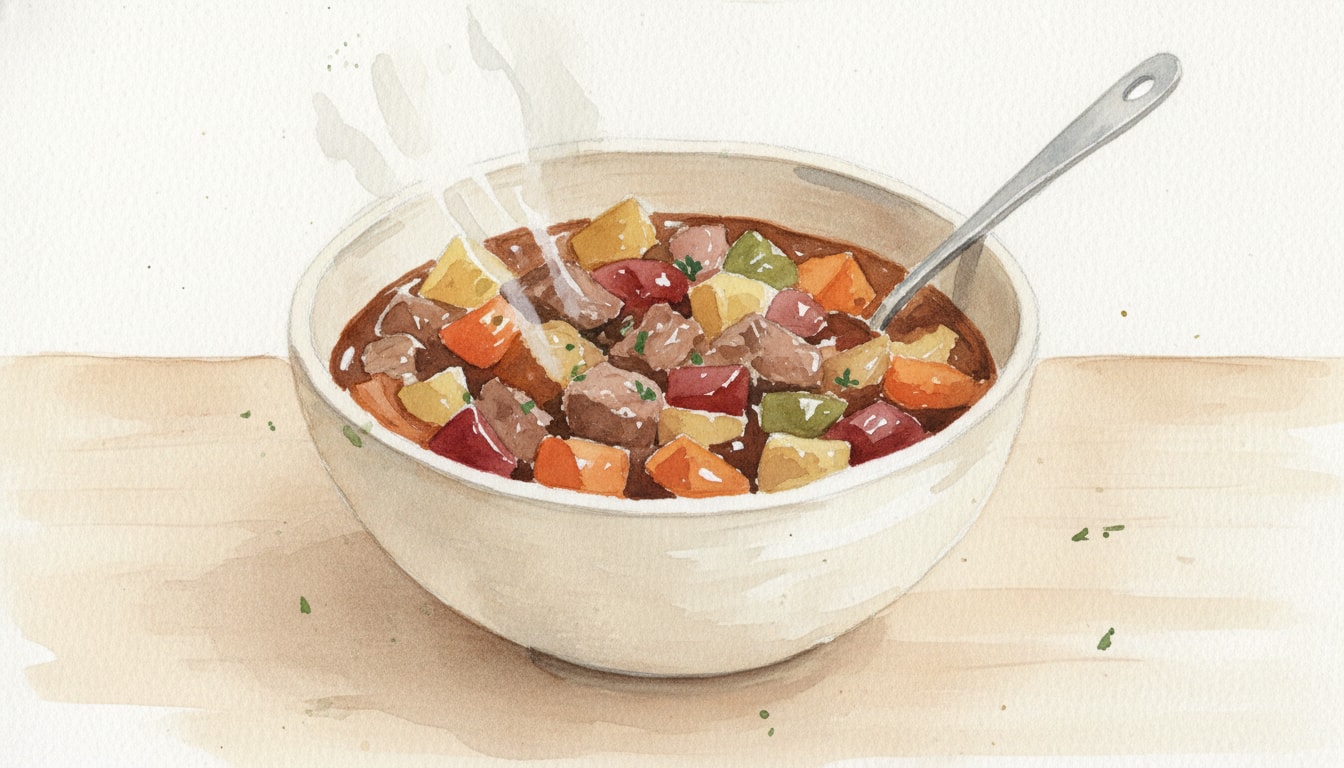
Pour the vegetable and wine mixture over the lamb in the slow cooker. Add the potatoes, beef stock, Worcestershire sauce, thyme, rosemary, and bay leaves. Stir gently to combine.
Cover and cook on LOW for 7-8 hours or HIGH for 4-5 hours. The lamb should be fork-tender and reach an internal temperature of at least 71°C/160°F (though usually much higher for texture).
Thirty minutes before serving, discard the herb sprigs and bay leaves. Stir in the thawed peas. Cover and cook for the remaining time to heat the peas through.
Chef's Notes
- Lamb shoulder is essential here; leg of lamb is too lean and will dry out during the long cook time.
- Do not skip the searing step. The Maillard reaction on the meat and the fond (browned bits) on the pan provide the majority of the savory depth.
- If using a wine with high tannins, a pinch of sugar or a teaspoon of currant jelly at the end can balance any bitterness.
- Acid balances fat. If the stew tastes 'heavy' at the end, stir in a teaspoon of balsamic vinegar or lemon juice before serving.
Storage
Refrigerator: 4 days — Flavor improves after 24 hours.
Freezer: 3 months — Potatoes may become slightly grainy upon thawing.
Reheating: Reheat gently on the stove over medium-low heat until piping hot, adding a splash of water if the gravy has thickened too much.