Equipment
Ingredients
Rabbit Braise
- 800 g rabbit legs, bone-in
- 100 g pancetta, diced
- 15 ml olive oil
- 30 g unsalted butter
- 150 g yellow onion, finely diced
- 100 g carrot, finely diced
- 100 g celery, finely diced
- 15 g garlic, minced
- 250 ml dry white wine
- 500 ml chicken stock
- 5 g fresh thyme, tied in a bundle
- 1 bay leaf
- 30 g dijon mustard
- 60 g creme fraiche
- kosher salt
- black pepper
Pasta and Garnish
- 400 g pappardelle pasta, dry or fresh
- 50 g parmigiano-reggiano, freshly grated
- 10 g fresh flat-leaf parsley, finely chopped
Nutrition (per serving)
Method
Pat the raw rabbit legs dry with paper towels and season generously on all sides with kosher salt and black pepper. Thoroughly wash your hands, cutting board, and chef knife after handling the raw meat to prevent cross-contamination.
Place a large Dutch oven over medium heat. Add the olive oil and diced pancetta. Cook until the pancetta is crisp and its fat has rendered into the pot. Use a slotted spoon to transfer the pancetta to a small bowl, leaving the rendered fat in the pot.
Increase the heat slightly to medium-high. Add the rabbit legs to the hot pancetta fat, working in batches if necessary to avoid crowding. Sear until a deep golden-brown crust forms on both sides. Remove the rabbit and set aside with the pancetta.
Melt the unsalted butter in the same Dutch oven over medium heat. Add the diced yellow onion, carrot, and celery. Cook, stirring occasionally with a wooden spoon, until the vegetables soften and begin to turn translucent.
Add the minced garlic to the softened vegetables and cook, stirring continuously, until highly fragrant.
Pour the dry white wine into the pot to deglaze. Use the wooden spoon to actively scrape up all the flavorful browned bits from the bottom of the pan. Allow the wine to boil until the liquid has reduced by half.
Return the seared rabbit pieces and crisped pancetta to the Dutch oven. Pour in the chicken stock, and submerge the fresh thyme bundle and bay leaf. Bring the liquid to a gentle simmer.
Cover the pot tightly, reduce the heat to the lowest setting, and braise gently. Ensure the liquid maintains a very low simmer, not a rapid boil. Cook until the rabbit meat registers a safe internal temperature of 71 degrees C (160 degrees F) and is completely tender.
Carefully remove the tender rabbit legs from the braising liquid using tongs and transfer them to a clean cutting board to cool slightly. Using two forks or your fingers, pull the meat from the bones. Discard all bones, cartilage, and the thyme stems and bay leaf from the pot.
While the meat cools, skim any clear excess fat from the surface of the braising liquid. Bring the remaining liquid to a rapid simmer over medium-high heat until it thickens slightly. Remove from the heat completely, then whisk in the Dijon mustard and creme fraiche.
Bring a large pot of heavily salted water to a rolling boil. Add the pappardelle pasta and cook according to package instructions until just al dente. Reserve approximately 100ml of the starchy pasta cooking water before draining the pasta in a colander.
Fold the shredded rabbit meat back into the warm mustard and cream sauce. Add the drained pappardelle to the Dutch oven, tossing gently to coat the ribbons evenly. If the sauce seems too thick, add reserved pasta water one splash at a time until the sauce reaches a glossy, clinging consistency.
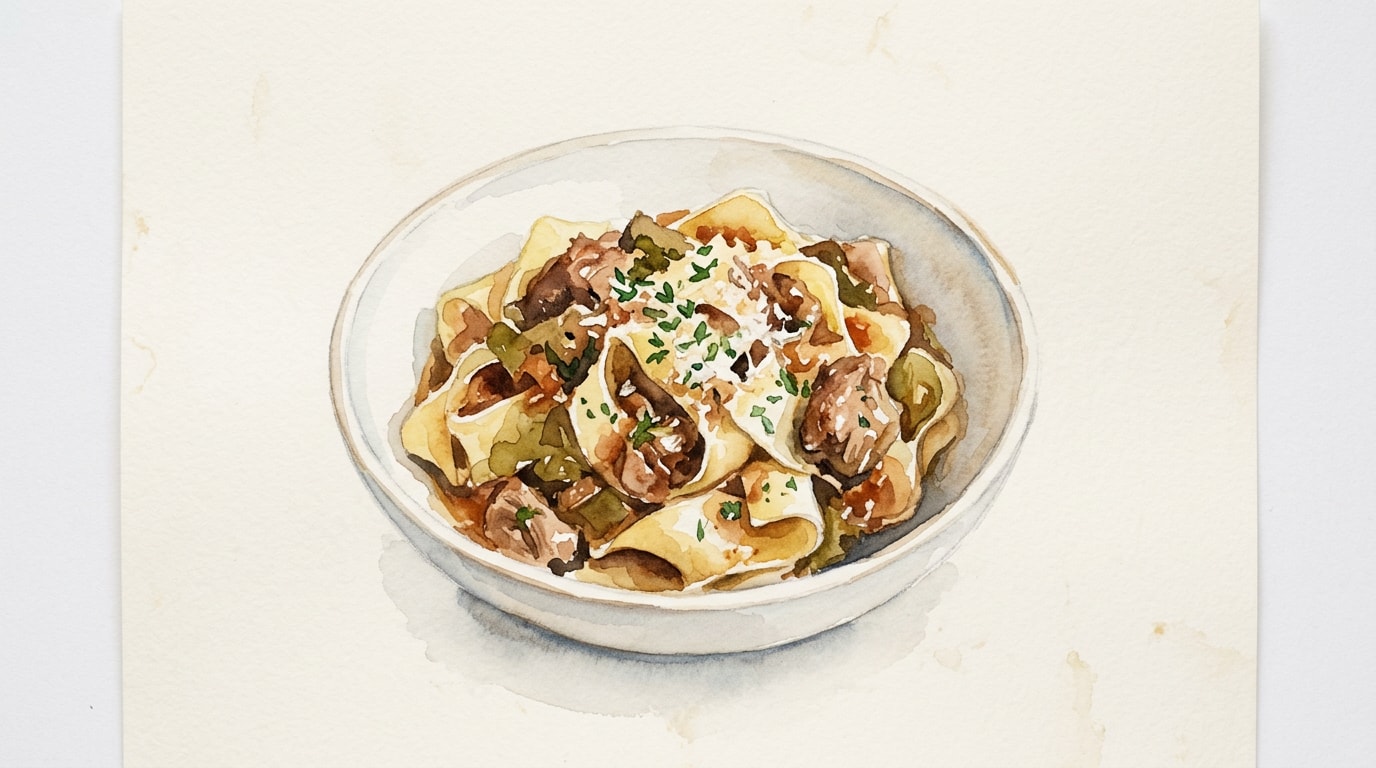
Portion the pasta into warm, shallow serving bowls. Garnish generously with freshly chopped flat-leaf parsley and a light grating of Parmigiano-Reggiano. Serve immediately.
Chef's Notes
- Rabbit anatomy features many fine, needle-like rib and spine bones. Even if using just legs, always feel through the shredded meat with clean fingers to guarantee no sharp bone fragments are hidden before returning it to the sauce.
- A proper sear on the rabbit is non-negotiable. The Maillard reaction developed during the searing step creates the foundational depth of flavor for the entire ragu. Do not rush this step, and ensure the meat is patted completely dry beforehand.
- Starchy pasta water is the secret to a perfectly bound sauce. It bridges the gap between the fat in the dish and the water, ensuring the creamy Dijon reduction clings to every ribbon of pappardelle instead of pooling at the bottom of the bowl.
Storage
Refrigerator: 3 days — Store the cooked pasta and the rabbit ragu in separate airtight containers to prevent the pasta from absorbing all the sauce and becoming mushy.
Freezer: 2 months — Freeze the rabbit ragu only. The cream may separate slightly upon thawing; reheat gently while whisking. Cook fresh pasta when ready to serve.
Reheating: Reheat the ragu gently in a saucepan over low heat until warmed through, adding a splash of chicken stock if it appears too thick. Toss with freshly cooked pasta.