Equipment
Ingredients
Protein
- 1000 g boneless lamb shoulder, trimmed of excess hard fat and cut into 4cm cubes
Aromatics and Base Vegetables
- 30 ml olive oil
- 200 g yellow onion, diced
- 300 g carrots, peeled and sliced into 2cm thick rounds
- 150 g celery, sliced into 2cm thick pieces
- 15 g garlic, minced
- 30 g tomato paste
Starchy Vegetables
- 500 g yukon gold potatoes, scrubbed and cut into 3cm cubes
Liquids and Herbs
- 250 ml dry red wine
- 750 ml beef broth
- 10 g fresh rosemary, whole sprigs
- 5 g fresh thyme, whole sprigs
- 2 bay leaves
Seasoning and Thickener
- 15 g kosher salt
- 5 g black pepper, freshly ground
- 15 g cornstarch
- 15 ml cold water
Nutrition (per serving)
Method
Pat the diced lamb shoulder dry with paper towels to ensure a proper crust during searing. Season the meat evenly with the kosher salt and black pepper. Immediately wash your hands with soap and thoroughly sanitize the cutting board and any utensils used to handle the raw meat to prevent cross-contamination.
Heat the olive oil in a heavy-bottomed Dutch oven over medium-high heat. Working in batches to avoid overcrowding the pot, use tongs to add the lamb cubes. Sear until deeply browned on all sides, about 8 to 10 minutes per batch. Transfer the browned lamb to a large clean plate and set aside.
Lower the heat to medium. Add the diced yellow onion, thickly sliced carrots, and celery to the residual lamb fat in the Dutch oven. Sauté using a wooden spoon to stir occasionally and scrape up light browning from the bottom, until the onions are softened and translucent, about 5 minutes.
Add the minced garlic and tomato paste to the softened vegetables. Stir continuously to coat the vegetables and toast the mixture until the tomato paste darkens to a rich brick-red color and becomes highly fragrant, about 2 minutes.
Pour the dry red wine into the pot to deglaze. Vigorously use the wooden spoon to scrape up all the concentrated browned bits stuck to the bottom of the Dutch oven. Allow the wine to simmer uncovered until the liquid has reduced by half and the raw alcohol aroma dissipates, about 3 minutes.
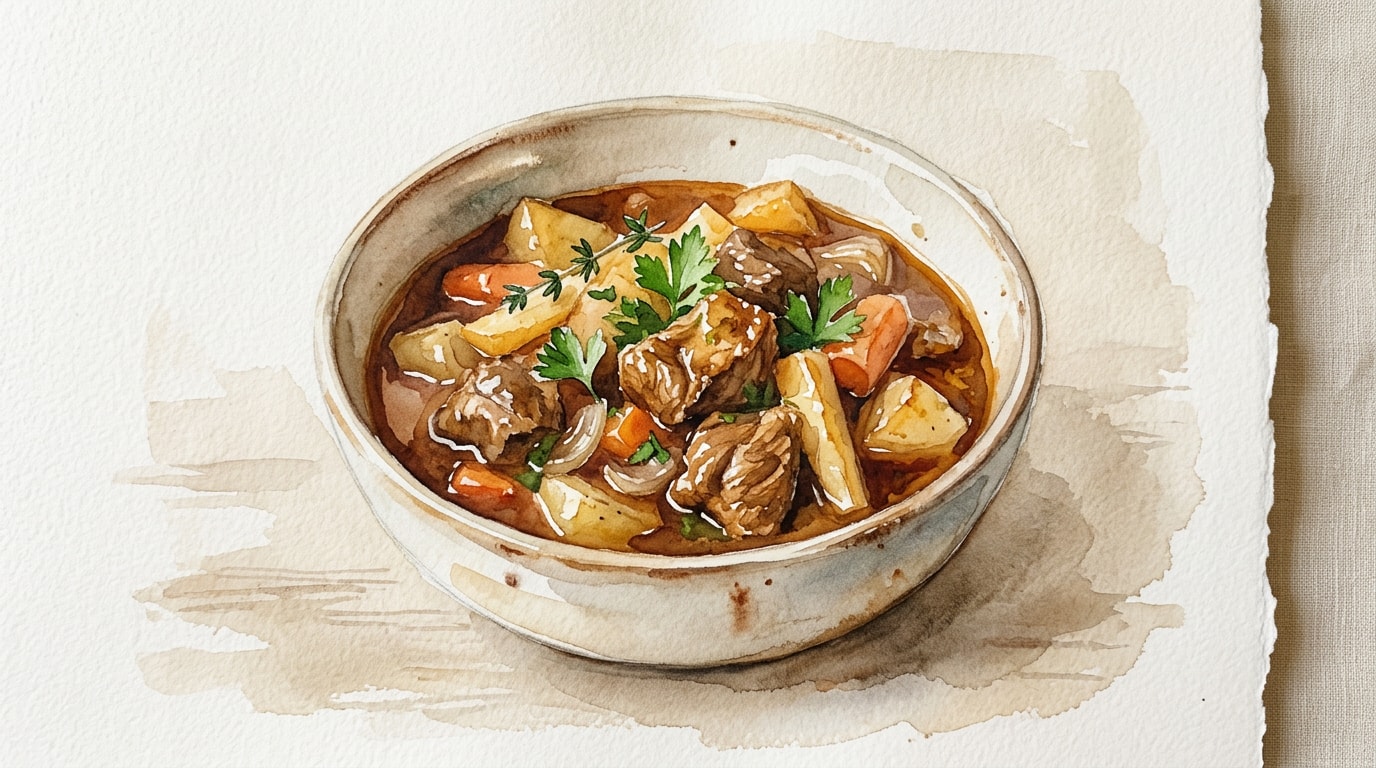
Return the seared lamb and any resting juices from the plate to the pot along with the cubed potatoes. Pour in the beef broth and submerge the rosemary sprigs, thyme sprigs, and bay leaves. Bring the liquid to a gentle boil, then cover with a tight-fitting lid. Reduce the heat to low and simmer gently for 1 hour and 30 minutes. The lamb is ready when it is completely fork-tender and reaches an internal temperature of at least 90°C/195°F, signaling that the tough collagen has successfully broken down into gelatin.
In a small bowl, whisk together the cornstarch and cold water until completely smooth to create a slurry. Stir this mixture directly into the simmering stew. Leave the pot uncovered and cook for a final 5 to 10 minutes until the broth has thickened to a gravy-like consistency that elegantly coats the back of a spoon. Using tongs, carefully locate and discard the bay leaves and bare herb stems before serving hot.
Chef's Notes
- Lamb shoulder is vastly superior to leg for stewing; it contains enough intramuscular fat and connective tissue to become meltingly tender and keep the meat moist during a long braise.
- Taking the time to deeply brown the meat in the initial step creates the foundational flavor base through the Maillard reaction. Do not rush this process or crowd the pan, which leads to steaming rather than searing.
- This stew is an excellent candidate for making ahead. It tastes significantly better the next day after the complex flavors have had time to meld in the refrigerator.
- For a brighter finish and contrasting texture, stir in a handful of frozen peas or a liberal sprinkle of freshly chopped parsley during the final two minutes of cooking.
Storage
Refrigerator: 4 days — Store in an airtight container; the flavor depth improves significantly after 24 hours.
Freezer: 3 months — Thaw overnight in the refrigerator before reheating. Potatoes may become slightly softer upon thawing.
Reheating: Reheat gently in a saucepan over medium-low heat, stirring occasionally until heated through to an internal temperature of 74°C/165°F.