Equipment
* optional
Ingredients
Main Components
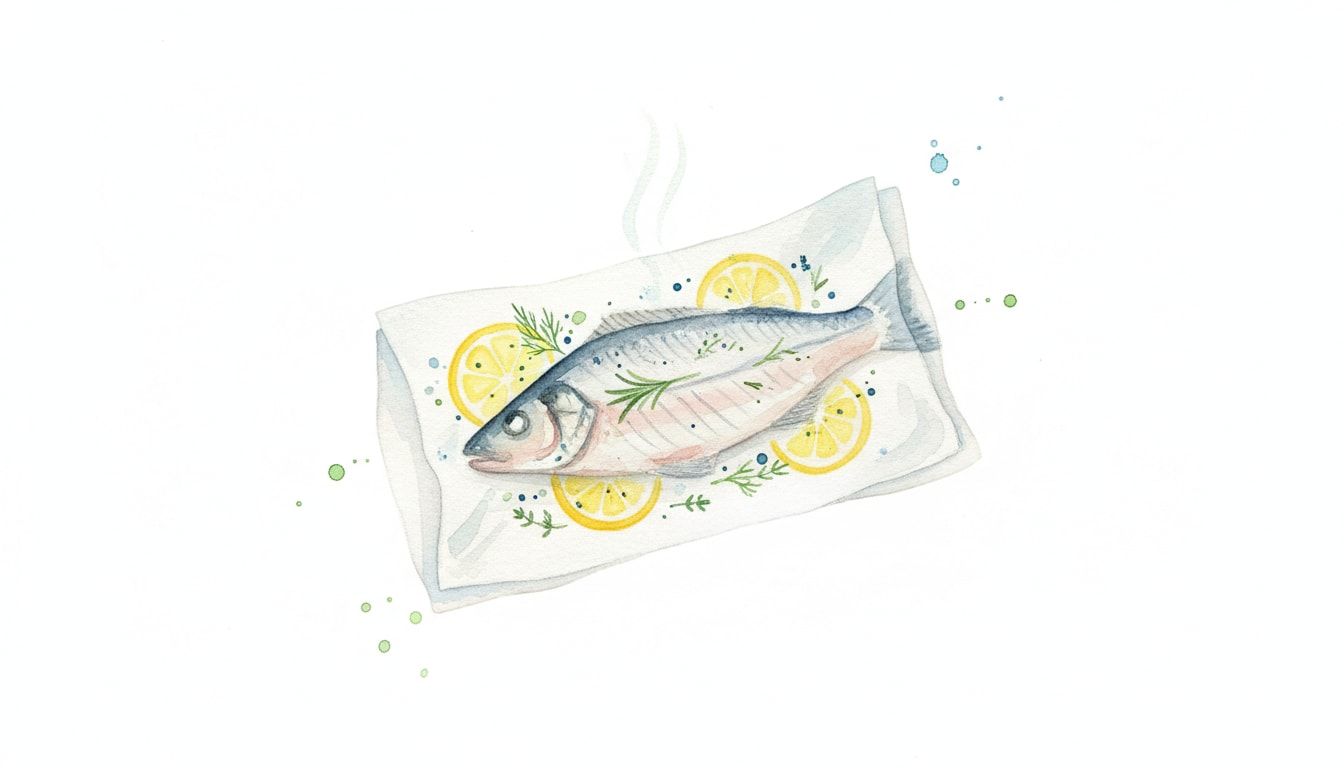
- 800 g shad fillets, boned, skin-on
- 200 g thick-cut smoked bacon, strips
- 2 lemon, sliced into thin rounds
- 10 g coarse sea salt
- 5 g coarse black pepper, freshly cracked
Nutrition (per serving)
Method
Submerge the untreated hardwood plank in cold water and let it soak for at least 2 hours to prevent it from igniting by the fire.
Build a robust hardwood bonfire. Allow the wood to burn down sufficiently to establish a strong core of hot coals that radiates high, even heat.
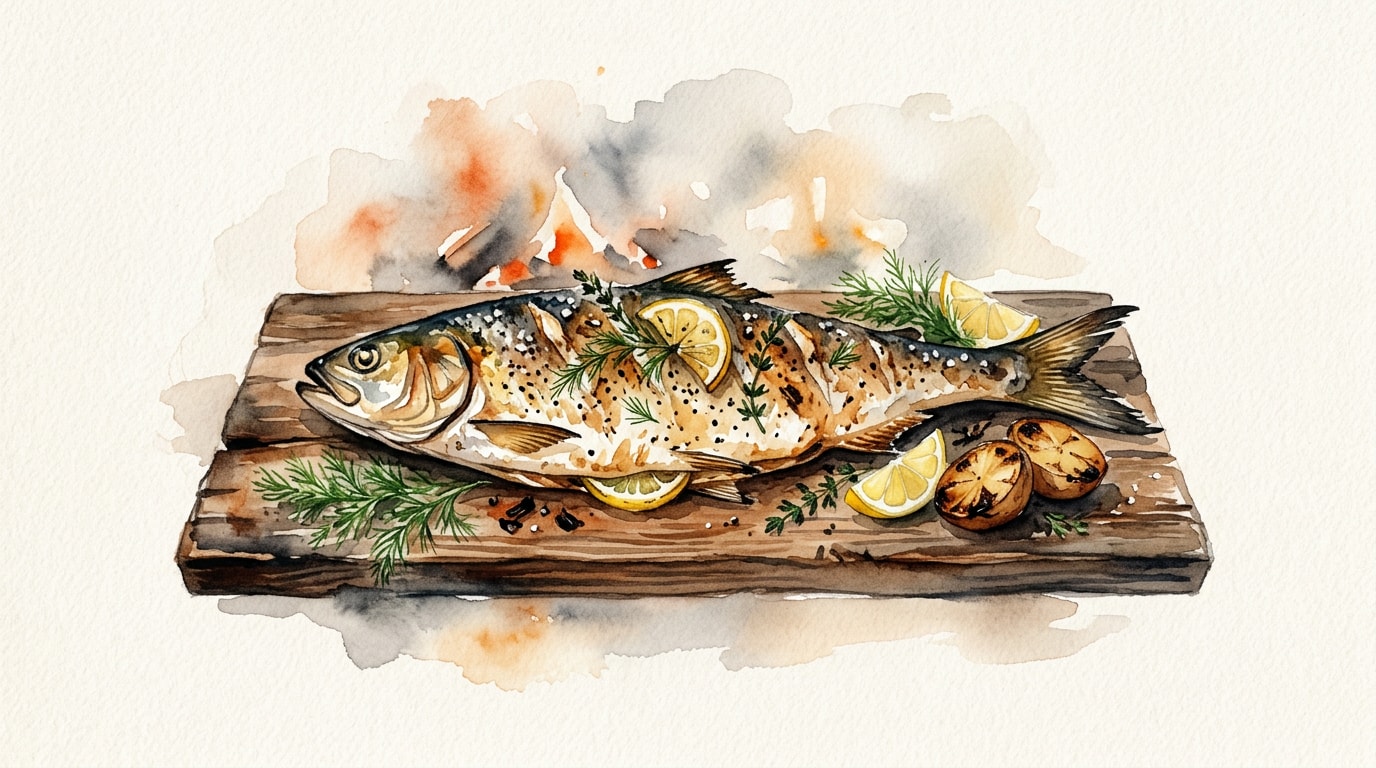
Lay the soaked plank flat. Place the skin-on shad fillets in the center of the wood. Season the fish generously with the coarse sea salt and cracked black pepper.
Shingle the lemon slices evenly over the length of the seasoned fish. Drape the thick-cut bacon strips vertically across the fillets to cover them completely. Secure the fish, lemon, and bacon to the plank using clean stainless steel nails or tight wraps of untreated cotton twine.
Prop the plank upright or at a slight angle about 45 to 60 centimeters (18 to 24 inches) away from the fire edge, facing the radiant heat directly. Ensure the setup is stable.
Cook the fish, rotating the plank 180 degrees halfway through for even cooking. The bacon will slowly render, heavily basting the lean fish beneath it. Continue until the bacon is deeply crisped and the thickest part of the shad reaches an internal temperature of 63 Celsius (145 Fahrenheit).
Carefully remove the plank from the fire perimeter using heavy heat-resistant gloves. Let it rest for 5 minutes before pulling the nails or cutting the twine, then serve directly from the wood.
Chef's Notes
- Shad is an incredibly bony fish with a complex skeletal structure. It is highly recommended to purchase your fillets from an experienced fishmonger who specializes in boning shad to save yourself hours of painstaking tweezer work.
- The bacon serves a dual purpose: it acts as a thermal blanket protecting the delicate flesh from the intense radiant heat of the bonfire, while its rendering fat provides necessary basting liquid to a naturally lean fish.
- If using nails to secure the fish, verify they are pure stainless steel. Galvanized nails can release toxic zinc compounds when heated.
- The cooking time will vary drastically depending on ambient temperature, wind, and the exact heat output of your fire. Always rely on a meat thermometer rather than a timer for the final pull.
Storage
Refrigerator: 2 days — Best eaten fresh off the fire; reheated fish can become dry.