Equipment
Ingredients
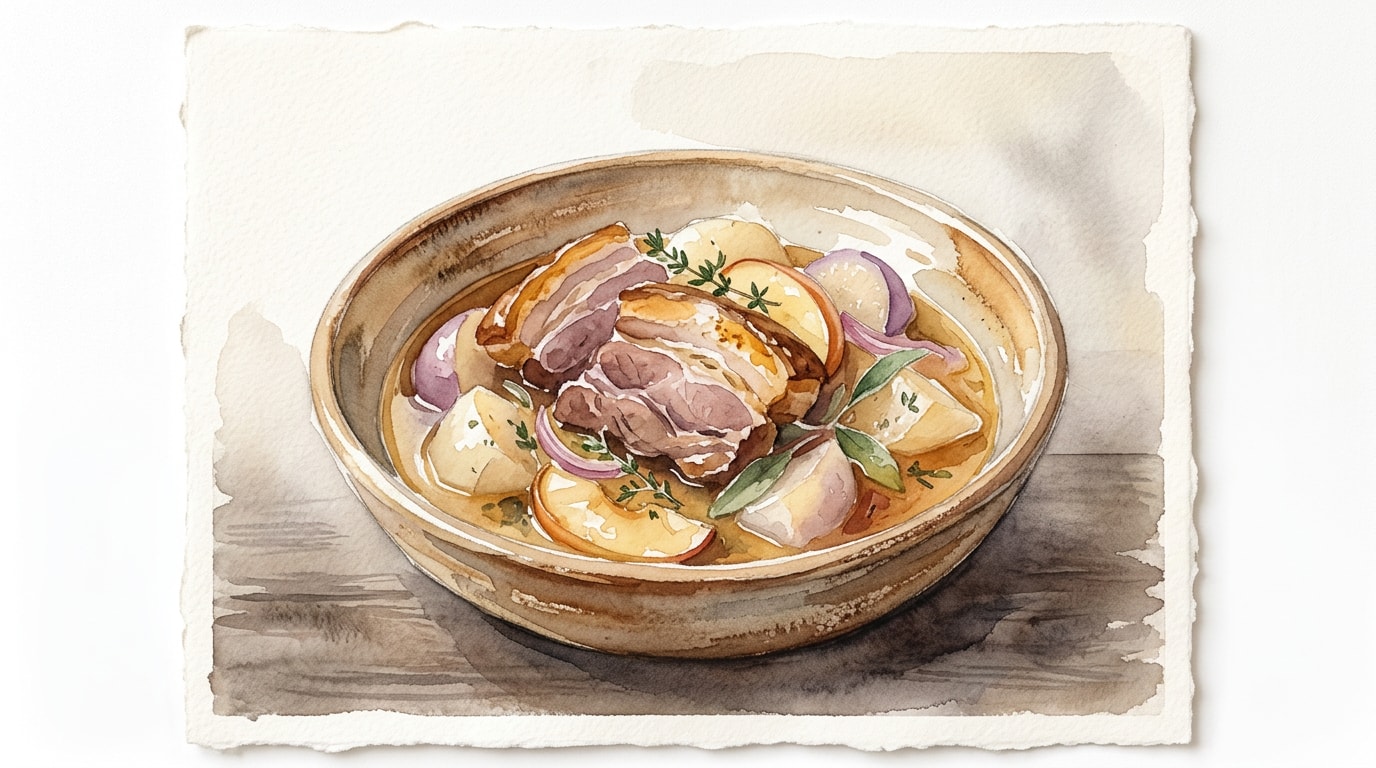
Pork and Coating
- 1000 g pork shoulder, boneless, cut into 4cm cubes
- 15 g kosher salt
- 5 g black pepper, freshly ground
- 30 g all-purpose flour
- 30 ml olive oil
Vegetables and Aromatics
- 500 g turnips, peeled and cut into 3cm wedges
- 1 yellow onion, chopped
- 200 g carrots, thickly sliced
- 4 garlic, minced
Braising Liquid and Herbs
- 250 ml hard apple cider
- 500 ml chicken broth, low sodium
- 15 g dijon mustard
- 5 g fresh thyme, whole sprigs
- 2 bay leaf, dried
Nutrition (per serving)
Method
Pat the raw pork shoulder dry and cut into 4cm cubes on a dedicated meat cutting board to prevent cross-contamination. Wash your hands, knife, and board thoroughly after handling. Season the pork chunks with the kosher salt and black pepper, then toss in the all-purpose flour until lightly and evenly coated.
Heat the olive oil in a large Dutch oven over medium-high heat. Working in two to three batches to avoid crowding, sear the pork cubes until deeply browned on all sides, taking about 8 minutes per batch. Transfer the browned pork to a clean plate using tongs.
Lower the heat to medium. Add the chopped yellow onion and thickly sliced carrots to the residual fat in the pot. Sauté until the onions begin to soften and take on a light caramelized color, about 6 minutes.
Stir in the minced garlic and continue to cook for 1 minute, stirring constantly so the garlic does not burn.
Pour the hard apple cider into the Dutch oven to deglaze the pot. Use a wooden spoon to firmly scrape up all the flavorful browned bits stuck to the bottom. Allow the cider to boil and reduce by half.
Whisk the dijon mustard into the chicken broth, then pour the mixture into the pot. Add the fresh thyme sprigs and bay leaves. Return the browned pork along with any juices that collected on the plate to the pot, then bring the liquid to a gentle simmer.
Cover the Dutch oven with a tight-fitting lid and transfer it to a preheated 160°C (320°F) oven. Let the pork braise undisturbed for 1 hour and 15 minutes.
Remove the pot from the oven carefully. Gently stir in the peeled turnip wedges, making sure they are partially submerged in the liquid. Cover and return to the oven for an additional 45 minutes. Note that while pork is safe to eat at an internal temperature of 63°C (145°F), it must reach at least 90°C (195°F) for the tough connective tissues to melt and become completely tender.
Remove the Dutch oven from the heat. Let the dish rest for 10 minutes to allow the sauce to settle. Skim off any excess clear fat pooling on the surface with a spoon, then locate and discard the bare thyme stems and bay leaves before serving hot.
Chef's Notes
- Searing the pork in batches is absolutely essential. Crowding the pan drops the temperature, causing the meat to steam rather than brown, which robs the finished sauce of its deep, roasted flavor base.
- If the lid of your Dutch oven fits loosely, moisture will escape and the braise may dry out. To prevent this, place a sheet of parchment paper or heavy-duty aluminum foil over the pot before pressing the lid down.
- Do not skip skimming the fat at the end. Pork shoulder is a rich cut, and removing the rendered oil from the surface of the sauce keeps the dish feeling hearty without being heavy or greasy.
- Choose smaller, younger turnips if available. They possess a sweeter, more delicate flavor and lack the bitter, woody core sometimes found in massive, mature winter turnips.
Storage
Refrigerator: 4 days — Flavors deepen and improve on the second day.
Freezer: 3 months — Turnips may soften further and change texture slightly upon thawing.
Reheating: Gently simmer on the stovetop over low heat until warmed through, adding a splash of broth if the sauce has over-thickened.